

Wholesale Melamine Polyphosphate for Reliable Flame Retardant Supply
2026-11-16
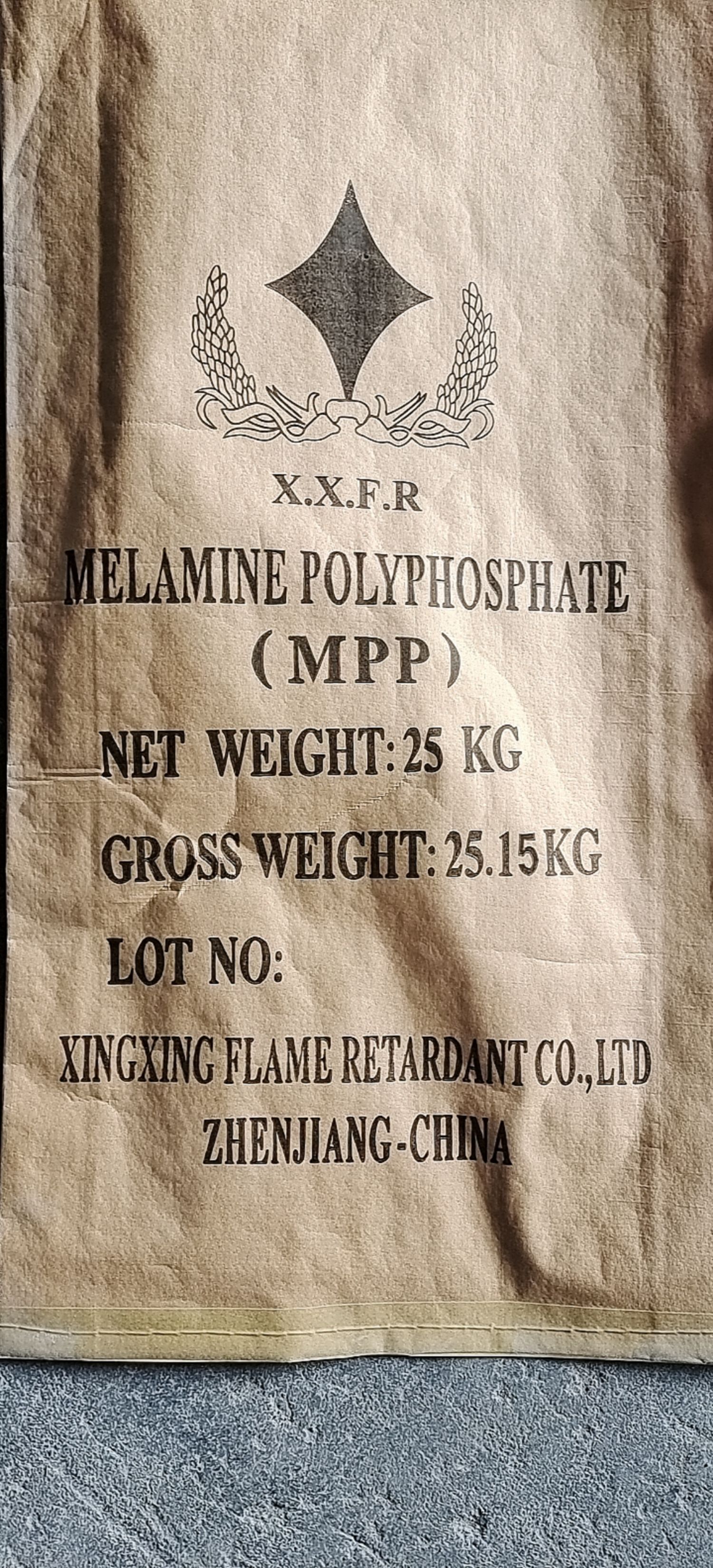
Ordering melamine polyphosphate in wholesale quantities often comes with a familiar risk: paperwork looks consistent, but the material itself can vary from one shipment to the next. For manufacturers who depend on stable flame retardant performance, that kind of uncertainty is expensive. X.X.F.R approaches wholesale supply differently, with tighter quality control and logistics designed to keep your production moving. Before your next order, it is worth knowing what separates a dependable MPP source from a costly gamble.
What Melamine Polyphosphate Brings to Flame Retardant Formulations
Melamine polyphosphate changes the way a polymer fails in a fire, which is more useful than simply diluting the fuel. The phosphate segment pushes the surface toward a carbon-rich char while the melamine segment releases nitrogen gases that cool and expand the boundary layer. That combination tends to cut peak heat release and reduce flaming drips without the heavy smoke often tied to brominated packages.
In polyamides and thermoplastic polyesters, MPP holds up through compounding and molding temperatures that would push many phosphorus additives past their useful range. This means the flame retardant stays in the part instead of degrading into volatiles before it is needed. The char left behind is usually dense and tightly bound, a detail that matters in thin-wall electrical components where flame can follow a weak residue across the surface.
MPP also gives formulators a practical base to build on. It pairs easily with selected synergists and fillers to adjust smoke density, afterglow time, and compound cost, all without starting over with a different chemistry. Compared with red phosphorus or aggressive mineral packages, MPP-based systems tend to be less moisture-sensitive and less abrasive in processing equipment, which shows up as better lot-to-lot consistency.
Performance Properties That Matter in Demanding Applications
When a component faces extreme pressure, vibration, or thermal cycling, the usual datasheet numbers stop telling the full story. What separates a reliable material from a marginal one is how its properties hold up after hundreds of hours under real stress—not just in a single tensile test. Engineers look for evidence of retained stiffness, resistance to creep, and dimensional stability when the part gets hot enough to soften lesser polymers. The practical question is never "how strong is it?" but "how strong will it be after the machine has been running for a year?"
Another overlooked factor is the way a material responds to sudden load shifts rather than steady-state stress. In demanding applications, impact resistance at low temperatures or reduced notch sensitivity can matter more than ultimate tensile strength. A gear or housing that survives a cold start or an unexpected jam without cracking buys more uptime than one that simply has a higher rating on paper. Similarly, chemical exposure—whether from lubricants, cleaning agents, or process fluids—tends to degrade performance long before mechanical failure shows up as a visible crack.
Finally, consistency across production batches often decides whether a high-performance material is actually usable. Two suppliers may quote the same nominal properties, but one delivers parts that warp after machining while the other holds tight tolerances run after run. That kind of predictability, combined with low moisture absorption and stable friction behavior, is what lets design teams push closer to the edge without risking field failures.
How a Stable Supply Chain Keeps Production Moving
A line stoppage rarely begins with a missing finished product. It starts earlier: a delayed shipment of fasteners, a batch of raw material that fails inspection, a supplier quietly operating above capacity. When supply is predictable, those small failures don’t have room to become expensive pauses. Production planning can actually be trusted, machines get scheduled for real demand instead of guesswork, and shift leads stop spending mornings chasing parts. That is the quiet advantage of a stable chain: fewer urgent calls, fewer improvised workarounds, fewer half-built orders waiting on one component.
Stability also shows up in inventory with better shape. Instead of stuffing the warehouse with safety stock for every possible shortage, teams can hold leaner buffers because lead times are consistent. Cash doesn’t sit trapped in boxes on shelves; it moves into materials that are actually being used. When suppliers deliver on time and in full, procurement shifts from firefighting to longer-horizon work—negotiating better terms, qualifying backup sources before they’re needed, adjusting schedules with suppliers early rather than at the last minute.
The biggest difference may be momentum. Once production stops, restarting is not just about switching a line back on. Quality checks, re-sequencing, overtime, expedited freight—all of it eats into output and morale. A stable supply chain keeps the line in motion so those recovery costs stay rare. It allows the plant to improve speed gradually instead of lurching between crisis and calm. Predictability doesn’t make manufacturing glamorous, but it does make it reliable.
Quality Control Measures Behind Consistent Material Batches
Batch-to-batch drift in raw material performance usually starts long before a supplier ships anything. Our incoming inspection doesn't stop at the certificate of analysis; every polymer lot gets a melt flow check, a moisture titration, and a small-batch trial run against a retained reference sample. Those reference samples, pulled from the last three approved deliveries and stored in controlled humidity, are what make the comparison meaningful. If a new lot falls outside the agreed tolerance band on any of those three points, it is quarantined on arrival and the supplier receives the actual instrument readings, not just a rejection notice. That back-and-forth has caught issues like a 3% shift in filler loading that a paper certificate alone would have missed.
In production, the pattern is to lock the process before chasing the material. Mixing curves, screw speeds, and barrel zone temperatures are archived with each batch record, and any operator adjustment beyond a narrow window requires a supervisor override plus a note linked to the specific lot number. Every two hours, a line sample is taken for ash content and tensile elongation, and those results are plotted on a live chart rather than filed away. When the chart starts trending toward the upper or lower control limit, the line slows before a full stop is needed. That early-warning habit has reduced internal rework on off-spec batches by a measurable margin without adding inspection staff.
The last layer is traceability that works in reverse. Each finished batch carries a lot code that maps back to the raw material lots, the operator shifts, the maintenance log for that extruder, and even the ambient humidity record from the plant floor. If a customer reports a subtle property change weeks later, the trace lets us pull the retained reference sample and compare it under the same test conditions. It is slower than a database lookup, but it often resolves disputes before they become claims. The goal is not to prove the material was perfect; it is to know exactly what was in it, who ran it, and what the machine was doing at the time.
Choosing the Right Grade for Different Polymer Systems
Grade selection rarely comes down to a single datasheet value. A polyolefin that flows beautifully in a thin-wall injection mold may tear or sag in a thick extrusion profile, while a high-viscosity elastomer can be impossible to process without raising temperatures to the point of degrading additives. It helps to start with the dominant processing method and let the melt rheology, shear response, and thermal stability of each candidate grade narrow the field before mechanical properties even enter the conversation.
The chemistry of the base polymer matters just as much as the additives around it. Reactive systems like epoxies or urethanes are far more sensitive to stoichiometry, moisture, and catalyst package than most thermoplastics, so a grade that cures reliably in a controlled adhesive line may fail in a humid, open-mold casting operation. Filled and reinforced compounds add another layer because particle size, surface treatment, and loading level change flow, shrinkage, and surface finish in ways that are often more decisive than tensile strength alone.
Practical validation still beats theoretical fit. Running a small batch across the actual tooling, at production speeds, with the intended regrind ratio or post-cure step exposes weaknesses that laboratory screening misses. Comparing two or three grades side by side under those conditions tends to reveal a narrow workable window where processing latitude, end-use performance, and cost overlap. The right choice is usually the grade that tolerates normal variation without drifting out of spec, not simply the one with the highest published performance.
Practical Points to Weigh Before Buying in Bulk
Bulk pricing often looks like an easy win until you factor in where everything will actually live. A spare closet that already holds holiday decorations and old luggage is not a realistic home for forty-eight rolls of paper towels. Before committing, measure the storage space you can genuinely spare and consider whether the items can tolerate heat, humidity, or a bit of dust. Buying in quantity only saves money if you are not forced to rent a storage unit or turn your guest room into a makeshift warehouse.
Another overlooked detail is how quickly your household actually uses the product. A gallon of mayonnaise might be a bargain, but if it expires before your family finishes a quarter of it, the unit cost advantage disappears. Pay attention to shelf life, especially for perishables, cleaning supplies that lose potency, or batteries that degrade over time. A good rule of thumb is to buy bulk only for items you already use at least once a week and have bought repeatedly in the same size.
Finally, compare the per-unit price against smaller packages at more than one store. Sometimes a “bulk” pack at a warehouse club is only a few cents cheaper per ounce than a regular pack at the grocery store, and the difference may not justify tying up cash or space. Factor in membership fees, gas for extra trips, and the risk of waste. If the math still works in your favor and the product is something you will definitely finish, the larger size makes sense. Otherwise, you are just paying more to store someone else’s inventory.
FAQ
It combines high phosphorus and nitrogen content with good thermal stability, so it suppresses ignition and slows heat release without serious degradation during processing. That balance makes it suitable for polyamides and other resins exposed to elevated temperatures.
It is commonly used in glass-fiber reinforced polyamide 66 and 6, polyesters, epoxy resins, and some thermoplastic elastomers. These materials often need a halogen-free option that can pass strict electrical and mechanical requirements.
Buying in bulk from a producer or established distributor gives you more consistent lot-to-lot quality, better lead-time planning, and direct access to technical support. It also reduces the risk of shortages when demand spikes.
Look at particle size distribution, decomposition temperature, phosphorus and nitrogen content, moisture level, and whether the material has been tested in your specific resin system. A dependable supplier will share those details openly and provide a sample batch for line trials.
Yes. It works through intumescence and char formation rather than relying on halogens, so it helps meet tighter environmental and health regulations while still meeting common flame retardancy standards.
Keep melt temperatures below the point where the product begins to degrade, ensure good dispersion through the compounder, and watch for any effect on viscosity. Pre-drying and controlled feeding help preserve performance in the final part.
With the right loading and surface treatment, it can maintain most tensile and impact properties. Some adjustment in formulation may be needed, but the trade-off is generally smaller than with older halogenated systems.
Suppliers usually offer 20 kg or 25 kg paper bags, supersacks, or custom bulk packaging. The material should be stored in a dry area and kept sealed to prevent moisture pickup before processing.
Conclusion
Melamine polyphosphate has become a workhorse in halogen-free flame retardant systems, largely because it balances char formation, lower smoke release, and good thermal stability without undermining the mechanical or electrical properties that engineers count on. In polyamides and thermoplastic polyesters, the phosphorus-nitrogen synergy activates in the right temperature window, allowing compounds to pass demanding glow-wire and UL-style tests while keeping processing straightforward. Buyers who source the material in bulk quickly learn that lot-to-lot consistency matters just as much as the datasheet values. A dependable wholesale supplier will track particle size distribution, moisture content, and residual impurities carefully, because small shifts in any of these can alter dispersion, surface finish, or long-term aging behavior in the final part.
Beyond chemistry, reliable supply comes down to practical logistics. Stock held at regional warehouses, clear batch traceability, and packaging that survives long storage without caking or moisture pickup keep production lines from stalling. Different polymer systems call for different grades, so working with a supplier that offers fine and coarse variants, and gives honest guidance on loading levels for PA66, PBT, or thermoplastic elastomers, prevents costly trial runs. Before committing to large volumes, it is worth confirming lead times, minimum order quantities, and whether the supplier can provide retained samples or test data for each shipment. These quieter operational details often separate a supplier that merely sells powder from one that supports a stable compounding operation.
Contact Us
Contact Person: Guohua Wang
Email: [email protected]
Tel/WhatsApp: 8613003442895
Website: https://www.xxflameretard.com