
Wear Resistant Steel Plate Distributor: How to Choose a Reliable Partner for Your Industrial Needs
2026-08-23
Choosing a wear resistant steel plate distributor is rarely a decision that makes headlines—until a failed liner halts your entire production line. The market is flooded with suppliers offering 'premium' plates at suspiciously low prices, but hidden defects and inconsistent hardness can cost far more than the initial savings. So how do you separate genuine reliability from empty promises? It starts with looking beyond the product spec sheet. From mill certifications to after-sales support, every detail matters. Jiangsu Baowu New Materials has spent years helping industrial buyers navigate these choices. In this post, we break down the essential criteria that turn a simple transaction into a long-term partnership.
Verify the Actual Grade and Hardness Before You Commit
Suppliers often list impressive numbers on paper, but real performance can stray from the spec sheet. Ask for a small sample or a mill test report before placing a large order. Feel the surface, check the edges, and if possible run a quick file test. A grade that sounds right on a quote may behave differently under your tools, and that difference shows up fast in finished work.
Hardness varies within the same grade depending on heat treatment and even the batch. Don't assume one delivery matches the last. A simple Rockwell reading on a corner or an offcut can save you from bending problems, premature wear, or a tool that dulls halfway through a job. If the supplier hesitates to let you verify, treat that as a signal to walk away.
Once you know the actual grade and hardness, write those numbers into your own notes. Compare them to what you ordered, not what the catalog promised. This habit keeps your expectations honest and your material choices consistent from one project to the next.
Look Beyond the Stock List: Cutting and Processing That Fit Your Job
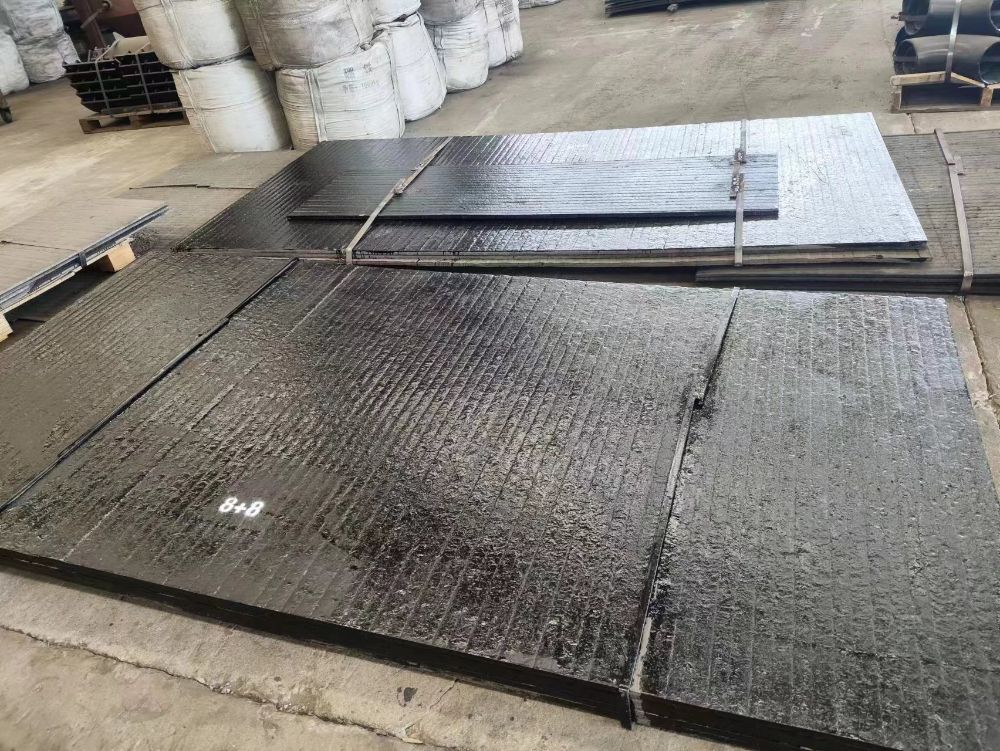
Standard stock lists rarely match the exact demands of a job. When you dig into the cutting and processing side, you find ways to get materials shaped to your specs before they ever hit the shop floor. That kind of precision saves you from forcing a square peg into a round hole later.
Think about thickness, edge finish, or even pre-drilled holes. A supplier who handles custom cutting can deliver pieces ready for assembly, not just raw slabs you need to wrestle into place. The right processing turns a generic sheet into a component that drops straight into your build.
The payoff shows up in fewer offcuts piling up and less time spent on rework. By moving beyond the catalog and specifying cuts that match your actual workflow, you keep the job moving without the usual stop-and-adjust rhythm.
Insist on Full Traceability From Mill to Delivery
Each fabric roll leaves the mill with a unique identity code tied to its production date, machine number, and every chemical treatment applied during dyeing and finishing. Even after the goods are packed and shipped overseas, our internal system can pull up the complete processing history in seconds, down to the operator who handled a specific lot on a given shift.
Traceability here is not a stack of paper forms collecting dust. Every critical checkpoint is double-verified by two staff members, and physical samples are retained for no less than three years. When a customer questioned the color consistency of a recent batch, we pinpointed the exact dyeing vessel and process parameters within 48 hours—not a vague guess about possible causes.
Before dispatch, each carton carries a scannable label linked in real time to the packing list, commercial invoice, and inspection report. The receiver simply scans the code to see the full timestamp record from raw material intake to final inspection, without sending a single email asking for piecemeal documentation.
Test Their Technical Advice During Your First Call
During your initial conversation, don't just accept every recommendation at face value. Ask for a quick walkthrough of how a suggested fix would work in your environment. A competent advisor should be able to explain the reasoning, mention potential downsides, and admit when something needs further investigation. If they dodge specifics or rely on buzzwords, treat that as a signal.
You can also throw in a scenario you already know well. For example, mention a past issue you resolved and ask how they would approach it. Their answer reveals whether they actually understand your stack or are just reciting generic steps. Pay attention to whether they ask clarifying questions before jumping to a solution—that's often a sign of real expertise.
End the call with one concrete follow-up question about integration or edge cases. The best advisors won't pretend to know everything; they'll offer to confirm details and get back to you. That follow-through matters more than a flawless first answer.
Ask How They Handle Urgent Orders and Unexpected Delays
When you ask a potential partner about urgent orders, pay attention to whether they explain their actual process rather than just saying "we can handle it." A good answer might mention their buffer capacity, how they prioritize existing production without disrupting schedules, or the specific communication channel for rush requests. If they hesitate or give a vague reassurance, that's a red flag—unexpected delays will eventually happen, and you need to know the mechanics of how they respond.
Unexpected delays are where most suppliers fall short. Instead of asking "what if something goes wrong?" ask them to walk you through the last time a shipment was held up or a machine broke down. Their answer reveals whether they have a real contingency plan or just hope for the best. Look for specifics like rerouting options, pre-qualified backup factories, or how they keep you informed during the disruption.
A reliable partner will also be upfront about what they cannot do. If they promise to meet every rush order with zero impact on quality or lead time, that's usually a sign they haven't thought it through. The best answers acknowledge trade-offs—maybe they can expedite but at a higher cost, or they can split the shipment to get part of it moving sooner. That honesty is far more useful than a blanket "no problem."
Compare Total Cost of Ownership, Not Just the Price Per Ton
When buyers focus only on the quoted price per ton, they miss freight, handling, storage, waste, and downtime. A lower sticker price can conceal serious downstream costs. A cheap filler that clumps in the silo, for example, can halt production for half a shift—that lost output dwarfs any per-ton savings.
Total cost of ownership includes energy consumed during processing, extra wear on equipment, labor for rework, and disposal fees for off-spec output. Two suppliers might quote the same per-ton price, but if one material runs through your line with fewer interruptions and less scrap, the effective cost per usable ton is far lower.
Savvy procurement teams model these variables over a full year rather than a single transaction. They compare delivered cost, yield loss, and operational impact side by side. This shifts the conversation from 'cheapest ton' to 'lowest cost per finished unit'—the metric that actually protects margins.
FAQ
Price matters, but a reliable partner also gives you full material traceability, mill certifications, and real stock in multiple grades such as AR400, AR450, and AR500. Ask about their cutting, beveling, and forming capabilities, because a partner that handles these in-house often cuts lead times and prevents mistakes at your fabricator.
Ask for the original mill test reports for each heat or batch, and find out whether the distributor does incoming inspection or uses third-party testing. A trustworthy partner will share hardness readings, Charpy values when relevant, and lot numbers without hesitation.
Ask them to describe recent projects in similar environments and explain the difference between sliding abrasion and heavy impact. A knowledgeable distributor will discuss wear mechanisms, suggest appropriate plate thickness and grade, and may even propose a different material if corrosion is also involved.
In-house cutting, beveling, rolling, and drilling save transportation steps and reduce the risk of damage or dimensional errors. You also get a single point of accountability, so if a part does not fit or arrives late, there is no dispute between the distributor and an outside processor.
A distributor with broad stock across multiple thicknesses and grades can ship standard items immediately and handle urgent replacement orders without panic buying. Thin stock or limited grade availability often leads to hidden delays when you need to match an existing liner or chute component.
Look beyond the per-ton price. Freight, minimum order quantities, cutting tolerances, scrap charges, rework from poor edge quality, and packaging for export or long-haul delivery can all change the real cost. Ask for a detailed quote that includes processing and delivery terms.
A strong technical team helps you match material properties to the actual wear pattern, whether you face high-stress abrasion, impact, or a mix of both. They can advise on hardness, thickness, and even alternative options like chromium carbide overlay for extreme conditions, saving money over trial-and-error.
Check for documented procedures, ISO or similar certifications, and evidence of internal testing such as portable hardness testers or ultrasonic thickness measurement. Ask for customer references in your industry and, if possible, visit their facility to see how plates are stored, handled, and inspected.
Conclusion
A dependable wear plate distributor should be able to prove the material's grade and hardness before any order is placed. Ask for actual mill certificates and, if possible, request a sample or independent test report instead of relying on a salesperson's verbal assurance. The right partner will also discuss cutting and processing capabilities early on—beveling, drilling, forming, or custom shapes—so you aren't stuck with a raw plate that creates extra work on your floor. Traceability matters just as much—every plate should be linked back to its heat number, mill origin, and delivery date, which protects you if a batch ever underperforms in service.
Technical knowledge becomes obvious during the first conversation. A distributor worth keeping will ask about impact angles, abrasion conditions, and temperature ranges before recommending a grade, rather than pushing whatever is in stock. Pay attention to how they handle pressure—do they have a clear process for urgent orders, partial shipments, or unexpected mill delays, or do they go quiet when problems arise? Beyond that, compare the full cost of ownership, including downtime, rework, and machining time, not just price per ton. A lower upfront price often disappears once you account for faster wear or poor dimensional tolerances, so choose a partner that reduces your long-term risk instead of simply cutting the invoice total.
Contact Us
Contact Person: Zoe Liang
Email: [email protected]
Tel/WhatsApp: 86 189 2128 6299
Website: https://www.baowuchina.com