

UV Piezo Inkjet Printer Manufacturer Delivers Unmatched Precision and Speed
2026-07-02
Precision and speed are the defining pillars of modern digital printing, yet finding a UV piezo inkjet printer that truly excels in both can feel like an elusive quest. Enter Danmajet, a manufacturer that doesn’t just promise high-performance printing—it delivers an entirely new standard. Whether you’re tackling intricate graphics or high-volume production runs, the gap between expectation and reality narrows dramatically with Danmajet’s cutting-edge technology. Discover how this brand redefines what’s possible, one droplet at a time.
Precision Meets Speed: The Next Evolution in UV Piezo Printing
In UV piezo printing, the longstanding trade-off between razor-sharp detail and rapid throughput is finally dissolving. Advanced printhead architectures now orchestrate droplet placement with sub-picoliter control at frequencies that redefine production cadence. This convergence isn't merely incremental—it's a fundamental shift that lets manufacturers achieve photorealistic textures and crisp microtext without slowing the line. By dynamically adjusting waveforms in real time, these systems maintain edge definition even as carriage speeds breach new thresholds, ensuring every pass contributes to flawless output.
Beneath the surface, intelligent ink management plays a pivotal role. Piezoelectric actuators, driven by refined pulse algorithms, eject UV-curable inks with viscosities once deemed impractical, expanding the substrate spectrum from delicate films to rigid industrial panels. Simultaneous curing with high-intensity LED arrays locks the droplets in position instantly, eliminating dot gain and preserving intended geometry. The result is a harmonious blend of speed and precision that opens doors to just-in-time customization and short-run agility—without sacrificing the robust, durable finish demanded by industrial applications.
What truly sets this next evolution apart is its adaptive feedback loops. On-the-fly calibration compensates for nozzle deviations and environmental variables that previously forced operators to choose between pace and perfection. Vision systems inspect and correct at speed, turning the entire print bed into a self-optimizing canvas. This isn't just a printer upgrade; it's a systems-level rethink that prioritizes consistency across long runs while granting creative freedom. In this era, precision and speed are no longer opposing forces—they're partners in a workflow built for the unexpected.
Unrivaled Print Quality at Breakneck Speeds
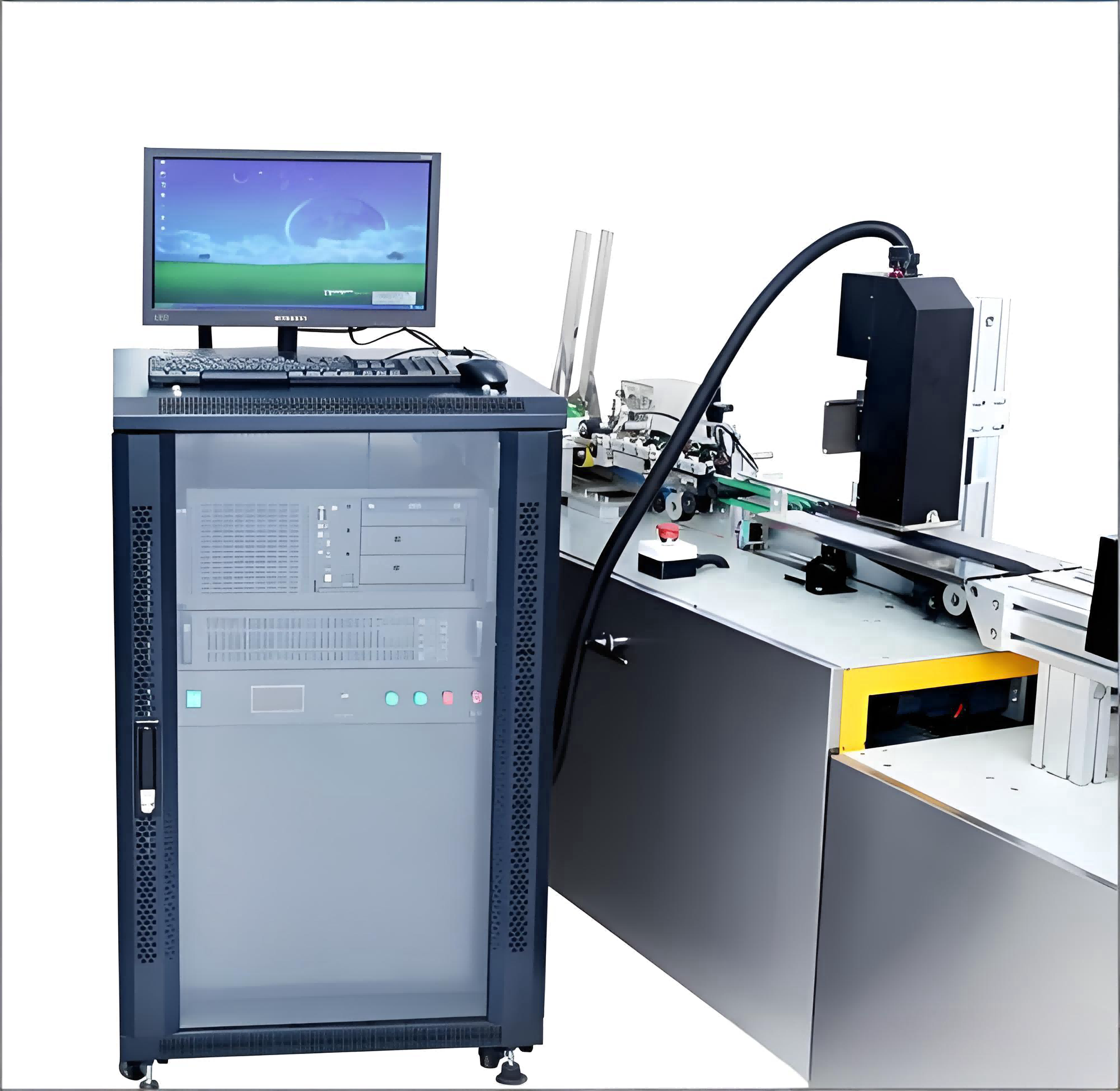
Every image bursts off the page with a sharpness that defies the machine's pace—fine details, smooth gradients, and bold colors come through without a hint of compromise. It’s the kind of output you’d expect from a device that takes its time, yet here the sheets fly out in rapid succession, each one as flawless as the last. The technology behind it sidesteps the usual trade-offs, so you’re never forced to choose between speed and a result that actually looks professional.
From crisp text that stays legible even at tiny point sizes to photographs rich with depth and subtlety, this machine handles it all without breaking stride. And unlike many high-speed systems that stumble when faced with intricate graphics or dense coverage, this one powers through without smearing, banding, or fading—even after hundreds of pages. The consistency is remarkable; what you see on the first print is exactly what you get on the 500th, which in a busy environment is nothing short of essential.
How UV Piezo Technology Redefines Industrial Printing
At the core of this transformation is the piezoelectric printhead, which uses mechanically responsive crystals to eject ink with surgical precision. Unlike older methods that rely on heat to push droplets through a nozzle, the piezo approach lets manufacturers fine-tune the size, speed, and placement of every single dot. That level of control — down to picoliter volumes — means text and graphics stay sharp on curved, textured, or delicate surfaces where lesser systems smear or fade. It’s not merely about resolution; it’s about repeatable accuracy across thousands of cycles, something traditional thermal heads simply can’t match without degrading over time.
Pair that precision with instant UV curing, and you get a workflow that eliminates the waiting game. Inside the printer, specially formulated inks hit the substrate and are immediately exposed to ultraviolet light, triggering a chemical reaction that solidifies the output in a fraction of a second. The practical benefits go beyond speed: because the ink doesn’t soak into porous materials or rely on evaporation, it sits precisely where placed, creating a durable, abrasion-resistant finish on everything from plastics and glass to metal and wood. This opens up customization opportunities that were once cost-prohibitive, allowing manufacturers to print directly onto finished goods without pre-treatment or lengthy drying tunnels.
What truly separates this technology from conventional digital printing is its material versatility and operational uptime. Piezo heads handle a wider viscosity range, so you can work with dense, pigment-heavy UV inks without constant clogging — a chronic headache with thermal systems. Meanwhile, the non-contact nature of the process and the cold-cure mechanism let you print on heat-sensitive substrates that would warp or melt under other methods. The result is a single industrial platform that can switch between marking circuit boards, decorating promotional merchandise, and personalizing packaging, all within the same shift, redefining what one machine can accomplish in a lean production environment.
Engineered for Accuracy, Built for Pace
Every component is calibrated with a zero-tolerance mindset, ensuring measurements land within a fraction of a millimeter. The precision isn't just a spec—it's a tactile certainty you feel with every cut, every pass, every final product. That relentless accuracy means projects move forward without rework, delays, or second-guessing.
Speed doesn't come at the cost of control. The streamlined workflow cuts through complexity, turning hour-long setups into minutes. It's a rhythm that feels natural, almost instinctive, letting your hands work as fast as your mind can plan. The result is a pace that keeps you ahead without ever slipping into recklessness.
This balance—surgical precision married to effortless speed—redefines what efficiency looks like in the shop. It's not about racing through tasks; it's about removing the friction between intention and outcome. When accuracy and pace align, the work feels less like a process and more like an extension of your own capability.
The Secret Behind Flawless UV Prints Every Time
Getting consistently perfect UV prints isn't just about having the right equipment—it's about mastering the subtle interplay between ink, substrate, and light. The real secret starts with understanding how UV-sensitive inks behave under different curing conditions. When the photoinitiators in the ink receive the exact UV wavelength and energy they need, the crosslinking happens completely and evenly. Too little exposure and the print remains tacky, prone to smudging; too much and the substrate can warp or the ink can become brittle. The sweet spot is a precise calibration of lamp intensity and exposure time tailored to each ink set and material.
Another often-overlooked factor is surface preparation. Even the most advanced UV printer can't compensate for a poorly prepared substrate. Static charge, dust, and invisible residues create barriers that disrupt ink adhesion at a microscopic level. Wiping down surfaces with an appropriate anti-static cleaner and letting them fully dry can eliminate those pesky fisheyes and edge crawling. For challenging materials like polypropylene or coated metals, a gentle corona or plasma treatment can boost surface energy dramatically, ensuring the ink wets out smoothly and bonds with permanence.
Finally, environmental stability ties everything together. Temperature swings and humidity fluctuations inside the print room change how the ink flows and how the substrate absorbs moisture. Keeping the workspace within a narrow range—typically around 22°C and 40–50% relative humidity—prevents viscosity shifts that lead to banding or color drift. It’s these quiet, behind-the-scenes practices, not flashy hardware specs, that separate everyday prints from those that look flawless every single time.
From Prototype to Production: Speed Without Sacrifice
Moving fast often means cutting corners, but that trade-off doesn't have to define your path from prototype to production. The real challenge isn't just building something quickly—it's building it in a way that holds up under real-world use without endless rewrites. Smart teams focus on keeping the core logic clean from day one, even while the interface or feature set shifts rapidly. By investing in a solid architectural backbone early, you can pivot without having to rebuild from scratch every time feedback lands.
Automation and lightweight processes are the unsung heroes here. Instead of heavy-handed approvals that slow everything down, rely on automated tests and deployment pipelines that catch regressions instantly. This lets you ship updates multiple times a day with confidence, not anxiety. Pair that with feature flags to gradually roll out changes, and you create a safety net that encourages experimentation without risking the entire user base. It's not about moving recklessly; it's about building momentum that doesn't stall when you scale.
Ultimately, speed without sacrifice comes down to culture. When every team member understands that maintainability is non-negotiable—even in the earliest stages—you start making decisions that pay off later. Code reviews become a quick alignment rather than a bottleneck, documentation stays alive because it's woven into the workflow, and technical debt is addressed in small, continuous bites rather than deferred until it becomes a crisis. The result is a product that evolves fast and stays robust, closing the gap between a quick prototype and a production-ready system that you're proud to support.
FAQ
It’s the combination of finely tuned piezo printheads and a tightly controlled UV curing process. The dots are placed with incredible accuracy, and the ink cures instantly, so you get razor-sharp edges and vibrant colors even on tricky surfaces.
Piezo printheads electrically control the shape of each nozzle’s chamber, firing droplets on demand with exact volumes and placement. There’s no heat involved, so the ink’s viscosity stays consistent, which means no distortion and repeatable micron-level accuracy.
Absolutely. It’s built for speed without dropping a beat—fast carriage movements, quick UV curing, and the ability to handle large media sizes let you churn out a high throughput while keeping every single print spot on.
A huge range. Because UV ink adheres to so many surfaces and the printer has adjustable head heights, you can go from rigid materials like glass, metal, and wood to flexible roll media without changing a thing.
Yes, it’s engineered for 24/7 operation. The chassis is heavy-duty, the ink system is sealed to prevent contamination, and the electronics are shielded against dust and vibration—it’s a workhorse that doesn’t need coddling.
The machine does a lot of self-monitoring—things like automatic nozzle checks, real-time ink temperature control, and calibration routines. On top of that, the manufacturer uses tight part tolerances and thorough burn-in testing before it leaves the factory.
Mostly just simple cleaning cycles that the printer can run itself. The piezo heads are long-lasting and user-replaceable, and the ink lines are designed to prevent clogging. A quick manual wipe-down of the printheads once a day is usually all it takes.
Yes, it integrates smoothly with workflows that need dynamic text, images, or serialisation. The RIP software is built to handle variable data without slowing down the print speed, so personalisation doesn’t become a bottleneck.
Conclusion
A leading manufacturer has pushed UV piezo inkjet printing into a new era where rigorous precision and breakneck speed no longer trade off against each other. By harnessing advanced piezo-electric control and UV-curable chemistry, their printers deliver pixel-perfect droplets at velocities that keep even the most demanding production lines moving without hesitation. This isn’t simply about faster motors or finer nozzles—it’s a ground-up re-engineering of how ink is jetted, cured, and managed across every substrate. Industrial print providers now find they can tackle intricate variable-data jobs, micro-text, and smooth gradients at throughputs once reserved for far coarser marking systems.
The real impact emerges when a concept jumps from prototype to full-scale output. The same relentless accuracy that catches a designer’s eye in a one-off sample holds steady at hundreds of units per hour, thanks to intelligent waveform tuning and real-time nozzle monitoring that eliminate banding and drop-out before they occur. Beneath every flawless finish lies a tightly integrated curing system that locks ink instantly, preserving crisp edges and vibrant opacity even on challenging materials like glass, metal, and flexible films. That consistency—run after run, shift after shift—gives converters and manufacturers the confidence to take on high-value short runs and long serialized batches with the same machine, knowing the result will be indistinguishable from the proof they approved. It’s this blend of unwavering precision and production velocity that truly redefines what industrial UV printing can accomplish.
Contact Us
Contact Person: Jacky
Email: [email protected]
Tel/WhatsApp: 086 15000607053
Website: https://www.danmajet.com