

Top Prefabricated Substation Factory Redefining Power Distribution Efficiency
2026-11-16
Most power distribution upgrades stall before they start—site work drags on, costs balloon, and custom builds rarely fit the timeline. That’s where a top prefabricated substation factory like CNKEEYA changes the equation. By shifting critical assembly off-site and into controlled production lines, CNKEEYA is redefining what efficiency means for utilities, data centers, and industrial projects. Here’s a closer look at how prefabricated substations are moving from niche solution to industry standard.
Modular builds that skip the usual six-month wait
The idea of waiting half a year for a new building to be ready feels almost quaint once you see how modular construction rewrites the timeline. Instead of pouring foundations and framing walls on-site across every season, major sections are assembled in parallel inside a controlled factory while site work happens at the same time. The result is a project that can go from signed contract to move-in day in a fraction of the conventional schedule, without anyone having to camp out in a trailer through winter just to watch the paint dry.
What makes the speed stick isn't just the factory line; it's the way decisions get locked in early. Because modules need precise dimensions before production starts, owners are forced to finalize floor plans, electrical layouts, and finishes upfront. That front-loaded clarity eliminates the mid-construction change orders that typically stall traditional builds for weeks. You get a building that shows up on a truck almost fully formed, and the site crew mostly handles stacking, sealing, and connecting utilities — tasks measured in days, not months.
Perhaps the strangest part is that nobody really misses the wait. Developers recoup capital faster, communities get housing or classrooms sooner, and the finished structure often carries the same or better insulation and structural integrity as a stick-built counterpart. Modular doesn't just skip the six-month delay; it quietly deletes the anxiety that comes with watching an empty lot for half a year while rent keeps ticking somewhere else.
Factory testing that catches what field crews miss
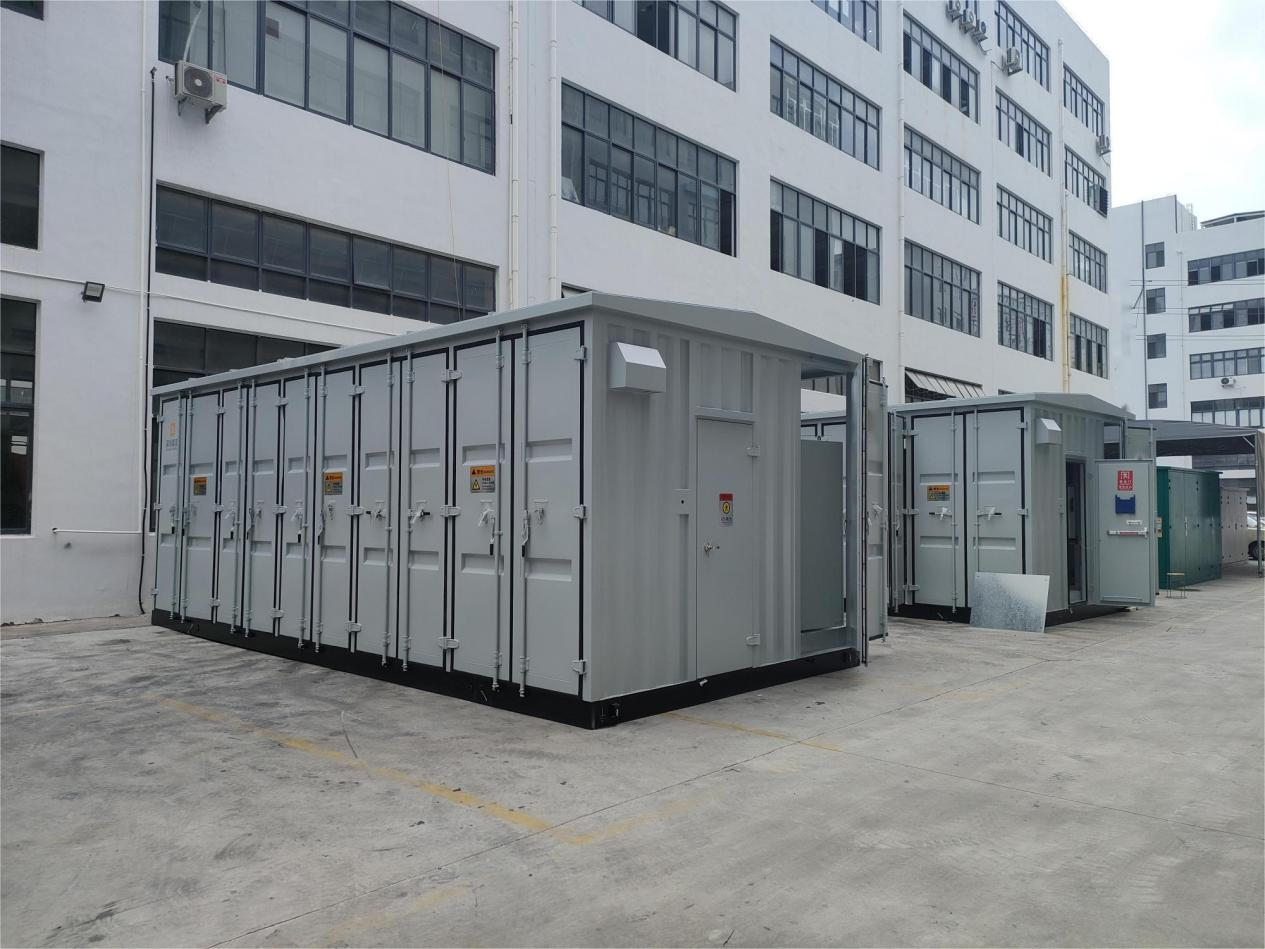
Most field failures trace back to conditions that never show up on a standard bench check. Factory testing runs components through staged load cycles, thermal swings, and signal injection tests that replicate the exact stresses crews face on-site—but in a controlled sequence where every deviation gets logged.
A loose terminal or a mismatched firmware version often passes a quick visual inspection. The test bench catches these by forcing the unit through its full operational envelope, including fault injection and recovery routines that field teams rarely have time to execute.
The result is fewer callbacks and fewer mystery faults that only appear after the equipment has been running for a week. Factory testing doesn't just verify that a unit powers on; it pressures the weak points that field crews typically discover too late.
Prefab designs that don't compromise on local grid codes
Prefab doesn’t mean generic. Each unit’s electrical architecture is tuned to the target utility region before fabrication starts. Inverters are preconfigured for the exact voltage and frequency trip points, anti-islanding behavior, reconnect delay, and ramp rates that local rules demand—whether that’s Hawaii’s Rule 14H, Germany’s VDE-AR-N 4105, or a specific Australian distribution network’s settings. These parameters are locked into the control firmware and cross-checked against the utility’s published curve during factory testing, not patched in the field.
The physical build follows the same principle. Meter socket placement, main breaker sizing, grounding and bonding details, and even the type of arc-fault protection are matched to the region before the enclosure is assembled. Where a visible lockable AC disconnect must sit within a set distance of the meter, the prefab layout already includes that disconnect and the correct labeling. Where rapid shutdown initiation is required at the module level, the wiring harness comes with the necessary connectors and a tested sequence. This means local inspectors encounter details they recognize, not a generic design waiting for improvisation.
Each prefab ships with a region-specific compliance sheet that lists the exact grid code version used for settings, the test results for voltage and frequency ride-through, and any utility pre-approval or witness test reference. Instead of spending hours sorting through manuals on site, the installation crew can hand over a clear document and move on. The result is a faster build that still meets local interconnection rules without weakening the design.
Why compact footprints are winning over utilities
Utility companies have long favored sprawling facilities, but the economics are shifting. Compact designs reduce land acquisition costs, shorten permitting timelines, and cut down on the miles of cabling and piping that quietly drain maintenance budgets. When every square foot carries a price, smaller footprints turn fixed overhead into a competitive edge.
Beyond cost, there is an operational flexibility that bulky layouts simply cannot match. A tighter physical layout puts critical components closer together, slashing inspection times and making fault isolation a matter of minutes rather than hours. Field crews spend less time walking and more time fixing, which directly improves system uptime and worker safety.
Regulators and local communities are also pushing the shift. Compact utility infrastructure faces fewer zoning objections and can be tucked into existing urban corridors without triggering lengthy public hearings. For utilities facing labor shortages and rising material costs, the ability to deploy more capacity in less space is not just a design preference, it is becoming a survival strategy.
Smart monitoring baked into every enclosure
Most enclosures treat monitoring as an accessory—something you screw in later and hope the wiring doesn't snag. Here, the sensors live inside the frame from day one. Temperature probes sit near the hottest rails, door switches are recessed into the latch, and airflow sensors ride the intake path. You don't configure them; they're already awake when the cabinet powers up.
When something drifts—a fan slows, a zone climbs past 85°F, a door stays open past the change window—the enclosure flags it quietly first, then escalates. The log isn't a wall of noise; it's a short list of anomalies with timestamps and the sensor's location. You can pull it up from a phone without logging into a portal for every glance.
Over weeks, the built-in historian maps heat patterns against load changes, so you can spot a failing PSU before it trips. No separate gateway, no retrofitted dongles hanging off the rack. The enclosure's own frame carries the signal paths, which means fewer cables and less to troubleshoot.
From order to energization in weeks, not seasons
For teams waiting on substation equipment, the old rhythm of long lead times and phased deliveries feels increasingly out of step. That lag between placing an order and flipping the switch often drags on for entire seasons, forcing project plans to stretch and budgets to absorb the wait. The shift to a weeks-based timeline changes how sites are planned, how crews are scheduled, and how quickly capacity comes online. Instead of working around a distant energization date, engineers can sequence civil work, cable pulls, and commissioning within a single construction window.
What makes that pace possible is not a single breakthrough but a tighter integration of design, factory assembly, and on-site preparation. Preconfigured modules arrive ready to connect, with much of the wiring and testing already completed under controlled conditions. That removes the usual back-and-forth of field modifications and rework. It also means the people on site spend less time interpreting drawings and more time verifying that everything fits the way it should. When the final connection happens in a matter of weeks, the project no longer carries the overhead of a months-long waiting period, and the energization date becomes a near-term milestone rather than a seasonal target.
FAQ
Instead of relying on traditional on-site assembly, the factory builds complete, pre-wired modules indoors under controlled conditions. Once delivered, crews simply connect incoming and outgoing cables, which can cut installation from weeks to a few days.
Every unit is assembled and tested on the factory floor before shipping, so wiring mistakes, insulation gaps, and component mismatches are caught early. This removes the trial-and-error phase common on construction sites and gives utilities a predictable first-time energization rate.
The factory applies uniform torque settings, anti-corrosion coatings, and sealed compartments consistently across all units. That consistency lowers partial discharge risks and moisture ingress, which translates into fewer unplanned outages over a 20-plus-year service life.
Because the footprint is compact and all medium-voltage and low-voltage gear is housed in a single enclosure, the substation can be placed on a simple concrete pad. No separate control room or large switchyard is needed, making it ideal for mining, island grids, or dense urban infill projects.
The substations ship with preconfigured sensors and a local controller that reports temperature, breaker status, and energy flows to a plain web dashboard. Operators do not need specialized SCADA training on day one, but the data is ready for advanced analytics later.
Before dispatch, each substation undergoes load testing, protection relay verification, and dielectric checks. Site commissioning then becomes a matter of confirming connections and settings rather than debugging a newly built system, often saving two to three days per unit.
Engineering works from a core modular platform but reconfigures bus ratings, protection schemes, and enclosure ingress protection to match IEC, IEEE, or local utility requirements. This avoids the 'one-size-fits-all' compromise seen in many off-the-shelf substations.
Conclusion
A leading prefabricated substation factory is reshaping how utilities and industrial clients approach power distribution, cutting wait times from the usual six-month lead to a matter of weeks. Instead of relying on lengthy on-site construction, the factory produces modular enclosures that are fully assembled, wired, and tested before they ever leave the floor. This approach means a substation can go from order to energization in a fraction of the traditional timeline, with factory testing catching wiring faults, relay misconfigurations, and grounding issues that field crews often miss during rushed outdoor installations. Because each build follows a repeatable, quality-controlled process, clients get a unit that performs exactly as specified the first time, eliminating costly rework and delayed commissioning.
The designs also respect local grid codes without forcing a choice between compliance and speed. Engineers adapt protection schemes, busbar ratings, and grounding methods to regional requirements while keeping the compact footprint that utilities increasingly prefer for urban infill and remote sites alike. Built-in smart monitoring is standard in every enclosure, giving operators real-time data on temperature, partial discharge, and load balance without retrofitting sensors later. By combining modular efficiency, factory-grade testing, code flexibility, space savings, and embedded intelligence, the factory delivers a complete power distribution solution that feels less like a prefabricated product and more like a purpose-built substation that simply arrives ready to work.
Contact Us
Contact Person: Queenie
Email: [email protected]
Tel/WhatsApp: +86 15558806611
Website: https://www.cnkeeya.com