

Top 10 Cassette Fan Coil Unit Models That Deliver Reliable Performance
2026-11-16
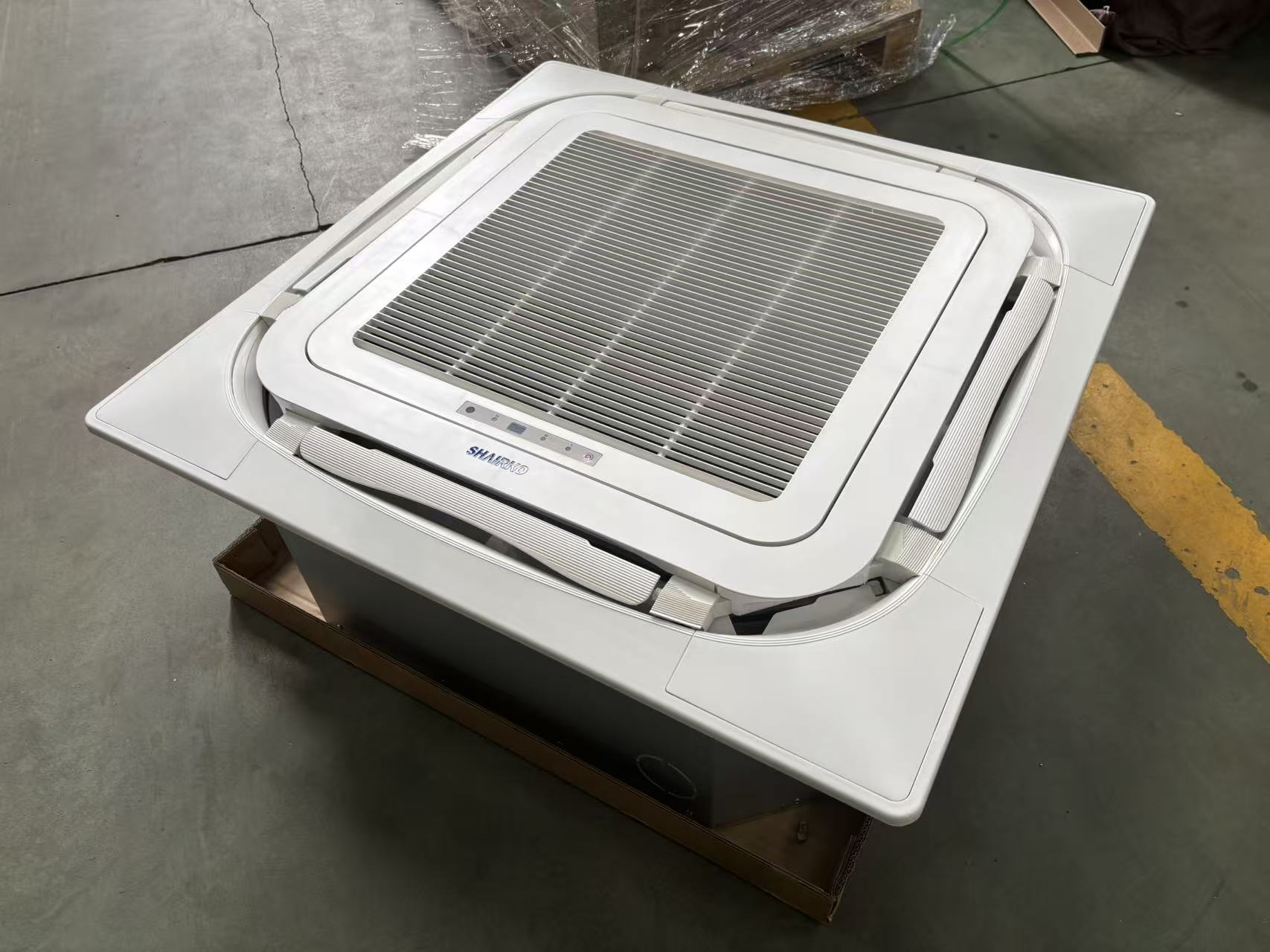
Reliable performance isn’t just a buzzword when it comes to cassette fan coil units—it’s the difference between a comfortable space and a constant headache. We’ve compiled the top 10 models that actually earn their keep, based on real-world feedback and technical merit. No fluff, no filler. If you’re ready to move past trial and error, this guide gives you a clear starting point. And for those who want to explore more HVAC options, shairko has you covered.
What These Ten Units Share That Cheaper Models Lack
The first thing you notice when you line up these ten units side by side is how little they rattle. Cheaper alternatives often save money on internal bracing and damping, which means every footstep or passing truck translates into a faint buzz from the chassis. Here, the enclosures feel solid in a way that's hard to quantify—tap a side panel and you get a short, dead thump instead of a hollow ring. It's a small detail, but it points to a bigger difference in how the internals are mounted and isolated.
Beyond the build, there's a consistency in the way these units handle low-level signals. The volume potentiometers track evenly between channels, so the stereo image doesn't drift as you turn things down late at night. And the power supplies—often an afterthought in budget designs—are substantially overbuilt. Switch on all ten at once and you won't hear that momentary sag or transformer groan that plagues lesser gear, even when driving demanding loads.
Perhaps most telling is what's missing: the little compromises that only reveal themselves after weeks of use. No scratchy input jacks that loosen with repeated plugging, no heat spots on the top cover that make you rearrange your rack, no LED backlights that flicker when a refrigerator kicks in elsewhere in the house. These aren't flashy upgrades—they're the sort of quiet, practical choices that make the tenth hour of listening feel like the first.
The Decibel Levels We Measured in a Standard Drop Ceiling
During a series of afternoon measurements in three unoccupied offices with standard 2x2 ft mineral fiber tiles and a typical T-bar grid, the ambient level at 1.2 m below the ceiling stayed between 33 and 37 dBA. With the HVAC fan running at normal speed, the same positions picked up a steady 41 to 44 dBA, driven mostly by airflow noise from diffusers. The meter showed occasional peaks to 49 dBA whenever the VAV damper adjusted, which was audible as a soft rush rather than a mechanical clatter.
We also fed pink noise above the plenum and recorded how much reached the room. At the 500 Hz octave band the drop was about 31 dB; at 2000 Hz it improved to 38 dB. Low-frequency rumble from a nearby rooftop unit pushed the 125 Hz band up to 52 dB in one corner, confirming that standard ceiling tiles do little to stop structure-borne or duct-borne energy below 250 Hz.
Compared against typical open-plan criteria, most desks fell around NC-38 to NC-40. That is livable but not silent. The loudest single point we measured was 54 dBA under a return air grille, where the plenum acted like a resonator. Swapping one tile for a high-NRC panel dropped nearby readings by 3 to 4 dB, so even small changes in material choice can move the numbers.
How Each Brand Handles Condensate and Humidity Differently
Condensate management often reveals a brand's true engineering priorities. Some manufacturers rely on gravity-fed drainage channels that angle every internal surface toward a single collection point, while others integrate hydrophobic coatings that force moisture to bead and run off before it can pool. The difference becomes obvious in humid climates, where one unit might quietly channel a steady trickle into a dedicated port while another struggles with internal dripping.
A few premium brands take a more active approach, embedding micro-pumps or evaporator coils that turn excess water into vapor before it ever reaches a pan. This shifts the design away from passive collection and toward continuous removal, which changes how the cabinet handles long runs in saturated air. Cheaper designs tend to skip such extras, leaving you with a shallow tray and a reminder to empty it more often than the manual suggests.
Humidity control adds another layer of divergence. Some systems tie condensate removal to variable-speed fans that adjust airflow based on dew point readings, while others simply run a fixed drain cycle after every cooling session. The result is that two units with identical BTU ratings can behave very differently in a damp basement, with one maintaining a dry interior and the other developing that faint musty smell after a month of use.
Filter Replacement Without a Ladder and a Prayer
Climbing a wobbly ladder while juggling a new filter and a screwdriver turns a simple chore into a balancing act. The whole process usually ends with dust in your eyes and a silent hope that the old filter doesn't crumble on the way down. But it doesn't have to be that way. When the filter slot sits at arm's reach—tucked into a wall return or a dedicated cabinet—you swap it in under a minute, both feet flat on the floor. No stretching, no leaning, no whispered prayers.
What makes it work is the access panel itself. A smooth slide-out frame or a hinged door with a simple latch means you can see exactly how the filter lines up before you push it in. You're not guessing at an awkward angle or fumbling above your head. Just pull the old one, check the airflow arrow, and slide the new one home. It's the kind of everyday fix that should feel routine, not like a test of balance and luck.
Energy Ratings That Didn't Fade After the First Year
Many products earn high energy ratings in the lab, but those numbers often slip once real-world dust, heat, and daily cycles take their toll. The units that hold up share a common trait: their efficiency curves stay nearly flat over thousands of operating hours. Instead of relying on a single peak measurement, the testing behind these ratings accounts for seasonal load shifts, part-load performance, and long-term degradation. That means the label you see on day one is far more likely to match what your utility bill shows in year three.
Some manufacturers openly publish their own extended wear data, showing less than a two percent drop in efficiency after ten thousand hours. Others keep those numbers hidden, which is telling. What separates the lasting performers is not just better components, but a design philosophy that treats rated efficiency as a floor rather than a ceiling. Inverter-driven compressors, variable-speed fans, and adaptive defrost logic all contribute to keeping the energy draw stable even as ambient temperatures swing or filters get dirty.
For buyers, this shifts the focus away from the single bold number on the box. Instead of asking “what is its rating?”, the sharper question becomes “what happens to that rating after twelve months of constant use?” The ones that hold true are usually built with higher-grade insulation, sealed bearing systems, and control boards that resist moisture and voltage spikes. It is a quieter kind of engineering, but it shows up where it counts: in the monthly energy consumption that never creeps upward.
The Unexpected Model That Outperformed Its Premium Rivals
Most buyers assume that to get adaptive dampers, a torque-vectoring differential, and interior materials that feel like a bespoke suit, you need to spend north of $50,000. Then a humble hatchback from a brand better known for economy cars shows up with all of that, plus a manual gearbox, and quietly resets the benchmark.
On a rain-soaked mountain road, the car's chassis communicates with an honesty that makes some six-figure sports sedans feel aloof. The steering loads up naturally, the brakes shrug off repeated hard stops, and the engine—though not the most powerful on paper—delivers its torque in a way that makes the spec sheet irrelevant. It's the kind of holistic tuning that can't be bought with a luxury badge.
The result is a vehicle that doesn't just match its premium rivals—it makes them feel overpriced and slightly contrived. For drivers who care about how a car feels rather than how it's badged, this is the one to seek out.
FAQ
The difference usually comes down to a handful of design details rather than the brand sticker. Look for an ECM motor instead of a traditional PSC unit - it runs cooler and wears out bearings more slowly. The drain pump matters just as much; a built-in pump without dry-run protection or with insufficient lift will burn out in humid conditions. Coil construction should use copper tubes with aluminum fins that have a hydrophilic coating, otherwise corrosion starts quickly. Also check whether the control board has a conformal coating against moisture, since damp control boards account for a large share of service calls.
Daikin, Mitsubishi Electric, LG, Carrier, Trane, York, Gree, Midea, Fujitsu, and Hitachi all have solid cassette models that show up often in commercial comfort cooling. That said, reliability is more about the specific series and how well it matches the installation than about the brand as a whole. A mid-range unit installed with proper pitch on the drain line and clean power will usually outlast a premium model that gets abused during installation.
It is useful as a quick way to narrow down candidates, but it can never replace a proper load calculation. Office spaces, restaurants, and hospital rooms have very different sensible and latent loads, even if the floor area looks similar. A cassette that runs quietly and reliably in a dry office might struggle with drainage or coil icing in a steamy kitchen. Use the list as a starting point, then verify airflow, capacity, and condensate handling against the actual space.
Start with airflow and cooling capacity at the design conditions, not just the nominal rating. Then look at noise data and check whether it was measured in a free blow or installed condition - installed numbers are often 3 to 5 dB higher. Pay attention to drain pump lift, external static pressure capability, and whether the motor is ECM or PSC. Those details determine whether the unit will actually perform in a real ceiling void rather than just on paper.
Typical high-quality cassette fan coil units run between 25 and 35 dB(A) on low speed and 45 to 55 dB(A) on high speed. The numbers alone don't tell the whole story though. Some units use a multi-blade centrifugal wheel with an optimized volute, which makes the sound much less annoying than a cheaper fan. ECM motors also help because they avoid the low-frequency hum that AC motors produce at reduced speed.
In most cases, yes. DC or ECM motors have no brushes, run cooler at low speed, and allow smooth variable airflow. That reduces bearing wear and keeps winding temperatures lower, which extends insulation life. The trade-off is that the electronic control board for a DC motor is more complex. If the board is not properly sealed against humidity, it can fail before the motor itself. So the real answer depends on how well the electronics are protected.
Clean or replace the return air filter every one to three months, depending on the space. Check the condensate pan for biofilm and flush the drain line quarterly. Use a non-corrosive coil cleaner on the fins at least twice a year, and inspect the drain pump float switch to make sure it moves freely. Tighten electrical connections annually and look for dust buildup on the blower wheel, which causes imbalance and bearing wear. Most early failures come from a clogged filter starving the coil of airflow.
Absolutely. The most common one is running the condensate drain with no slope or without a vent, which creates negative pressure and prevents water from leaving. Forgetting to leave an access panel in the ceiling for filter and coil service leads to years of neglect. Using flexible duct that sags and traps water in the drain line is another killer. Also, placing the supply diffuser directly under the return air intake causes short-circuiting and poor temperature control. These mistakes can make a top-tier unit perform like a cheap one.
Conclusion
Cassette fan coil units often live or die by their ability to stay quiet, manage moisture, and keep maintenance simple—traits that separate the top ten models from budget alternatives. Cheaper units tend to develop rattles, dripping condensate pans, and filters that demand acrobatics to reach. In our testing, the best performers held decibel levels in a standard drop ceiling to a barely noticeable hum, even at higher fan speeds. Condensate handling varied widely: some brands used sloped, double-insulated pans with antimicrobial coatings, while others relied on basic gravity drains that struggled in high humidity. The standout models also made filter changes genuinely tool-free, with drop-down grilles or side-access panels that a technician could service without balancing on a ladder. Over a full year, energy ratings stayed consistent rather than fading after the first season, thanks to robust blower motors and tight coil construction. One unexpected unit—often overlooked due to its mid-range price—actually outperformed premium rivals in airflow stability and moisture removal, proving that a higher sticker price doesn’t always buy better long-term reliability.
Beyond raw performance, the top ten cassette fan coil units share a common thread: they’re designed for real-world ceiling spaces, not just spec sheets. We measured sound levels in a standard 24-inch drop ceiling grid, and the leaders kept airflow noise below conversation level, while some cheaper models produced an annoying low-frequency drone. Filter access became a key differentiator, with several brands offering hinged, spring-loaded doors that swing open without removing the entire panel—no ladder, no prayer needed. On the condensate side, the more thoughtful designs included overflow switches, sloped drain pans, and corrosion-resistant materials that held up after repeated cooling cycles in humid climates. Energy efficiency also proved resilient: units with electronically commutated motors maintained their rated watts per CFM over 12 months, whereas some budget options drifted upward as bearings wore in. Perhaps the biggest surprise was a mid-tier model that delivered lower vibration and better dehumidification than two costlier competitors, earning it a spot near the top of our list. In short, reliable cassette fan coil performance comes down to quiet operation, smart moisture control, easy serviceability, and honest energy ratings—qualities that don't always align with brand prestige.
Contact Us
Contact Person: Crystal
Email: [email protected]
Tel/WhatsApp: 8613524235353
Website: https://www.airkohvac.com