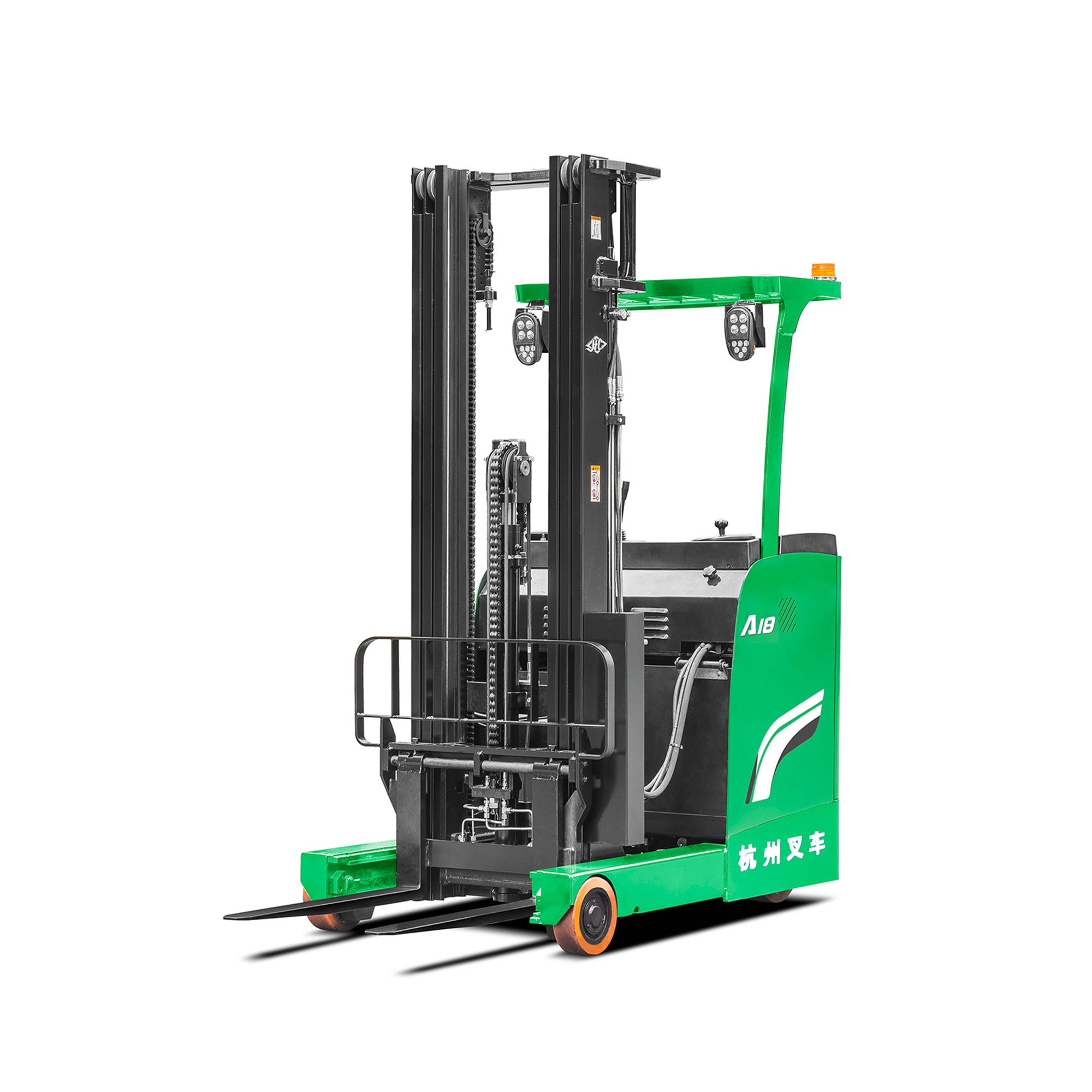
Reach Truck Original Manufacturer: Key Advantages of Partnering with an Authentic OEM
2026-09-07
When warehouse throughput stalls because your reach trucks spend more time in the service bay than in the aisles, the problem often traces back to a single decision: who actually builds the machine. Partnering with an authentic original manufacturer like HANGCHA removes the usual risks—diluted warranty support, gray-market parts roulette, and undocumented modifications from middlemen. Below, we unpack the key advantages of choosing a genuine reach truck original manufacturer before your next procurement cycle starts.
Direct Line to the Engineers Who Designed Your Reach Truck
When a reach truck starts acting up on the floor, the last thing you need is a phone tree that leads nowhere. That's why we've cut out the middle layers. The number you call connects you with people who actually put the mast, chassis, and control software together—not just someone reading from a script.
These engineers know the torque curves on the drive motor and the quirks of the regenerative braking system because they tuned them. So instead of guessing at a fault code, you get a straight answer about what to check, what to adjust, and what can wait until the next service window. It's not a support line—it's a direct channel to the minds that built your machine.
Custom Modifications Distributors Typically Decline
Most distributors run on thin margins and standardized processes. A request to swap a component, repackage, or add a feature means pulling a unit off the normal pick line, assigning a technician, and tracking a one-off change in a system built for bulk shipments. That labor rarely gets billed back to the customer, so the distributor quietly passes on the request.
Liability is the bigger sticking point. Once a distributor touches the internals, the factory warranty often dies. If the modified unit fails, the distributor becomes the default service point, handling returns, sourcing parts that were never meant for that configuration, and absorbing freight costs on a product they altered without manufacturer support. It's rarely worth the risk for a single sale.
There are exceptions, mainly with smaller regional players who keep a modification bench for long-standing accounts. But unless you're buying in volume or paying a documented modification fee, expect the distributor to suggest an aftermarket shop or tell you to handle the change yourself after the base unit arrives.
Why Factory-Sourced Parts Arrive Faster Than Expected
When you order a part directly from the factory, the perceived wait often feels shorter than dealing with a middleman. This isn't just a trick of perception—factory sourcing eliminates multiple handoffs. The part isn't sitting on a distributor's shelf waiting for a pick ticket; it's pulled from the production line or a nearby bin the moment your order clears. That direct line from assembly floor to shipping dock cuts out days of administrative lag that most people never see.
Another reason is inventory truth. A factory knows exactly what it has in stock, what's coming off the line in the next few hours, and what's already boxed for outgoing freight. Distributors often rely on batch updates or assume a part is available when the system hasn't synced yet. When you call the source, you're getting a real-time answer—and often, the part is already moving before your payment confirmation even lands in your inbox.
Finally, factories tend to use dedicated shipping lanes for their own orders. They aren't waiting to consolidate with a dozen other customers' freight or squeezing your part into a generic carrier route. If they run daily pickups for their own distribution network, your part can hitch a ride on a truck that was leaving anyway. That's the hidden speed boost: you're not paying for expedited service, but you're borrowing the factory's existing momentum.
Lower Total Cost Without the Middleman Markup
When you buy through a conventional supply chain, every intermediary adds a slice to the final price. Distributors, wholesalers, and resellers each take their cut before a product ever reaches you. By working directly with manufacturers and cutting out those extra steps, the price you pay reflects the actual cost of materials, labor, and quality control—not a chain of markups designed to benefit middlemen.
That direct relationship also means fewer surprises. There’s no hidden fee for “handling,” no inflated retail markup, and no vague service charge that vanishes into someone else’s margin. Instead, you get one honest number that covers what matters: the product itself, built to spec, shipped when promised.
The result is a lower total cost that doesn’t come from cutting corners. It comes from simplifying the path between production and purchase. You keep the quality you expect, but lose the inflated pricing that used to be part of the deal.
Fleet-Specific Software Tuning Unavailable from Resellers
When you buy a vehicle through a reseller, you inherit whatever software configuration the previous owner left behind. For fleet operators, this can be a serious limitation. Resellers typically reset systems to factory defaults or apply generic updates, but they lack the access and authorization to create custom parameter sets that match your specific duty cycles, load profiles, or telematics integrations. The result is a one-size-fits-all calibration that may work fine for an individual commuter yet falls short for a delivery van idling in city traffic or a utility truck running PTO-driven equipment.
Another overlooked issue is that many resellers are bound by franchise agreements or technical restrictions that prevent them from flashing fleet-specific adjustments—things like altered shift points, idle speed adjustments, or emergency vehicle idle-up routines. Without direct access to the manufacturer’s engineering tools, a reseller can only offer off-the-shelf updates. That means if your operation requires a custom torque curve for towing or a reduced top speed for safety compliance, you won’t find a ready solution on a used-car lot. Fleet managers often discover this gap only after deployment, when productivity metrics and fuel logs reveal the mismatch.
There’s also a practical side to this limitation: resellers prioritize quick turnaround and broad market appeal. Spending hours tailoring software for a single buyer’s five identical trucks doesn’t fit that business model. Instead, they’ll sell the vehicle as-is and direct you to a dealer or authorized upfitter for recalibration. By then, you’ve lost time and may face additional fees. For fleet-specific tuning, the only reliable path is through a manufacturer-certified channel that understands your operational data and can apply validated changes without voiding warranties or risking compliance.
Accountability That Follows the Product Lifecycle
Accountability isn’t a static label applied at the factory gate. It moves with a product long after the sale, shifting from raw material suppliers to manufacturers, logistics partners, retailers, and eventually to the people using, repairing, or discarding it. This lifecycle view means every hand that touches an item inherits a piece of its story—and a share of responsibility for what happens next.
Mapping those handoffs requires more than a spreadsheet. It demands that data about origin, composition, and condition travel with the product itself. A jacket traced from cotton field to sewing floor to warehouse shelf can also reveal who handled the dyeing, which chemicals were used, and whether the final seam meets safety standards. When accountability is embedded in the product record rather than stored in a separate report, it becomes harder to hide gaps or shift blame.
End-of-life is where many accountability systems collapse. Recycling, resale, donation, or landfill—each path carries different consequences for communities and ecosystems. A genuinely lifecycle-wide approach keeps the thread intact even here: who collected the item, how it was processed, what was recovered, and what was released. That continuity turns vague sustainability claims into checkable actions.
FAQ
It means the truck is built, tested, and shipped by the same company that designed it. There is no middleman altering specs or selling you a machine that has been sitting in a warehouse for months. You get direct access to the engineering team, the original parts inventory, and warranty terms that actually match the machine's build sheet.
You're pulling from the same stock that was used on the assembly line, so there's no guesswork about compatibility. Many OEMs can cross-reference your truck's serial number and ship the exact component the next day. And if a part has been superseded, they'll give you the updated version instead of whatever happens to be on a dealer's shelf.
Yes, and that's one of the biggest differences. A reseller usually can only add aftermarket accessories. An OEM can change mast height, fork length, battery compartment size, or even reprogram the controller before the truck leaves the factory. You tell them your aisle width and lift height, and they build around those numbers.
Many OEMs offer technical phone support staffed by the same engineers who designed the drive system or hydraulics. Training programs are usually more thorough because they're not condensed into a one-day dealer seminar. Some manufacturers also send a field technician for the first major service interval to catch issues early.
The upfront quote might be higher, but the total cost of ownership often isn't. You avoid dealer markup on parts, you get faster diagnostics when something breaks, and the truck holds its resale value better because the service history can be verified directly with the factory. Downtime is also shorter when you're not waiting for a reseller to source a part from three warehouses away.
Ask for the manufacturing facility address and check if they build reach trucks on that site. A real OEM will have a plant tour option, a VIN or serial number system tied to factory records, and they won't hesitate to provide third-party safety certificates for their specific models. If they can't show you a build sheet or a factory warranty card, treat them as a reseller.
Often yes, because they keep detailed records of every truck they've built. That means you can get a fleet report showing battery cycles, hour meters, and maintenance alerts across all your reach trucks in one place. Some OEMs also offer trade-in programs where they refurbish your old units and resell them through certified channels, which helps you recoup value.
Not necessarily. Resellers sometimes have stock, but they may not have the exact configuration you need. An OEM can build to order in a few weeks, and you'll know the production slot upfront. With global supply chains, the key advantage is transparency: if a component is delayed, the OEM tells you before the truck is half-assembled, not after you've already signed for a floor model.
Conclusion
Working with the original manufacturer of your reach truck changes how you handle everything from troubleshooting to upgrades. Instead of relaying questions through a dealer who may never have seen your specific configuration, you can speak directly with the engineers who designed the lift mechanism, mast, and control software. That access makes a real difference when you need a non-standard mast height, a different fork length, or a battery compartment tweak that a distributor will simply refuse to quote. Many fleet managers discover that custom modifications—things like cold-storage conditioning, extra camera mounts, or altered load backrests—are only possible when the OEM builds them into the production line. And because the factory already has your unit's build sheet, any change is documented and supported from day one.
The financial and operational side is equally compelling. Factory-sourced parts don't sit in a regional warehouse waiting for a twice-weekly delivery; they get picked, packed, and shipped directly from the production or central parts facility, often arriving faster than a local dealer can reorder from the same source. Removing the middleman also removes a layer of markup, so a genuine OEM seal kit or drive unit can cost less than the identical part bought through a reseller. Beyond hardware, authentic manufacturers offer fleet-specific software tuning—adjusting acceleration curves, lift speeds, or regenerative braking limits to match your narrow aisles or heavy pallet profiles—something a reseller's generic parameter file will never include. Finally, accountability doesn't end at delivery. The OEM tracks your truck through its entire lifecycle, issuing service bulletins, recall support, and end-of-life refurbishment guidance that independent channels rarely match.
Contact Us
Contact Person: Liuxue
Email: [email protected]
Tel/WhatsApp: +86-19084200370
Website: https://www.hf-ec.com/