

Quick Coupler Factory Guide to Choosing Reliable Hydraulic Connections
2026-11-16
Every hydraulic system lives or dies by the small connections most people never see. In this guide, we look past the polished spec sheets to what actually matters when choosing quick couplers from a factory you can trust. If you have ever dealt with a coupler that leaks after three months or refuses to disconnect under pressure, you know the real cost of cutting corners. We will break down how materials, tolerances, and testing separate dependable connections from cheap imitations—and why HONGSEN builds its couplers for the jobs where failure is not an option.
What Usually Breaks First in a Hydraulic Coupler
The flat-face seals tend to be the first casualty in most hydraulic couplers. They sit right at the mating point, so every connection and disconnection scrapes them against dirt, metal burrs, or misaligned halves. Once a seal develops a hairline nick or loses its elasticity from heat cycling, you’ll notice a slow weep of fluid that gets worse under pressure. Replacing these O-rings and backup rings early is far cheaper than letting the leak wash away lubrication or draw air into the system.
Close behind the seals are the locking balls or poppets, especially on couplers that get connected while the line still holds residual pressure. Those small hardened balls take the brunt of repeated impact and can flatten or crack, leading to partial engagement or sudden disconnects under load. On the female side, the internal spring that returns the sleeve to the locked position often weakens over time, making the coupler feel sloppy and increasing the risk of a half-seated connection.
Threads and body surfaces round out the usual wear points, though they fail more from abuse than normal use. Cross-threading during hasty hookups, overtightening with a wrench, or hanging a heavy hose assembly directly off the coupler will crack the body or strip the threads long before the internal seals wear out. If you catch any of these issues during routine inspections, addressing them immediately prevents a small drip from becoming a blown line or a disconnected implement in the middle of a job.
Pressure Ratings Are Only Half the Story
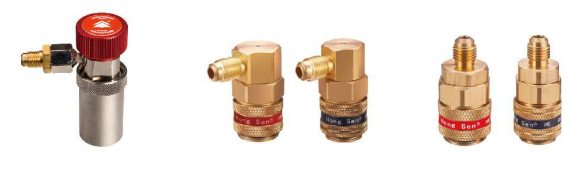
A pressure rating looks reassuring on a datasheet, but it rarely describes what happens in the field. That number is usually tied to a narrow set of assumptions: a steady load, a controlled temperature, a clean fluid, and a properly supported assembly. Real systems have water hammer, vibration, thermal cycling, and people who over-tighten a fitting well past the point of help. A part that holds at 300 psi on a bench can fail at 200 psi when the temperature swings enough to soften a seal or relax a clamp.
Material compatibility is another place where pressure ratings go quiet. Two fittings might share the same printed rating, yet behave very differently when exposed to a slightly acidic washdown, a chlorinated cleaner, or long stretches of UV. The pressure-bearing wall can still be intact while the sealing surface swells, hardens, or leaches plasticizer. Once that happens, the rated pressure becomes a memory rather than a safety boundary.
Installation quality and fatigue life matter just as much. A rigid line that is misaligned by half a degree can load a connection in ways the rating never anticipated. Repeated pressure cycles, even below the listed limit, can propagate small cracks around a barb or a thread root. If the rating is treated as a starting point instead of the whole answer, the selection process starts to include the things that actually determine whether the part stays dry at 2 a.m. on a Saturday.
Seal Materials That Clash With Real Hydraulic Fluids
Many maintenance teams assume any elastomer from the parts bin will hold up in a hydraulic system, but real fluids are rarely as forgiving as the spec sheets suggest. Nitrile rubber, for example, handles mineral oil fine at moderate temperatures, yet the same seals turn brittle and shrink within weeks once a machine is switched to a biodegradable synthetic ester — even if the fluid’s data sheet only hints at "slight seal swell."
The mismatch is often worse with phosphate ester fluids, the kind used around furnaces and die-casting cells. Standard fluorocarbon compounds with a high fluorine content may seem like a safe upgrade, but certain FKM grades lose tensile strength rapidly in these fluids, cracking at dynamic lip edges. It's not the base polymer that fails; it's the cure system and filler package, so two seals both labeled "Viton" can behave completely differently in the same reservoir.
Polyurethane presents another trap. In dry mineral oil it offers outstanding abrasion resistance, but introduce even a few percent of water — common in mobile equipment and washdown areas — and hydrolysis starts eating the chain. The seal softens, swells, then extrudes into the clearance gap. No universal seal material exists, and guessing based on color or durometer is how systems get expensive leaks.
How to Spot Production Shortcuts Before They Cost You
Most shortcuts show up first as small inconsistencies, not outright failures. Keep a reference sample from the approved pilot run and compare it against incoming batches by weight, surface texture, and fastener torque. A supplier that quietly switches to a lighter alloy, thinner plating, or a faster curing process will usually drift on one of these measurements long before a functional defect appears. If the numbers start spreading wider around the same average, treat it as a signal to pull the batch apart, not just a reason to adjust the spec.
Cut one unit open every few months and look at the places nobody expects you to check: weld penetration, wall thickness in corners, and whether the internal finish matches the outside. Shops that cut corners tend to concentrate attention where customers look. Also watch for quieter operational clues, such as mixed batch codes on cartons, hand-corrected inspection logs, or tooling marks that no longer match the original cavity numbers. Those details tend to indicate a line moved, a mold changed, or a process pushed faster without approval.
Ask for the production records that should link material lots, shift times, and inspection results. When those records do not line up, or the supplier becomes vague about which cavity a part came from, the cost usually lands later in returns, field failures, or a recall. The cheap fix is rarely worth the explanation you will have to give a customer.
Bench Testing Habits That Predict Field Lifespan
Most bench tests are built around a simple question: does the part survive the spec? The habits that actually forecast field life tend to come from watching how something degrades before it breaks. Engineers who log the first sign of wear, the change in noise, the drift in leakage, or the slight shift in torque are gathering the data that matters later. A pass/fail result hides the early warning that a component will limp through year one and quit in year two.
Another habit is to stop treating the bench fixture as a perfect world. Real installations have misalignment, thermal swings, contaminated fluids, and technicians who overtighten bolts. The bench setups that predict field lifespan usually introduce at least one of those realistic insults on purpose, not to provoke an immediate failure, but to see how the margin shrinks. That margin, measured repeatedly, gives a far better read on remaining life than a single durability number.
Perhaps the most overlooked habit is comparing bench observations with warranty returns and torn-down field parts long before a design freeze. When a lab failure looks nothing like a field failure, the test is lying, regardless of how well it controls temperature or load. Teams that revise fixtures to reproduce the actual field fracture surface, the actual corrosion path, or the actual wear pattern end up with bench habits that carry weight.
Why Interchange Standards Matter More Than Brand Loyalty
Loyalty to a single brand often feels safe until a project demands a file type, connector, or workflow that your usual tools refuse to open cleanly. Interchange standards step in where brand promises stop. A well-documented open format lets a team move geometry from one CAD platform to another without silently dropping tolerances or rebuilding assemblies by hand. That reliability is not about choosing the cheapest option or chasing a trend; it is about knowing the data will still be readable next year, even if the software vendor changes its licensing model or discontinues a product line.
The real cost of ignoring interchange standards shows up in small, repeated losses. An engineer spends a morning re-exporting a model because the first attempt stripped thread definitions. A supplier requires a native file you cannot produce, so you pay for a conversion service. Multiply those moments across a supply chain and the brand loyalty you were protecting starts to look expensive. Standards are boring infrastructure, but they quietly prevent the kind of errors that make a project late and a team suspicious of their own tools.
None of this means brand reputation is meaningless. A vendor with strong support and a history of respecting open formats deserves credit. But when a purchasing decision places brand above the ability to exchange clean data, the compromise usually lands on the people doing the actual work. Interchange standards are a form of respect for that work: they let geometry, metadata, and design intent travel without an argument at the border.
FAQ
It usually comes down to machining tolerances, seal material, and how the factory handles pressure testing. A reliable coupler holds rated pressure without weeping, connects smoothly under residual pressure, and uses hardened steel or stainless components where needed.
Look beyond the port threads. Confirm the flow rate, working pressure, temperature range, and fluid type. Then check the coupler's pressure drop curve and seal compatibility. A good factory will publish those values rather than only listing the thread.
Pressure spikes, vibration, and side loading are common culprits. If the coupler body is not fatigue-tested or the locking balls are too soft, the rating on paper will not survive real machine conditions.
NBR works for common mineral oils, FKM handles higher temperatures and some synthetic fluids, EPDM suits phosphate esters, and PTFE can handle aggressive media. The factory should ask about your fluid, not just hand you a default seal.
Flat-face designs are easier to clean and leak less on disconnect, so they fit construction and agricultural equipment well. Poppet couplers can be more compact and lower cost, but they tend to trap fluid and allow more spillage.
At minimum, every production lot should undergo pressure testing above rated working pressure, proof testing, and a leak check. For critical applications, ask about impulse testing and burst testing data, not just a final visual inspection.
Match the ISO standard or manufacturer series, confirm the nominal diameter, and compare the mating profile. Even if threads fit, different internal profiles may not seal or lock correctly. Request dimensional drawings or a sample mate test.
Not automatically, but it often reflects traceable materials, heat treatment, clean assembly, and real test records. If a supplier cannot tell you the steel grade or test procedure, a lower price may hide short-term savings and long-term downtime.
Conclusion
Most field failure reports start with the same worn coupling face or a seal that turned brittle long before the housing showed fatigue. That alone should change how a buyer reads a quick coupler catalogue. Pressure ratings look decisive on paper, but they rarely describe what happens when a circuit spikes, vibrates, or runs on a blended fluid the seal was never designed to handle. A unit that holds rated pressure on a static bench can still leak after a few hundred connect-disconnect cycles because the locking balls have galled or the poppet spring lost rate. In a factory audit, the shortcuts worth finding are often invisible in the finished part: undersized heat treatment, skipped deburring, or a cheaper elastomer that swells in common ester-based fluids. Those choices surface later as cracked O-rings, sticky valves, or connectors that refuse to seat under residual pressure.
That is why bench testing should mimic the messy side of real circuits, not just clean oil at room temperature. Cycling a connector under side load, testing at cold and hot extremes, and leaving samples pressurized overnight expose failures that a simple proof test misses. Interchange matters just as much. A well-made coupling that matches a recognized face profile can replace a worn unit without forcing a fleet to stock another brand-specific tip. Brand loyalty feels safe until a machine is down in a remote location and the only available spare is built to the same interchange standard by a different manufacturer. Reliable hydraulic connections come from factories that prove material compatibility, cycle durability, and dimensional conformance together, not from chasing the highest number on a spec sheet.
Contact Us
Contact Person: KOPASS HO
Email: [email protected]
Tel/WhatsApp: 8613606566112
Website: https://www.hongsenref.com/