

Programmable Power Supply Manufacturers: Driving Innovation in Precision Power Control
2026-05-14
In the world of precision electronics, power is everything—and not just any power, but intelligent, adaptive, and ultrastable output tailored to the most demanding applications. As programmable power supply manufacturers push the boundaries of control, accuracy, and efficiency, one name consistently emerges as a driving force: TPS. From high‑current industrial systems to laboratory-grade precision, the next generation of sources isn't just about setting voltage and current; it's about redefining what you can do with them. In this blog, we explore the innovations shaping the future—and why the manufacturers behind them matter more than ever.
The Evolution of Precision: How Programmable Power Supplies Redefine Control
Precision in power delivery has come a long way from the days of clunky knobs and analog meters. Traditional power supplies demanded constant manual tweaking, leaving plenty of room for drift and human error. The introduction of programmable interfaces was not just an upgrade; it was a complete rethink of what a bench power supply could be. Suddenly, engineers could script voltage and current profiles, synchronize multiple outputs, and log every fluctuation with digital certainty. This shift turned power from a static resource into a dynamic, controllable variable, opening doors to automated test sequences that weren’t possible before.
What truly sets programmable units apart is the granular control they offer over every parameter. Instead of approximating a value with a dial, you type in exactly what you need — down to millivolts and microamps — and trust that the output will hold there, ripple-free, throughout the test. This fidelity matters when validating sensitive electronics or simulating battery discharge curves. With features like list mode, arbitrary waveform generation, and fast transient response, these supplies behave less like simple sources and more like precision instruments that can mimic real-world electrical conditions on the fly.
Modern programmable power supplies also champion integration. Remote programming via USB, Ethernet, or GPIB isn’t just a checkbox feature; it’s how production floors and R&D labs tie their gear into larger ecosystems. Through SCPI commands or intuitive software, one supply can be dynamically adjusted while another reacts, creating coordinated test beds without human intervention. This level of orchestration reduces setup time, catches faults early, and ensures repeatability across batches — redefining control not as a manual chore but as an automated, reliable process that scales with ambition.
From Labs to Production Lines: The Expanding Role of Smart Power Sources
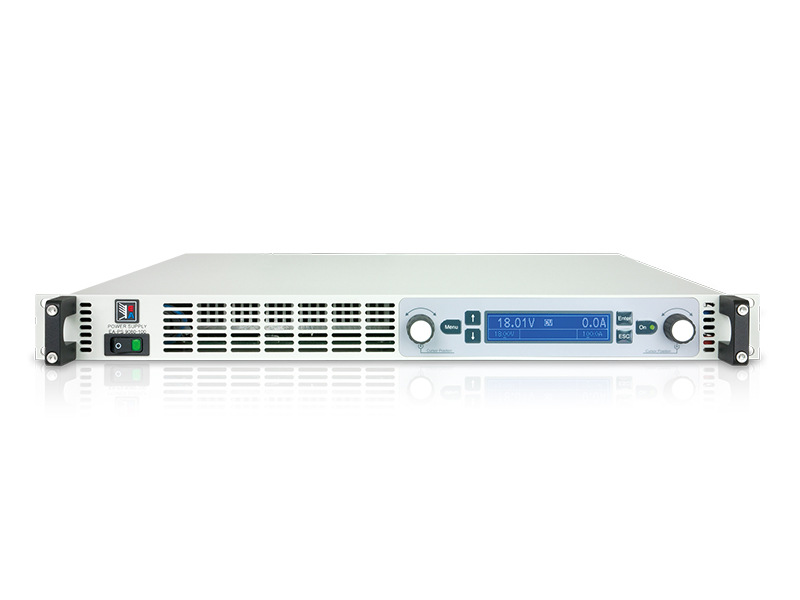
The leap from experimental prototypes to full-scale manufacturing has been anything but linear for smart power sources. Early lab breakthroughs promised adaptive energy management, but real-world production demanded a ruggedness that only iterative field testing could deliver. Engineers soon realized that a power source capable of self-optimization in a sterile lab would need to withstand voltage spikes, thermal swings, and unpredictable load demands on a bustling factory floor. That tension reshaped design philosophies, pushing developers to embed real-time diagnostics and fault-tolerant architectures directly into the core hardware, not as an afterthought.
Now, smart power units are weaving themselves into the fabric of automated assembly lines, doing far more than simply keeping the lights on. They communicate with robotic arms to throttle energy during idle cycles, sync with HVAC systems to shed non-critical loads, and even predict maintenance windows by analyzing their own consumption patterns. This isn't just about efficiency—it's about creating a symbiotic relationship where the power supply becomes an active participant in production logic. The result is a quieter, leaner operation where energy decisions happen in milliseconds, guided by onboard intelligence rather than manual oversight.
What truly sets today's smart power sources apart is their ability to learn from the edge. On a packaging line, for instance, a single unit might oversee conveyor belts, sealers, and labelers, gradually mapping out the ebb and flow of energy needs without central command. As these systems spread from automotive plants to pharmaceutical cleanrooms, their role is expanding into territory once reserved for dedicated controllers. The line between power delivery and process orchestration is blurring, marking a shift where the power source isn't just a utility—it's a strategic asset that shapes how entire production lines evolve.
Customization at the Core: Tailoring Output for Unique Industry Demands
Every industry speaks its own language, with subtle nuances that generic solutions often miss. True customization means moving beyond surface-level tweaks—it’s about embedding domain-specific understanding directly into the output. For healthcare, this could involve adhering to strict privacy frameworks and clinical terminology; for finance, it’s the ability to parse regulatory filings and market jargon with precision. The goal is to make the technology feel like a native insider, not a visitor with a phrasebook.
This level of tailoring requires more than just keyword libraries. It demands a deep integration of contextual logic—the kind that distinguishes a legal memo from a marketing brief at a glance. By training models on curated datasets that mirror real-world workflows, outputs become not just accurate but actionable. A retail forecast, for instance, should weave in seasonal demand patterns and inventory constraints, while an engineering report might prioritize tolerance specs and compliance standards without being asked.
Ultimately, putting customization at the core transforms a one-size-fits-all tool into a strategic asset. It’s the difference between handing someone a map and giving them a guide who knows every shortcut and dead end. When outputs align intuitively with professional realities, they slip into existing processes seamlessly, saving time and reducing the friction of manual corrections. That’s where the true value lies—not in generating more, but in generating what’s precisely needed, in the language that makes sense for the task at hand.
Engineering Reliability: The Rigorous Standards Behind Consistent Performance
Behind every dependable product lies an uncompromising approach to engineering—one that treats reliability not as an aspiration, but as a baseline requirement. It starts with a design philosophy where every component, from the smallest fastener to the most complex subsystem, is selected and validated against stress scenarios that far exceed normal operating conditions. Prototypes are subjected to accelerated life testing, thermal cycling, and vibration profiles that mimic years of use in a matter of weeks. Only when a design survives these trials without degradation does it move forward.
Manufacturing consistency is then locked in through statistical process control and automated inspection systems that catch deviations before they become defects. Torque values, weld penetration, seal integrity—every critical parameter is monitored in real time, with data fed back into production loops to correct drift immediately. Suppliers aren’t just audited; they’re integrated into the same quality ecosystem, sharing failure mode analyses and continuous improvement targets. The result is a product that behaves identically whether it’s the first unit off the line or the hundred-thousandth.
Finally, field data closes the loop. Embedded sensors and connectivity allow performance to be tracked across diverse environments, feeding insights back into engineering teams. An anomaly in a remote installation might trigger an investigation that updates manufacturing tolerances or inspires a material substitution—long before any customer notices an issue. This relentless feedback cycle ensures that reliability isn’t just designed in; it’s continuously proven and hardened against the unexpected, keeping promises made under the most demanding conditions.
Pushing Boundaries: Innovations in Efficiency and Miniaturization
The relentless drive toward smaller, more efficient systems has redefined modern engineering. By rethinking traditional architectures, designers now achieve remarkable performance in compact footprints. Thermal management and power delivery, once major obstacles in downsizing, are being solved through novel materials and smart layouts that dissipate heat faster and route energy with minimal loss.
Miniaturization no longer means sacrificing capability. Advanced integration techniques pack analog, digital, and even mechanical functions into single modules, slashing both size and interconnect complexity. This holistic approach not only shrinks devices but also lowers production costs and improves reliability, as fewer discrete components mean fewer points of failure.
Efficiency gains are equally transformative at the system level. Adaptive algorithms and real-time monitoring allow circuits to dynamically adjust performance, conserving energy during idle periods while ramping up instantly under load. Combined with advances in low-power semiconductor processes, these innovations enable devices that last longer on smaller batteries or harvest ambient energy, opening doors to applications once deemed impractical.
Future-Ready Power: Integrating AI and IoT for Smarter Energy Management
At its heart, the convergence of artificial intelligence and the Internet of Things is reshaping how we think about electricity. Sensors now live inside transformers, meters, and even individual appliances, quietly feeding real-time data into a web that never sleeps. This isn't about flashy dashboards—it's about algorithms that learn when an office building truly needs cooling, guiding systems to pre-cool before peak pricing hits without anyone touching a thermostat. The result feels almost invisible: lower bills, fewer brownouts, and a grid that breathes with demand instead of reacting to it.
Where things get genuinely interesting is in the unexpected patterns these tools uncover. An AI scanning millions of data points might notice that a factory's voltage dips just before a conveyor motor overheats, allowing maintenance teams to swap a bearing during scheduled downtime rather than after a costly shutdown. On the residential side, smart breakers can distinguish between a harmless spike from a power tool and the signature of faulty wiring hidden behind drywall. These aren't hypotheticals—they're already happening, because the technology doesn't just monitor; it builds a memory of what 'normal' looks like and flags deviations without being explicitly programmed for every scenario.
Perhaps most critically, this integration turns energy management from a cost center into a strategic lever. Hospitals can dynamically allocate backup power reserves based on real-time weather forecasts and patient load. Commercial fleets charge vehicles in windows when renewable availability peaks, then discharge a portion back to the building during afternoon strain—all orchestrated by a system weighing dozens of variables simultaneously. The quiet promise here isn't just smarter energy. It's a foundation where resilience, efficiency, and sustainability stop competing and start reinforcing each other, almost naturally.
FAQ
Unlike a basic bench supply that requires manual knob adjustments, a programmable unit lets you precisely control voltage, current, and often waveform output through digital interfaces. You can automate test sequences, log data, and simulate complex power scenarios—things that aren't practical with manual setups.
In fields like semiconductor testing or medical device development, even minor voltage fluctuations can corrupt test results or damage sensitive components. Programmable supplies offer tight regulation and low noise, which ensures repeatable conditions and protects your work from unintended variation.
You'll find them heavily used in aerospace, automotive electronics, telecom, and renewable energy R&D. Any sector that needs to validate how a product behaves under varying power conditions—like simulating a satellite's solar array output or testing electric vehicle charging systems—depends on these tools.
Today's leaders are integrating regenerative capabilities that feed excess energy back to the grid, shrinking footprints while boosting power density, and adding real-time monitoring with cloud connectivity. Some also offer modular designs so you can scale output as your testing needs evolve.
Look beyond just watts and volts—consider the supply's transient response, programming speed, and the software ecosystem. If you're running automated tests, seamless communication protocols like SCPI and robust driver support are non-negotiable. Also, check how easy it is to parallel units for higher current.
Not at all. While they're essential for advanced R&D, the rise of affordable, compact models has brought them into smaller workshops and even education. You can find entry-level units that cover most prototyping needs without the enterprise price tag.
Beyond testing renewable energy systems, many new programmable supplies include energy-recovery features and high-efficiency switching topologies. They help engineers design more efficient power converters and battery systems, indirectly cutting waste before products ever reach the market.
Conclusion
The landscape of precision power control has been fundamentally reshaped by programmable power supply manufacturers, who have moved far beyond simple voltage and current regulation. Their devices now embed sophisticated digital control loops and high-resolution sensing, enabling engineers to simulate complex load profiles and transient conditions with unprecedented fidelity. This evolution, once confined to research laboratories, has cascaded into production floors where smart power sources dynamically adapt to varying test sequences, slashing setup times and minimizing human error. The ability to tailor output characteristics—whether for semiconductor validation, medical device testing, or renewable energy simulation—has become a hallmark of modern systems, reflecting a deep industry shift toward hyper-customization without compromising throughput.
Underpinning these advancements is an uncompromising commitment to reliability, achieved through rigorous design standards and exhaustive lifecycle testing. Manufacturers integrate real-time monitoring and predictive algorithms that not only protect the unit itself but also safeguard the connected load, anticipating failures before they occur. Meanwhile, relentless innovation drives efficiency and miniaturization, packing multi-kilowatt capabilities into compact form factors that suit dense rack deployments. Looking ahead, the fusion of AI and IoT is turning programmable supplies into proactive energy managers: they analyze usage patterns, optimize power delivery in real time, and communicate with broader infrastructure to reduce waste. This convergence of precision, adaptability, and intelligence positions programmable power supplies as critical enablers of next-generation electronic design and manufacturing, where control is no longer just about supplying power, but about mastering it intelligently.
Contact Us
Contact Person: Lily
Email: [email protected]
Tel/WhatsApp: +49 (0) 2161 49526-0
Website: https://tps-elektronik.com/en/