

Professional Explosion Proof Reactor Heater: Essential Safety and Efficiency for Industrial Applications
2026-07-12
In high-stakes industrial environments, safety and efficiency aren't just goals—they’re imperatives. When processes involve volatile substances under pressure, the equipment you choose can make all the difference. A professional explosion proof reactor heater isn't simply a component; it's a critical safeguard that ensures both operational integrity and workforce protection. At Shenzhou Chemical Industry, we recognize that precision heating solutions must meet rigorous standards without compromising performance. This blog explores why these heaters are indispensable for modern industrial applications, shedding light on the technology that keeps reactions stable, energy-efficient, and, above all, safe.
How Explosion Proof Reactor Heaters Prevent Catastrophic Failures in Hazardous Zones
In environments where flammable gases, vapors, or dust are part of daily operations, even a small spark from standard heating equipment can trigger a disaster. Explosion proof reactor heaters are built with robust enclosures that contain any potential ignition source, ensuring that the heat generated inside never meets the volatile atmosphere outside. By using flameproof joints and carefully controlled surface temperatures, these heaters stop a chain reaction before it can begin, effectively neutralizing the risk of fire or explosion at its source.
What truly sets these heaters apart isn’t just their rugged housing, but the engineering that goes into managing thermal energy safely. They employ advanced temperature limiting devices and are often paired with precision control systems that actively monitor and adjust output. This prevents overheating—a common precursor to catastrophic equipment failure—even under fluctuating process conditions. Moreover, their design often incorporates materials that resist corrosion and chemical attack, a critical factor in harsh industrial settings where a compromised heating element could otherwise become an unpredictable hazard.
Beyond the hardware, explosion proof reactor heaters undergo stringent certification processes, subjected to simulated fault conditions that verify their ability to withstand and isolate internal explosions. This rigorous testing means that operators aren’t just relying on a piece of equipment; they’re investing in a proven barrier against unexpected failures. When integrated into a comprehensive safety system, these heaters provide a reliable layer of defense that keeps reactors running smoothly, protecting both personnel and the surrounding facility from events that could otherwise spiral out of control.
Engineering Precision: The Core Design Features That Maximize Thermal Efficiency
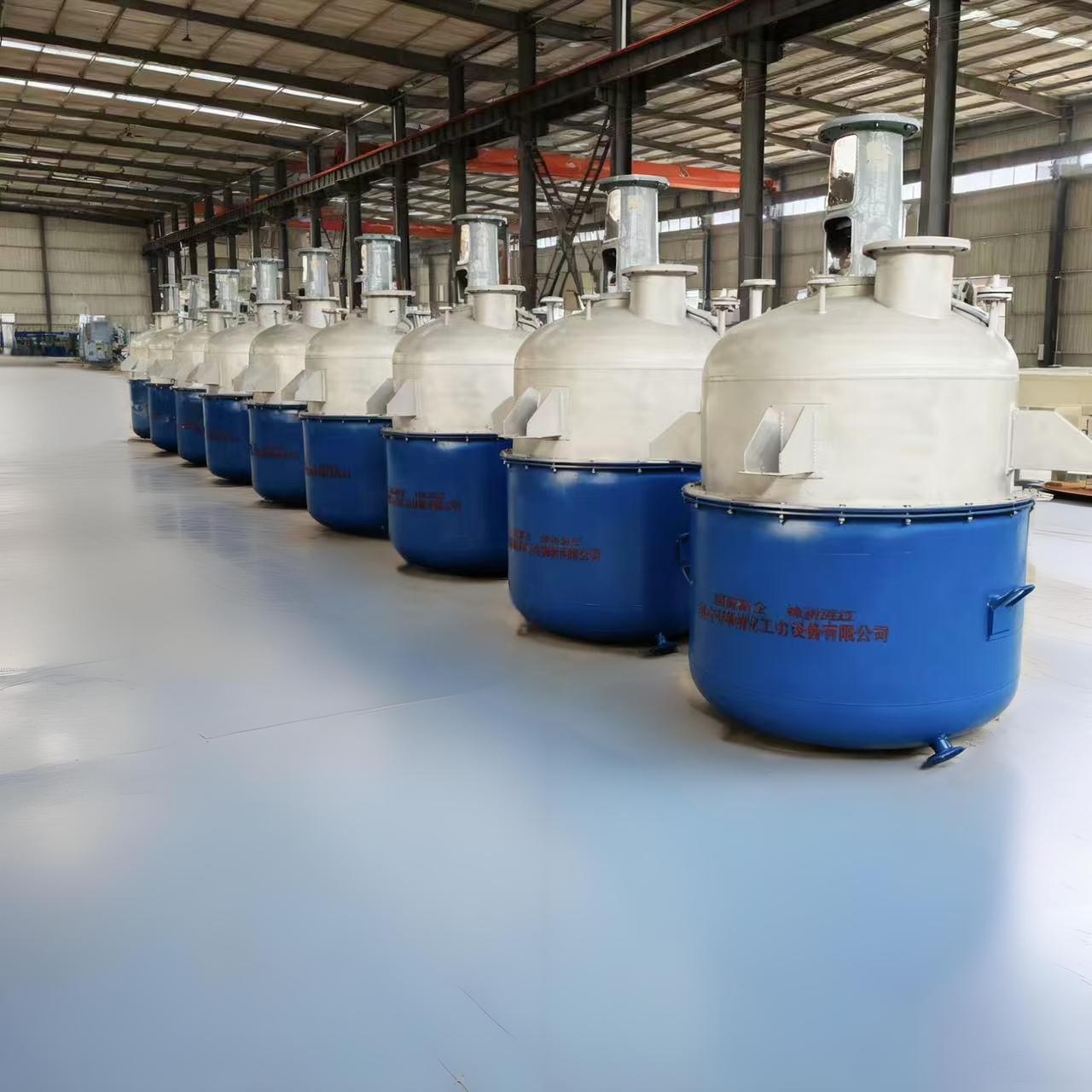
Every channel and surface within the system is shaped by deliberate geometries that direct heat flow along optimal paths. Rather than relying on brute-force cooling, the architecture channels energy through finely tuned contours and material interfaces, turning potential waste into usable output. This isn't passive insulation—it's active thermal routing that responds to load shifts in real time.
Precision assembly tolerances play an equally silent but critical role. Gaps measured in microns prevent parasitic leaks that would otherwise bleed away efficiency. These aren't just manufacturing benchmarks; they're functional boundaries where laminar flows meet conductive layers, creating a cascade effect that stabilizes temperatures under fluctuating demand. The result reads more like a controlled exchange than a one-way dump of heat.
Materials are selected not for their standalone properties, but for how their expansion coefficients, emissivity, and thermal mass interact across joints. This selective pairing minimizes stress and warpage over thousands of cycles, preserving the tight clearances that make high performance sustainable. It's a design philosophy where every edge and interface earns its place—no filler, no redundancy, just layered precision that keeps the working fluid in its most energetic state.
Beyond Compliance: Why Standard Safety Ratings Are Only the Starting Point
Meeting mandated safety benchmarks has long been viewed as the finish line for product design, but in reality, these ratings represent a baseline, not a guarantee of real-world resilience. They validate performance under a narrow set of controlled conditions—often failing to account for the chaotic, unpredictable nature of everyday use. Relying solely on certifications can lull manufacturers into a false sense of security, leaving critical gaps that only surface when systems are pushed beyond the lab.
True protection isn’t found in a checklist; it’s embedded in a culture that questions the edge cases the standards don’t cover. Forward-thinking teams treat compliance as a stepping stone, then layer on their own rigorous testing that simulates decades of wear, environmental extremes, and user error. This proactive stance not only catches potential failure points early but also fosters innovation, as engineers are freed to design beyond the minimum—creating products that earn trust through performance, not just paperwork.
The companies that stand out are those that view safety as a continuous dialogue with their customers, not a one-time handshake with a regulator. They invest in monitoring how products actually behave in the field, feeding those insights back into iterative improvements. By doing so, they turn safety into a competitive advantage—one that’s felt long after the certification logos have faded from memory.
Material Selection Mastery: Corrosion Resistance and Heat Transfer Synergy
In the demanding world of industrial manufacturing, selecting materials that simultaneously resist corrosion and excel at thermal transfer is a nuanced art. Engineers often face a trade-off: highly conductive metals like copper and aluminum offer superb heat dissipation but quickly succumb to oxidation or chemical attack in harsh environments. Stainless steels, on the other hand, provide robust corrosion resistance, yet their relatively low thermal conductivity can bottleneck system efficiency. The key lies in looking beyond the obvious candidates—exploring engineered alloys, advanced coatings, or composite structures that harmonize these seemingly opposing properties.
Emerging solutions are reshaping what’s possible. Nickel-based superalloys, for instance, maintain structural integrity and high thermal efficiency in corrosive seawater and acidic media, making them invaluable in desalination plants and chemical reactors. High-performance polymer composites, such as filled PPS or graphite-reinforced PEEK, offer tailored conductivity and inherent corrosion immunity, eliminating the need for protective layers that often impede heat flow. Even ceramic materials, once dismissed for brittleness, are now engineered into heat exchangers that shrug off aggressive chemicals while keeping energy transfer rates competitive.
The real mastery isn’t just in picking a material from a chart—it’s in matching the material’s microstructure and surface finish to the specific operational stresses. For example, a copper-nickel alloy might be chosen not just for its seawater corrosion resistance, but for its ability to form a thin, tightly adherent oxide film that actually enhances heat transfer while blocking further degradation. Similarly, laser-textured surfaces can boost boiling heat transfer coefficients in refrigeration systems without compromising the base material’s protective characteristics. By thinking in synergies rather than compromises, engineers can unlock performance levels that were once considered out of reach.
Real-World Deployment Lessons from Chemical and Pharmaceutical Giants
Tucked away in the sprawling complexes of chemical and pharmaceutical leaders, the real story of industrial AI isn’t found in polished press releases—it’s in the unglamorous, incremental triumphs over data chaos. One global manufacturer discovered that its advanced predictive maintenance system was only as good as the handwritten logs from shift operators, which contained shorthand notes and tribal knowledge no sensor ever captured. The lesson? Before chasing algorithms, you first need to digitize the sticky notes on the control room whiteboard. That meant months of winning over skeptical veterans, translating their decades of intuition into structured data without losing the context a simple vibration reading could never convey.
Then there’s the quiet revolution in regulatory paperwork. A mid-sized pharma company running AI for batch quality prediction learned the hard way that explainability isn’t a checkbox for regulators—it’s a survival tool when a batch deviates. Their models flagged anomalies beautifully, but the FDA inspectors wanted to know why, in language a chemist could trust. The solution involved grafting domain-specific reasoners onto neural networks, creating audit trails that read like a logical argument rather than a black-box probability. Months of extra work, but the payoff came during the next review cycle when the same models spotted a subtle raw-material drift that would have historically caused a three-month shutdown.
Perhaps the most counterintuitive lesson came from scale-ups that actually worked. A specialty chemical outfit spent two years perfecting a reinforcement learning agent for reactor optimization, only to have operators ignore its gentle nudges. It turned out the AI was correct but insufferable—pushing minute adjustments every ninety seconds, overwhelming the humans who preferred twice-per-shift interventions. Redesigning the agent to batch its suggestions and couch them in operator-friendly rationale lifted adoption rates from 20% to nearly 90%. In these industries, the best deployment strategy often means making the technology appear less clever, blending silently into the workflow until it becomes as invisible as the steam traps on a pipe rack.
Smart Temperature Control: The Quiet Revolution in Process Reactor Heating
In the world of chemical and pharmaceutical manufacturing, precision isn’t just a goal—it’s a necessity. Smart temperature control systems have moved beyond simple thermostats, embedding algorithms that anticipate thermal shifts before they occur. These units learn from each reaction cycle, adjusting heat input dynamically to maintain a razor-sharp setpoint. What used to require constant human oversight now hums along silently, trimming hours off batch times and slashing energy waste without anyone noticing.
The real magic happens at the interface between the reactor wall and the heating medium. Advanced sensors map temperature gradients in real time, feeding data to predictive models that compensate for changes in viscosity, exothermic spikes, or coolant flow hiccups. This isn’t just faster—it’s smarter. Operators once wrestled with overshoot and lag; now they watch a flat line on the trend screen while the system quietly orchestrates perfect thermal harmony. The result is tighter yield distributions and fewer rejected batches, all while maintenance logs shrink because the equipment isn’t fighting itself.
Beneath the hood, this quiet revolution runs on robust, domain-tuned control loops that merge classical PID logic with modern adaptivity. It’s a blend of proven engineering and subtle machine intelligence, never overcomplicating the user experience. Plant managers appreciate that the retrofit requires minimal downtime, often fitting into existing infrastructure like a natural upgrade. As industries push toward greener footprints, letting a smart controller handle the heavy thermodynamic lifting isn’t a luxury—it’s rapidly becoming the default way to run a reactor.
FAQ
It's a specialized heating unit engineered to safely warm the contents of a reactor without causing ignition in environments with flammable gases, vapors, or dust. Industrial sites handling volatile chemicals rely on them to prevent catastrophic accidents while maintaining precise temperature control.
They're built with robust, sealed enclosures that can contain any internal sparks or explosions. The materials, wiring, and connections are all rated to withstand harsh conditions and prevent flame paths from escaping, which isn't a consideration for ordinary heaters.
Look for globally recognized marks like ATEX for Europe, IECEx for international compliance, or UL/CSA for North America. These ensure the heater has been rigorously tested for use in classified hazardous areas.
Absolutely. Manufacturers often offer flexible designs, including immersion, clamp-on, or flange-mounted types, which can be tailored to fit specific vessel dimensions and heating requirements without compromising the explosion-proof integrity.
Regular visual inspections for corrosion, seal integrity checks, and verifying that temperature sensors and shutoffs are functional are key. Any maintenance should be done by qualified personnel following lockout-tagout procedures to avoid accidental ignition.
Yes, they often incorporate efficient heat transfer technologies like direct immersion or optimized thermal insulation, reducing energy waste. Combined with precise controls, they can actually lower operational costs while meeting safety standards.
You'll find them in chemical processing, pharmaceutical manufacturing, oil refineries, paint production, and any sector where reactors handle solvents, fuels, or other volatile substances under temperature-controlled conditions.
It depends on the reactor volume, the specific heat of the materials, desired ramp-up time, and process temperature. Consulting with the heater manufacturer to perform a thermal calculation based on your process parameters is the safest approach.
Conclusion
In hazardous industrial environments, where volatile chemicals and high temperatures coexist, explosion proof reactor heaters are not just accessories—they are vital safeguards. These systems are engineered to contain any internal spark or flame, preventing ignition of surrounding gases or dust, and thus averting catastrophic failures. But safety is just the baseline. The most advanced designs push thermal efficiency through precision engineering, using optimized heating elements and fluid dynamics to deliver uniform heat while minimizing energy waste. Beyond standard certifications, leading manufacturers incorporate redundant safety layers and self-diagnostic features that actively monitor for anomalies, ensuring continuous protection even as conditions shift. Material selection plays a silent yet critical role: exotic alloys and cladding techniques marry corrosion resistance with superior heat transfer, extending service life in aggressive chemical environments.
Real-world deployments by chemical and pharmaceutical giants reveal that smart temperature control is quietly revolutionizing reactor heating. Digital controllers with predictive algorithms adjust heating profiles in real time, slashing overshoot and maintaining tight process windows that boost yield and product quality. These intelligent systems learn from process data, preemptively adapting to load changes rather than simply reacting. Field experience also highlights the importance of robust installation practices and maintenance protocols tailored to each plant’s unique risk profile. Taken together, these elements form a cohesive approach where safety, efficiency, and operational intelligence converge, making the professional explosion proof reactor heater an indispensable asset for any high-stakes industrial process.
Contact Us
Contact Person: Mr. Wang
Email: [email protected]
Tel/WhatsApp: 8613705299955
Website: https://vip.e-baixing.com/szhgyw