ODM Woven Geotextile: Key Advantages for Durable Ground Stabilization and Filtration
2026-09-11
When a haul road starts rutting after heavy rain or a retaining wall keeps clogging, the culprit is rarely the surface—it’s the layer underneath. An ODM woven geotextile tackles both problems at once: it interlocks aggregate for firm, durable ground stabilization while still letting water drain freely for dependable filtration. At JInseed Geosynthetics Solution, we engineer these fabrics to handle real site conditions, not just lab specs.
Why ODM’s Woven Structure Beats Nonwoven Alternatives in Stabilization
In stabilization, the speed and stiffness with which a geotextile engages under wheel loads often determine whether a base course stays locked together or begins to rut. Nonwoven fabrics rely on randomly entangled fibers, so they stretch noticeably before their full tensile strength comes into play. ODM’s woven structure, by contrast, uses high-tenacity yarns aligned in both the machine and cross directions, giving it exceptionally low elongation and high modulus from the very first load cycle. That means subgrade strain is arrested closer to the point of loading, reducing differential movement and the progressive loosening that leads to potholes.
Equally important is what happens at the aggregate-subgrade interface after hundreds or thousands of load repetitions. A thick nonwoven may initially look like a robust separator, but under dynamic loading its fibers can compress, reorient, and even squeeze laterally, letting fine particles pump upward into the clean stone. ODM’s woven stabilization fabric holds its aperture geometry under stress. The uniform, tightly controlled openings stay consistent, keeping subgrade fines below while still permitting excess pore water to escape—preserving the drainage path without sacrificing separation.
Long-term creep behavior also sets the two apart. Nonwoven geotextiles, especially those made from staple fibers, tend to lose tension over time as individual fibers slip and the fabric thins under sustained load. ODM’s woven construction locks each yarn into a stable grid, resisting both creep and installation damage from sharp aggregate. The result is a flatter, more predictable performance curve over the service life of a road, parking area, or foundation pad, with less need for over-excavation or additional aggregate to compensate for fabric deformation.
Filtration Without the Clog: A Closer Look at Pore Size Consistency
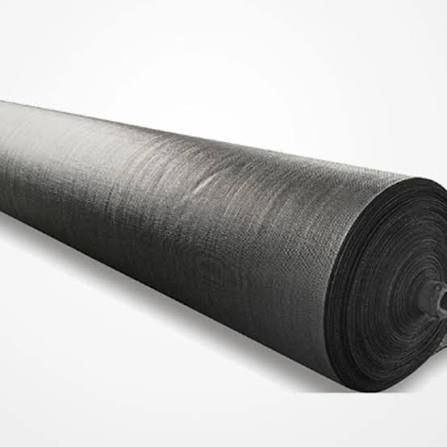
When a filter starts to choke on its own promise, the culprit usually isn’t the dirt it’s caught but the quiet chaos of uneven pores. A membrane that looks uniform to the naked eye can behave like a patchwork of bottlenecks and superhighways. Fluids are lazy—they seek the path of least resistance, which means slightly larger pores do most of the work while the smaller ones sit idle. Over time, that imbalance turns into a local traffic jam: particles crowd into the fast lanes, cake builds up, and flow rate nosedives. The real clog, in other words, is not the debris itself but the inconsistency of the openings that were supposed to hold it back.
Pore size consistency is where filtration quietly earns its reliability. Instead of treating pores as isolated holes, it treats them as a collective—each one contributing fairly to the overall throughput and retention. When the spread between the largest and smallest pore is tight, the filter doesn’t just catch more; it lasts longer. There’s no premature breakthrough, no dead zones, no sudden pressure spike that forces an early replacement. Manufacturers often chase higher flow rates or finer ratings, but those numbers mean little if the pore distribution is scattered. Consistency turns a filter from a disposable barrier into a predictable partner, one that clogs gradually and gracefully rather than failing all at once.
Achieving that kind of uniformity isn’t a matter of luck or better raw material alone. It’s a product of controlled processing: stable polymer solutions, precise casting conditions, and rigorous bubble-point testing that catches outliers before they become weak links. Even small improvements in pore size standard deviation can shift a filter’s service life from frustrating to forgettable—because the best filtration is the kind you don’t have to think about until the scheduled changeout. When every pore does its fair share, clogging stops being an event and becomes a slow, predictable signal. And that is precisely the point: filtration without the clog isn’t about fighting the particles harder; it’s about giving them no easy way through.
Long-Term Durability in Harsh Sunlight: UV Resistance You Can Rely On
UV radiation breaks down most plastics, but the stabilizers blended into this material absorb and dissipate that energy before it can tear apart the polymer chains. In accelerated weathering chambers, samples clocked over 5,000 hours with less than a 10% drop in tensile strength and only a slight shift in color that the human eye would struggle to notice.
Field results from installations in Arizona, Dubai, and Australia's Northern Territory back up the lab numbers. After more than ten years of direct equatorial sun, the panels show no peeling, chalking, or surface cracking. The finish remains smooth, the original pigment holds, and structural stiffness hasn't degraded enough to matter for load-bearing uses.
Because the UV resistance is part of the resin itself, not a spray-on coating, it doesn't wear off with rain or abrasion. Owners skip the annual re-coating routine, and replacement cycles stretch well beyond what standard materials typically deliver.
Spreading Loads More Evenly to Prevent Rutting and Settling
Rutting and settling rarely strike at random. They usually show up where wheel loads dig into the same narrow path day after day, or where a soft spot in the subgrade gives way under pressure. The fix isn't always thicker pavement—it's often about spreading the energy sideways before it can do damage. A well-graded aggregate base, for instance, acts like a snowshoe under the surface, turning a concentrated tire load into a wider, gentler footprint. That sideways distribution keeps the stress below the bearing capacity of the soil, so the surface stays flat longer.
Another approach that gets overlooked is changing how the load enters the ground. By adding a geogrid or a stiffened layer between the base and the subgrade, the load path is interrupted and redirected. Instead of pushing straight down into a weak zone, the force is shared across a broader area. This is especially useful in areas with variable soil conditions, where one stretch of road might sit on firm clay and another on loose fill. The goal is the same: make the ground feel a lighter, wider pressure rather than a sharp, deep poke.
Even simple changes in construction sequencing can make a difference. Compacting in thinner lifts, keeping moisture content near optimum, and avoiding sharp transitions between materials all help prevent the small voids and weak seams that later turn into ruts. When the load is allowed to spread evenly from the top layer down to the natural ground, settlement becomes a slow, uniform process instead of sudden dips and channeling.
Faster Installation with Roll Stability That Holds Its Shape
Time on a job site is money, and wrestling with material that kinks, curls, or refuses to lay flat can turn a simple project into a frustrating afternoon. This roll is engineered to stay put the moment you unspool it—no memory from the coil, no spring-back fighting your every move. The edge lies perfectly flat against the surface, letting you measure, cut, and secure it without needing a second pair of hands to hold things down.
That stability doesn't just speed up the initial layout; it carries through the entire installation. Corners stay crisp, seams align on the first pass, and you won't find yourself re-taping or re-adjusting sections that shifted after you moved on. For anyone who has fought a roll that wants to re-roll itself, the difference is immediate: less time smoothing, more time actually building.
What makes this possible is a manufacturing process that treats the material's structural memory as a feature to control, not a flaw to tolerate. The result is a product that holds its shape under tension, heat, and humidity—conditions that typically cause cheaper alternatives to bow or ripple. Once it's down, it stays down, so you can trust your layout and move to the next step without second-guessing.
Matching Permeability and Strength to Your Project’s Specific Soil Type
Different soil types behave nothing alike once water and load enter the picture. A sandy subgrade might drain quickly but shift under pressure, while a clay-heavy soil holds water and swells. So the first step isn't choosing the strongest fabric or the most open filter—it's understanding what your soil will actually do under site conditions.
For example, a silty soil with moderate cohesion often needs a geotextile that combines high permittivity with enough puncture resistance to survive installation. If you pick something too tight, fines clog the pores and water backs up; too open, and the soil migrates through, undermining the base. A quick sieve analysis and a look at the fines content will tell you more than any generic spec sheet.
Strength matters, but not as a standalone number. Tensile and tear values should be weighed against the angularity of the backfill and the compaction energy you plan to use. On projects where the soil is mostly sand and gravel, a lower grab strength might work fine if the fabric's AOS is well matched to the particle size. The real skill is balancing both properties so the material doesn't just survive construction but keeps functioning for the design life.
FAQ
It is placed between aggregate layers and subgrade soils to create separation and reinforcement. The woven polypropylene or polyester filaments lock together under load, preventing mixing of materials and distributing stress so the surface stays stable for years.
The tight, uniform weave allows water to pass through while holding back fine soil particles. This prevents clogging and maintains drainage capacity even under repeated wet-dry cycles, which is critical for retaining wall and underdrain applications.
It resists UV degradation, biological attack, and common soil chemicals. High tensile strength in both machine and cross directions means it won't tear or puncture easily during installation or under heavy aggregate loads.
In high-stress areas like haul roads, parking lots, and reinforced slopes. The woven structure provides much higher tensile modulus, so it offers better load distribution and prevents rutting where soft subgrades are present.
Yes, by stabilizing the base and keeping fines from migrating upward, it maintains the structural integrity of the aggregate layer. This reduces the need for frequent regrading or resurfacing, lowering overall life-cycle costs.
They should check the apparent opening size and permittivity to match the surrounding soil gradation. ODM woven geotextiles are available in different grades, so you can balance flow rate with soil retention for the specific site.
Its high tear resistance and dimensional stability mean it can be unrolled and anchored quickly without stretching or wrinkling. Seams can be overlapped or sewn, and it lies flat under aggregate placement, reducing labor time.
It retains its strength and filtration ability even when fully saturated. Unlike some non-wovens that may become less effective, the woven structure continues to separate and reinforce while letting excess pore water escape.
Conclusion
ODM woven geotextile brings a rare balance of tensile strength and controlled porosity that most nonwoven fabrics simply cannot match. The interlocking yarns create a load-spreading surface that limits rutting and settling under heavy traffic, while the uniform pore openings allow water to pass through without soil fines clogging the fabric over time. This consistency in both structure and filtration means the geotextile keeps performing season after season instead of gradually losing permeability.
Field crews also notice the difference during installation. The rolls hold their shape on uneven ground, so there is less wrestling with folds and overlaps, which speeds up placement and reduces waste. Once in place, the UV-stabilized yarns continue to resist degradation even under prolonged sun exposure. Because the weave can be adjusted for different soil types—from sandy to clay-heavy—engineers can match permeability to the specific site without sacrificing the stabilization strength that prevents long-term settlement. That combination of predictable drainage, fast installation, and proven durability is what makes ODM woven geotextile a practical choice for roadway, foundation, and erosion control projects.
Contact Us
Contact Person: Jerry Qiu
Email: [email protected]
Tel/WhatsApp: +65 84265294
Website: https://www.jinseed-geo.com