

ODM Rigid Chain Lift System A Complete Guide to Modern Vertical Lifting Solutions
2026-11-16
When it comes to vertical lifting in modern industrial and commercial settings, the ODM Rigid Chain Lift System is quietly redefining what's possible. Unlike conventional hydraulic or screw-driven lifts, rigid chain technology offers a unique blend of stability, precision, and compactness that is hard to match. But what exactly makes this system stand out in today's demanding material handling environments? In this complete guide, we'll break down the engineering principles, key advantages, and practical applications of ODM Rigid Chain Lift Systems. Along the way, you'll discover why forward-thinking businesses are turning to specialized manufacturers like Homall Industry Limited for reliable, custom lifting solutions. Whether you're an engineer, a facility manager, or simply curious about modern lifting technology, this guide will give you a clear, no-nonsense overview of how rigid chain lifts work—and why they might be the perfect fit for your next project.
What Makes a Rigid Chain Lift Different From Telescoping Masts Right Away
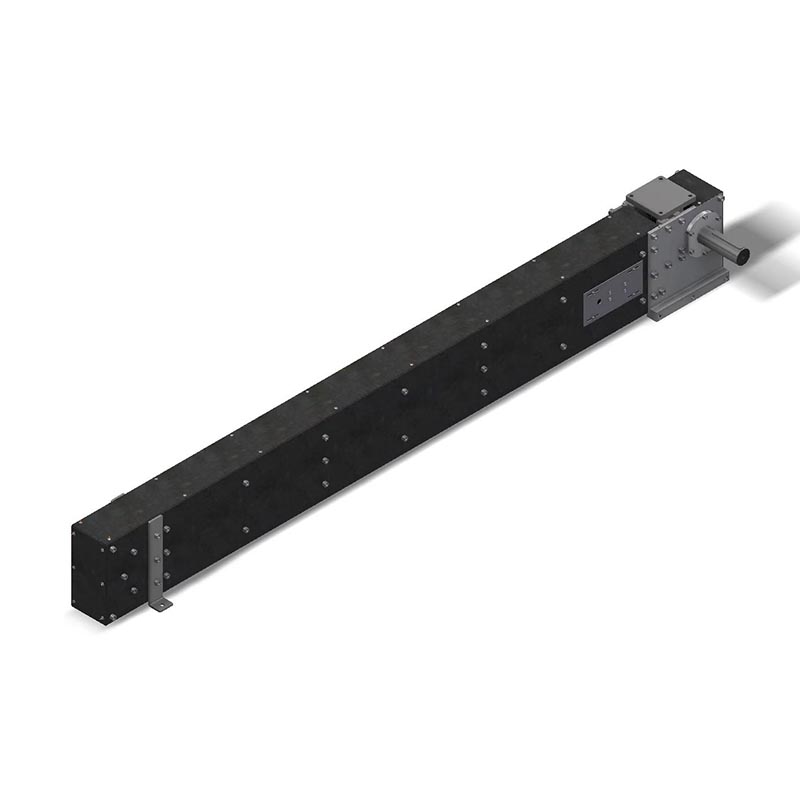
Rigid chain lifts earn their name from the solid, interlocking links that behave more like a push rod than a traditional lifting medium. Unlike telescoping masts, which rely on nested sleeves that slide past one another, a rigid chain stacks horizontally into a compact magazine before straightening into a vertical column. This gives designers an immediate advantage in tight spaces: the retracted chain occupies only a fraction of its extended height, while telescoping masts must reserve room for every collapsed stage.
Another right-away difference shows up in how the load path works. Telescoping masts transfer force through overlapping tube walls with sliding bushings, creating friction points and potential side play under uneven loads. A rigid chain, by contrast, locks each link against its neighbors once extended, forming a near-solid steel spine. The result is better resistance to off-center loads and less deflection at full height, even without guy wires or external supports.
Maintenance and setup also separate the two approaches quickly. Telescoping sections need regular cleaning of machined surfaces and careful alignment to avoid galling, while chain systems simply feed from a motorized magazine with minimal exposed moving parts. For applications where speed, compact stowage, or dirty environments matter, the rigid chain’s behavior at first glance—lifting from a coiled pile into a straight column—signals a fundamentally different engineering choice.
The Load Chart Numbers That Matter More Than Maximum Capacity
Maximum capacity gets printed in bold on the side of the machine, but it rarely survives contact with a real job. The load chart's small numbers for load center and lift height are the ones that actually decide whether a forklift stays upright. A 5,000-pound rating at a 24-inch load center turns into roughly 3,500 pounds when you pick up a 48-inch-deep pallet, because the weight sits farther from the mast. Add a full-height lift on top of that, and you can lose another 20 to 30 percent without the chart ever flashing a warning. Operators who glance only at the big number end up learning this lesson with the back wheels off the ground.
On telescopic handlers and cranes, outreach and boom angle quietly rewrite the capacity story. The chart might list 10,000 pounds at ground level with the boom retracted, but extend that boom to 45 feet and raise it to a steep angle, and the safe load can shrink to under 2,000 pounds. Those derating curves drawn across the lower half of the chart are not fine print; they describe the exact point where the machine's center of gravity starts to walk forward. Reading them feels less like memorizing numbers and more like learning how the machine balances, which no single maximum rating can ever explain.
Ground conditions and outrigger position also matter more than the headline figure. A mobile crane chart assumes firm, level ground and fully extended outriggers with the right counterweight. Set up on a two-degree slope, park one outrigger on soft fill, or forget a section of counterweight, and the actual capacity can drop by a quarter or more before you lift anything. Those notes at the bottom of the chart about tire pressure, boom configuration, and setup requirements are the difference between a controlled pick and a slow roll onto the cab. Ignore the maximum number and start reading the assumptions underneath it, because that is where the real load limit hides.
Positioning Accuracy Without the Usual Hydraulic Creep
Hydraulic systems have long been the workhorse for heavy positioning tasks, but anyone who has watched a cylinder inch toward a target knows the frustration of creep. That slow, sticky hesitation as pressure builds and friction releases can turn a precise alignment into a guessing game. It is the kind of problem that forces operators to overshoot, back off, and nudge again—wasting time and wearing down components.
This design sidesteps that entirely by replacing the fluid coupling with a direct mechanical drive that holds its position without feedback lag. Instead of relying on compressible oil and valve throttling, the actuator moves in discrete, repeatable steps. Each increment locks into place, so there is no residual drift after the command stops. The result is a motion profile that feels almost digital: crisp starts, immediate stops, and no waiting for the system to settle.
In practice, that means a fixture can return to the same spot within a few microns, cycle after cycle, without the usual compensation routines. Operators spend less time watching gauges and more time running parts. For applications like press brakes, injection molding, or test stands where position defines quality, removing hydraulic creep is not just a refinement—it changes how the machine behaves on the floor.
Fitting a Rigid Chain Tower Into an Existing Mezzanine Without Major Steel Work
Retrofitting a rigid chain tower into a mezzanine often triggers concerns about costly structural modifications. The key is to treat the tower not as a load-bearing addition to the steel frame, but as a self-contained vertical module that can slide into an existing opening or against a column bay. Start by mapping the mezzanine’s clear height, floor deflection limits, and anchor points. In many cases, the tower can be secured to the concrete slab below and braced against the underside of the mezzanine deck using friction clamps or post-installed anchors, eliminating the need for new beams or welded connections.
A practical approach is to use a modular mast design with adjustable guide rails. These rails let the carriage travel smoothly even if the mezzanine edge isn’t perfectly plumb. Instead of welding base plates to the existing steel, use a freestanding base frame with leveling screws and chemical anchors into the lower floor. Lateral stability comes from a top tie-in bracket that bolts through the mezzanine deck, distributing forces without cutting into main girders. This method keeps the original structural integrity intact and shortens installation to a single shift.
One often-overlooked factor is vibration isolation. Rigid chain towers generate dynamic loads during lifting cycles. Adding elastomeric pads between the tower base and the floor, plus a flexible coupling at the upper restraint point, absorbs those impulses and prevents micro-cracking in the mezzanine slab. By thinking of the tower as an independent vertical conveyor rather than a structural modification, you can achieve a clean retrofit that respects the existing building envelope and avoids expensive steel reinforcement.
Duty Cycle and Thermal Build-Up: Sizing the Drive for Real Shifts
Nameplate horsepower gets a drive in the ballpark, but it says little about what happens across eight or ten hours of actual production. A conveyor that runs at 80 percent load for half an hour, then cycles through a load surge every four minutes, can thermally load a drive more than a steady 100 percent motor would. The heating in the output transistors accumulates during peaks and only partially dissipates during lighter stretches, so a drive sized for full-load amps may have no real reserve when the repetitive peaks hit. Duty cycle has to be derived from the load’s current-over-time pattern, not from a single amp reading.
Thermal build-up moves a lot slower than the drive’s control loop. A three-second overload is long gone before the heat sink temperature peaks, but that heat hasn’t disappeared; it becomes the starting temperature for the next overload. On a hot afternoon with a clogged cabinet filter, the same sequence that ran fine in winter can walk the drive into an overtemperature fault halfway through the second shift. That’s why a real shift analysis needs repeated cycles, worst-case ambient, and a close look at the spacing between high-current events. Two 150 percent starts in a minute is a very different thermal problem than the same two starts spread across ten minutes.
Instead of adding an arbitrary safety factor, log motor current and time across a representative shift. Convert the data to an RMS current over the worst recurring ten or fifteen minute window, then compare that number to the drive’s continuous output rating at the site’s altitude and ambient. If the load includes braking, factor the resistor duty separately; it often gets hotter than the drive and can derate the entire system. This kind of sizing tends to surface drives one frame size larger than the nameplate calculation would suggest, but it also stops the 2 a.m. callbacks for nuisance trips.
Common Failure Points in Chain Cassettes and How Pre-Tensioning Fixes Them
Chain cassettes take a beating in ways most riders never notice until the damage is done. The usual suspects are worn teeth that develop a shark-fin profile, stretched links that no longer seat snugly, and lateral play from loose retaining rings. Each of these failure points shows up as skipping under load, a rhythmic grinding sensation, or that annoying chain slap you can't tune out.
Pre-tensioning attacks the root cause rather than the symptom. By applying a controlled axial load before the cassette is locked down, you eliminate micro-gaps between sprockets and the freehub body. This stops the individual cogs from shifting under torque, which is what eventually chews up the splines and lets the whole stack wobble. It also keeps the chain engaged across the full tooth profile instead of riding on the tips.
In practice, a pre-tensioned cassette behaves more like a single machined unit than a stack of stamped parts. The result is quieter operation, more accurate shifting under power, and a drivetrain that wears evenly instead of developing hot spots. It's a small adjustment that pays off in longer intervals between replacements and fewer mid-ride mechanicals.
FAQ
A rigid chain lift uses a specially designed chain that can push as well as pull. Unlike a standard roller chain that only handles tension, the links interlock to form a rigid column when extended, allowing it to lift loads vertically without buckling. This sets it apart from hydraulic cylinders, which require pumps and fluid lines, and ball screw lifts, which have length limitations and higher maintenance needs.
They’re commonly found in automated warehouses, assembly lines, stage lifts, and material handling stations. Any place where you need a compact vertical stroke but don’t have room for a scissor lift or the overhead clearance for a hoist works well. Automotive plants often use them for body positioning, and logistics centers rely on them for pallet transfer.
Load capacity varies by model, but most ODM units range from a few hundred kilograms up to several tonnes. The key factor isn’t just weight but also the stroke length and duty cycle. For heavier loads, the chain design is reinforced and the drive motor is upsized accordingly, but the footprint remains much smaller than a hydraulic equivalent.
The chain links have interlocking profiles on their contact faces. When the chain is driven forward, each link locks against the next, forming a solid column that resists bending. A guide channel or cassette keeps the chain aligned during extension and retraction. The stored chain folds away neatly inside a housing, so you get a long stroke from a very shallow storage space.
Compared to hydraulic systems, maintenance is minimal. You mainly need to keep the chain lubricated and check for wear on the link interfaces and guide rails. Some units have automatic lubrication or sealed bearings. It’s also wise to inspect the drive gears every 1,000 operating hours or so. Most downtime comes from neglect rather than design flaws.
Yes, one of the strengths is that they don’t use hydraulic oil, so there’s no risk of leaks contaminating products. Stainless steel versions with food-grade grease are available for washdown areas. The chain itself can be fully enclosed, which prevents debris from entering the mechanism. For cleanrooms, you can specify sealed chains that emit very few particles.
In many cases, yes. The main barriers are extreme duty cycles and very high load requirements beyond the chain’s capacity. Hydraulics still make sense when you need to push against a constant force all day long, but for intermittent lifting and precise positioning, rigid chain systems are faster, more energy-efficient, and easier to control without oil temperature drift.
First, define your required stroke, speed, and load. Then look at the mounting orientation—vertical, horizontal, or angled—because not all models handle side loads equally. Check the available space for the chain storage cassette. Also consider the environment: temperature extremes, washdown requirements, or explosive atmospheres may require special materials or motor enclosures. Finally, ask about the expected cycle life and whether the manufacturer provides test data.
Conclusion
Rigid chain lifts earn their keep the moment you stop treating them like compact scissor lifts and start reading what the chain column actually does under load. Unlike telescoping masts that extend in collapsible stages, a rigid chain push-pull mechanism locks each link into a solid column, which changes how the platform reacts to off-center loads and how much side play you can tolerate before guides wear unevenly. The real conversation usually begins with the load chart, though, and not the headline capacity number. A unit rated for 2,000 kg might only hold that rating within a narrow envelope near the mast centerline; move the load outward and the allowable figure drops faster than most facility teams expect. That distinction matters when you are positioning a die or a coil rather than lifting evenly distributed pallets.
Positioning accuracy is another area where rigid chain systems diverge from hydraulic cylinders, especially during long holds. There is no slow drift from valve leakage or fluid temperature swings, so a tooling platform can sit at a programmed height for an entire shift without nudging a limit switch. Installation also tends to be less invasive than people assume. A rigid chain tower can often bolt to an existing mezzanine edge with little more than a reinforced base plate and some tie-backs, avoiding the heavy structural columns that a telescoping mast usually demands. Duty cycle planning still deserves attention, though. Chain cassettes generate heat at the reversing sprocket and inside the storage magazine, so drive sizing needs to account for acceleration starts, not just travel length. The most overlooked failure point remains the chain cassette itself: if the chain is not pre-tensioned correctly, links can hesitate, stack loosely, or overload the drive pinion. A proper pre-tension procedure removes that slack before first motion and keeps the column formation clean, which in practice does more for long-term reliability than upgrading the motor ever will.
Contact Us
Contact Person: Ryan
Email: [email protected]
Tel/WhatsApp: +85259582726
Website: https://www.robomast.com/