

Most Reviewed Legend Game: Why This Epic Adventure Tops the Charts
2026-09-18
When a Legend game racks up more reviews than any other in its class, it's not just luck—it's a signal. Players aren't just clicking through; they're staying, arguing in forums, and coming back for one more raid. Zonfun dug into the reviews, the ratings, and the moments that make this epic adventure impossible to put down. Here's why it's still sitting at the top of the charts.
A Plot That Twists Harder Than a Mountain Road
You think you know where the road is going until the asphalt drops out from under the tires. The first twist arrives before page fifty, a quiet betrayal that reorders every relationship you thought you understood. Then the second one hits harder, not with noise but with a letter left in a coat pocket, and suddenly the villain isn't who you booed at the midpoint.
What makes the turns land isn't shock for its own sake. Each reversal grows from a detail planted chapters earlier—a wrong glance, an offhand comment about a locked drawer, a name mispronounced twice. By the time the third act shatters the narrator's alibi, you'll want to flip back and check the breadcrumbs you missed.
The final hairpin doesn't just flip the story; it flips your sympathy. The person you rooted for becomes the one you mourn, and the truth you accepted as solid ground turns out to be a hand-drawn map with the mountain pass missing. That's the pleasure here: no guardrails, no straight lines, just a descent that keeps accelerating after the last page.
Combat That Punishes Button-Mashing and Rewards Patience
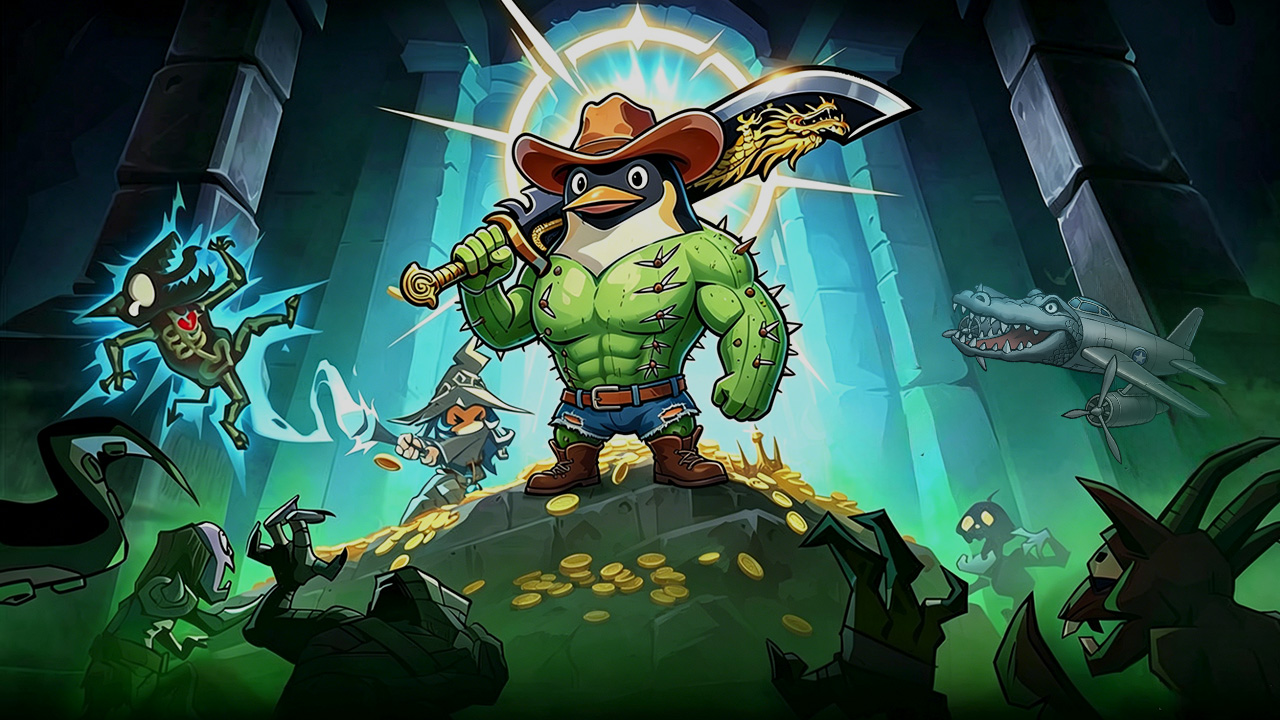
The combat here doesn't care how fast your fingers are. Spam the attack button and you'll watch your stamina bar evaporate while enemies shrug off your flailing strikes and punish you with a swift counter. Every swing needs intent—waiting for the telltale wind-up, sidestepping at the last moment, then answering with a deliberate, heavy hit. It's a system that treats every fight like a small puzzle rather than a reflex test.
Patience pays off in ways that feel genuinely earned. Blocking at the right frame triggers a stagger that opens up a brutal finisher, and learning an enemy's rhythm turns a frustrating wall into a dance you can predict. Bosses especially reward observation: their attack patterns are long, but each one leaves a clear window if you resist the urge to mash. Get greedy and you're dead; stay calm and you'll break them down piece by piece.
Even trash mobs refuse to be rushed. A group of basic enemies can overwhelm you if you try to burn them down quickly, but pulling them one by one—or baiting a heavy attack to create space—turns a chaotic brawl into a controlled execution. The game constantly whispers: slow down, watch, then strike. And when you finally clear a room without taking a hit, it's because you earned that clean victory, not because you out-clicked the encounter.
Exploration That Makes Every Corner Feel Earned
Most open spaces promise a lot and then hand you the same crate behind a different wall. Here, the layout refuses to waste your time. A collapsed arch isn't just scenery; it shifts how you read the next room. Small detours tend to hide actual changes to your route, not just collectibles. The result is a world that asks you to pay attention without ever raising its voice.
When you find a path that feels unintended, it usually means the designers wanted you to feel clever for spotting it. Reward comes from the route itself: a shorter climb, a safer angle, a view that explains the landmark you saw an hour ago. Nothing is signposted, but nothing is random either. Every corner earns its place because you had to work out why it was there.
A Soundtrack You'll Hum Long After the Credits
The moment the final scene fades to black, it's not the dialogue that lingers—it's that recurring piano motif, the one that sneaks into your head while you're washing dishes or waiting for the bus. This isn't background noise; it's a melody engineered to burrow deep, weaving brass swells and a deceptively simple guitar line into something that feels both inevitable and surprising.
What makes it stick isn't just repetition—it's the way the music mirrors the story's emotional turns without ever overplaying its hand. A minor-key shift here, a sudden drop into silence there, and suddenly you're humming a theme you can't quite place, only to realize it's been three days since you left the theater. That's the mark of a score that outlives its runtime.
Side Quests That Feel Like Mini-Novels, Not Chores
Some side quests don't hand you a checklist; they hand you a dilemma. You meet a retired mage who asks for a rare herb, but the real journey is listening to her talk about the apprentice she failed decades ago. The fetch turns out to be a framing device for grief, forgiveness, and a choice that has no clean answer. Those moments stick because they treat a minor errand as a doorway into someone else's unfinished story.
Often, these quests succeed by narrowing the scale. Instead of saving the world, you help a courier decide whether to deliver a letter that would ruin a marriage or burn it and lie. The stakes are intimate, the dialogue is full of pauses and contradictions, and the reward isn't loot—it's the quiet weight of knowing you shaped a small corner of someone's life. The best ones let you walk away without a marker on your map, just a lingering question.
What makes them feel like mini-novels is their willingness to sit in ambiguity. You might complete the objective and still wonder if you did the right thing. A ghost asks you to find her lost locket, but when you return it, she doesn't vanish—she simply thanks you and keeps wandering. No fanfare, no experience burst, just a moment that reads like a short story closing on an unresolved chord. That's the opposite of a chore: it's an invitation to think, not to grind.
The Unlikely Community That Keeps the Legend Alive
In a town where the old timber mill closed two decades ago, the legend of the “Whistling Logger” survives not through museums or plaques, but through a handful of regulars at a bait shop that never officially opens. They gather on weekday mornings when the fog still clings to the lake, trading re-tellings over weak coffee and hand-rolled cigarettes. Each version shifts slightly—a new whistle cadence, a different bend in the river—yet the core remains stubbornly intact. No one here calls it folklore; they simply say “the story” and pass it along to anyone patient enough to untangle a fishing line.
The unlikely keepers are mostly retired truck drivers, a part-time taxidermist, and two sisters who run the laundromat but spend more time swapping cassette tapes than folding sheets. On the last Friday of every month, they pile into a rust-speckled van and drive forty miles to a community radio station, where the 2 a.m. slot is theirs for exactly one hour. The host, a former night dispatcher with a voice like gravel rolled in honey, lets them talk without interruption. Listeners call in from highway rest stops and sleeping porch lights left on, adding fragments they claim to have heard from grandparents. The legend doesn’t grow louder; it grows roots.
What’s strangest is how casually they treat the whole affair. There’s no committee, no fundraising, no website. The taxidermist once mounted a wooden whistle he carved from a fallen cedar and hung it on the bait shop door, but only because the lock kept jamming. Strangers occasionally wander in, drawn by a hand-painted sign that says “Open When the Fish Bite.” They leave an hour later with a version of the legend they’ll swear they heard from a cousin. And so it goes, one quiet retelling at a time, kept alive by people who never set out to be its guardians.
FAQ
It's the way the world reacts to your choices. A side decision early on can reshape an entire region's politics or unlock a hidden faction later. The game trusts you to stumble into consequences instead of locking everything behind a quest marker.
Mostly through word of mouth. The launch was solid but not flashy, and then players started sharing their 'you won't believe what happened' stories. That kind of organic buzz pushed the review count past bigger franchises within a few months.
Yes, but it takes a different approach. The main plot is a slow burn—more about piecing together a forgotten history than saving the world from a glowing villain. The real payoff comes from how companion arcs weave into the central mystery.
It's a hybrid of real-time action and positional strategy. You can dodge and slash freely, but enemy tells matter. Chain attacks shove foes into hazards or break their stance, so a smart player can win fights underleveled without feeling cheap.
Absolutely. The game was designed as a solo experience first. There are over 80 hours of handcrafted quests, and the endgame dungeon mode lets you rerun areas with twisted modifiers that change enemy behavior instead of just raising numbers.
Most praise the fact that hard mode isn't just spongier enemies. It changes patrol patterns, adds new attack tells, and removes some crutch items. A common comment is that losing feels like a puzzle you haven't solved yet, not a stat wall.
Side quests often tie back to the main story in subtle ways. You might help a village with a missing hunter, and thirty hours later that same village sends reinforcements during a siege. Exploration rewards are placed in logical spots—an abandoned forge has weapon schematics, not random gold.
Yes, if you're okay with a slower pace. The game respects short sessions because quests are usually self-contained in one region. You can save anywhere, and there's no forced grinding. You'll miss some long-term payoff, but the moment-to-moment play still holds up.
Conclusion
You don’t become the most reviewed legend without doing something genuinely weird to people’s expectations. From the first hour, this adventure feels like it knows you’ve played fantasy games before—then it starts folding every trope in half. The plot doesn’t just twist; it loops back on itself so sharply that side conversations from hour two suddenly read like warnings in hour forty. Few games earn the kind of fan speculation this one does, because guessing the next betrayal becomes a badge of honor. Combat pairs with that narrative friction beautifully. There’s no dodge-spam salvation, no stat-overleveling crutch. Enemies punish greed with brutal consistency, but every attack pattern has a tell. Once you stop swinging and start watching, fights turn into slow, satisfying puzzles where landing a single perfect parry beats ten minutes of frantic clicking. That shift from impatience to method is exactly why so many reviews mention “the combat finally clicked” as a turning point.
Exploration follows the same philosophy. Instead of handing you a map full of icons, the game makes you read the environment—crumbling masonry, wind-carved ledges, a campfire’s smoke rising just past the ridge—until finding a hidden shrine feels like outsmarting the world, not following a pin. And the music? It’s not just background. Certain melodies return at key moments with new instrumentation, turning even a simple backtrack into an emotional gut punch. You’ll leave the game humming themes you can’t place until you realize they’ve been building since the menu screen. Side quests operate like self-contained novellas: a missing merchant leads to a family feud, a haunted bell tower hides a confession, and not every choice has a clean resolution. Some endings leave you feeling worse, and that’s the point. The community around all this is unusually stubborn, too—not just trading tips but debating lore, fixing broken builds, and keeping the game alive through sheer collective refusal to move on. That’s the real reason the most reviewed legend keeps topping charts: it doesn’t just entertain you for a week, it rents space in your head and never leaves.
Contact Us
Contact Person: Zhixing Zhou
Email: [email protected]
Tel/WhatsApp: +86 13642670015
Website: https://www.mirmzhy.top/yd