

Inside an Allergy Wristband Factory: How Safety Bands Are Made
2026-11-16
Ever wondered what goes on behind the scenes at an allergy wristband factory? From raw silicone to the final safety band on your child’s wrist, every step matters—and at BAOBI, precision isn’t just a goal, it’s a promise. In this post, we take you inside the production floor where medical-grade materials, strict testing, and smart design come together to create bands that speak up when you can’t.
Sourcing Medical-Grade Silicone That Won’t Irritate Skin
Finding a silicone supplier that actually understands skin sensitivity is harder than it sounds. Most catalogs list “medical-grade” but few can tell you how the material behaves after weeks of continuous wear against sweating, healing, or compromised skin. You need a partner who can walk you through cure systems, extractables, and surface finishes without making you chase down a datasheet from three departments.
Ask for biocompatibility test reports up front—ISO 10993-5 for cytotoxicity and 10993-10 for irritation are the bare minimum, but don’t stop there. Request a sample batch cured with the same platinum catalyst they’ll use in production, because a generic sample won’t reveal how the final part feels after autoclaving or repeated cleaning. The best suppliers will also offer low-volatile, low-bleed formulations that resist breakdown from skin oils and topical medications.
When you’re comparing vendors, pay attention to how they handle post-curing. Residual siloxanes and peroxide byproducts are what usually cause redness or itching, even if the base polymer passes every test. A supplier that runs a proper post-cure cycle and verifies low extractables in the finished geometry is worth the higher quote. If they can’t show you a real lot traceability record tied to your specific part number, keep looking.
Injection Molding: Where Heat and Pressure Shape the Band
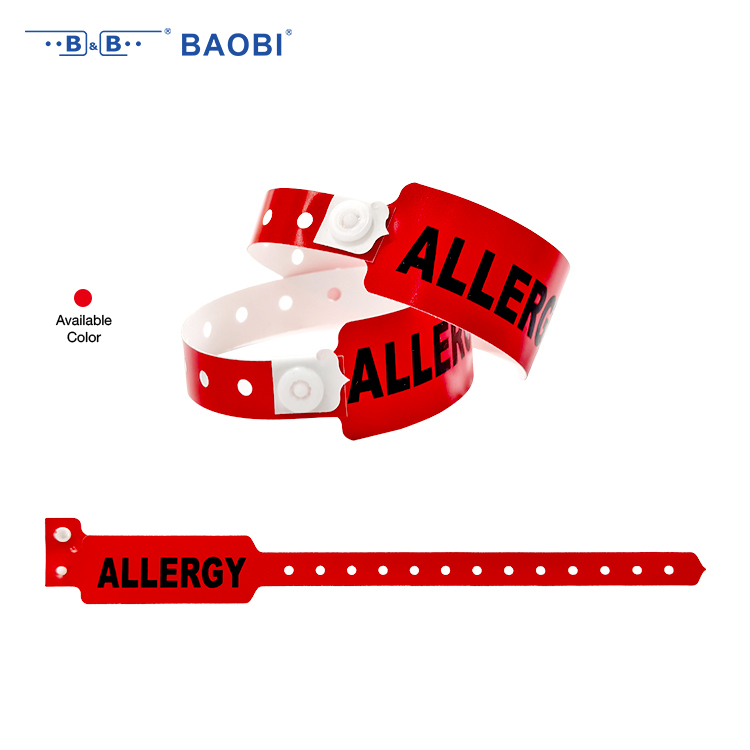
Molten polymer is forced into a precision-cut steel cavity under intense pressure, filling every micro-groove and clasp contour before cooling locks the molecular chains into a single, seamless loop. The mold itself is split along a parting line, leaving a faint witness mark that skilled finishers later buff away with abrasive wheels and texturing pads.
Heat management separates a supple, resilient band from a brittle one. Barrel temperatures hover just below degradation thresholds while the screw’s shear action adds a controlled spike, thinning the melt without scorching it. Cooling channels drilled behind the cavity walls then draw heat out unevenly on purpose—thicker lug sections stay slightly warmer longer, encouraging denser crystallization right where the band will flex hardest during daily wear.
Pressure profiling is tuned by trial runs on each new mold geometry. A short high-pressure spike packs the gate area, then a lower holding phase compensates for shrinkage as the polymer cools from the outside in. Operators read the injection curve like a fingerprint, adjusting switchover points until the finished band pops free with crisp edges, uniform wall thickness, and no sink marks around the buckle holes.
Printing Warnings That Stay Legible for Years
A warning that fades into a pastel blur after a season of sun and rain ceases to be a warning—it becomes a legal and safety blind spot. Long-term legibility starts with choosing pigment-based inks over dye-based ones, since pigments hold their color under ultraviolet exposure far longer. Pair those inks with a substrate that can take abuse: polyester and polypropylene films resist tearing, moisture, and many industrial chemicals that would break down paper or vinyl. A UV-blocking laminate or overcoat adds another layer of defense, slowing the photodegradation that turns bold reds and yellows into washed-out ghosts.
The printing method matters as much as the materials. Thermal transfer with a resin ribbon produces crisp, high-contrast text that bonds into the label surface rather than sitting on top, which helps it survive scrubbing, solvents, and temperature swings. UV-curable inkjet is another solid option for high-resolution graphics, but only if the ink is formulated for outdoor or harsh indoor use. Avoid standard office inkjet prints for any warning that must last—they can smear after a single wet wipe and fade in weeks near a window. For maximum staying power, consider embedding the print under a polyester laminate or using a reverse-printed overlay where the text is protected behind a clear film.
Durability claims mean little without testing, so specify accelerated weathering and abrasion standards when ordering. A QUV chamber or xenon arc test can simulate years of sunlight in days, while rub tests with cheesecloth or chemical wipes reveal whether the print will survive routine cleaning. Look for resistance to isopropyl alcohol, mild acids, and common degreasers if the labels will be used in manufacturing or food processing. Finally, check legibility from the intended viewing distance after aging—bold sans-serif fonts at adequate sizes tend to hold up better than thin scripts, and high contrast between text and background is non-negotiable when someone’s safety depends on reading it quickly.
Cleanroom Protocols to Keep Allergens Out
Most people assume cleanrooms are only for microchips or sterile drug manufacturing, but the same logic applies when you're trying to keep peanut dust or pet dander from invading a living space. The core idea is pressure: a cleanroom stays slightly positive relative to the hallway, so air flows out when the door opens instead of sucking unfiltered air in. For homes, that means installing a continuous exhaust fan in the entry vestibule and making sure the main room has a dedicated HEPA supply that runs 24/7, not just when you're awake.
Surface protocols matter just as much as air. Instead of dry dusting—which just launches allergens back into the air—use damp-wiped stainless steel or sealed concrete floors, and keep all soft goods like curtains or upholstered chairs outside the boundary. Anyone entering should shed an outer layer, wipe down shoes with a sticky mat, and don a hair cover and disposable booties before touching the doorknob. It sounds extreme, but after two weeks it becomes as automatic as taking off a coat in winter.
The real secret, though, is maintenance auditing. Set a cheap particle counter by the air return and log the readings twice a day. If the count spikes, you've got a leak—maybe a door gasket worn out or someone left the pass-through window open. Fix it within the hour, not next week. Allergens don't respect good intentions, only physical barriers and consistent habits.
Stretch, Pull, and Snap: Testing Every Batch
Every batch of stretch film gets pulled to its breaking point before it ever leaves the floor. We mount rolls on a fixed frame, grip the free end with a calibrated clamp, and run the pull test until the material snaps. The numbers that matter—elongation percentage, tear resistance, and load retention—come straight from that failure point, not from a spec sheet. If a roll doesn’t hit our minimum stretch ratio under real tension, it gets marked and pulled from the line.
Snap testing isn’t just about finding the weak ones. It tells us how the film behaves when a pallet shifts mid-transit or a forklift bumps a corner. We log the break pattern, the neck-down width, and the recoil speed. Those observations feed back into the extrusion settings for the next run. It’s a loop: stretch it, snap it, read the fracture, adjust the blend. No shortcuts, no “good enough” batches.
The goal isn’t to make film that never breaks—that’s fantasy. The goal is to make film that breaks predictably, at a load well above what a wrapped load will ever see. Every batch gets a test card with the date, line number, and the operator’s initials. If you ask why we go through all that for a consumable, the answer is simple: a snapped film on the dock costs more than a snapped film in the lab.
Hand-Finishing and Packing Without Cross-Contamination
Every item that leaves our facility is handled by a dedicated team trained in allergen and contaminant control. Workstations are separated by product type, and each batch undergoes a full line clearance before the next run begins. This prevents residue from one recipe transferring to another, even when production schedules are tight.
During the finishing stage, tools and surfaces are color-coded by zone and sanitized between uses. Staff rotate gloves at defined intervals, and air filtration systems capture airborne particles that could settle on exposed product. For products with shared equipment, we run them in a sequence that minimizes risk, followed by verified cleaning logs that are reviewed daily.
Packing takes place in sealed rooms with positive air pressure, and each finished pack is scanned and weighed to confirm it matches the intended recipe. Random swab tests of gloves, scoops, and sealing jaws provide an extra layer of confidence. By the time a package is sealed, it has passed through multiple checkpoints specifically designed to rule out cross-contact from start to finish.
FAQ
Most factories use medical-grade silicone or latex-free synthetic rubber, with a smooth finish so it won't irritate skin. Some also embed a nylon mesh for tear resistance.
Instead of surface ink, many production lines use laser engraving or debossed lettering filled with a contrasting, skin-safe pigment. That keeps the text readable after months of daily wear.
Every batch passes through an automated vision system that compares each band to the approved digital proof. Mismatched bands are pulled immediately and the line pauses until the error is traced.
Yes, samples from each production run undergo irritation testing under occlusive patches, and the raw silicone is checked for common allergens like latex, nickel, and certain plasticizers.
They add a flexible inner core and run tensile tests that stretch the band far beyond normal wrist movement. Weak points are identified early and the molding pressure adjusted.
Absolutely. The same blank can be molded in multiple sizes, and the engraving layout automatically scales down. The text may be split across two lines but stays legible.
Safety bands have redundant fastening, a non-snag closure, and the alert text is integrated into the material rather than applied as a sticker. They also follow stricter traceability rules from raw material to finished product.
For a standard design, a factory can go from approved artwork to packed boxes in about five to seven working days, depending on the molding queue and whether custom colors need to be compounded.
Conclusion
Inside an allergy wristband factory, everything starts with the silicone. The raw material has to be medical-grade, free of latex and common allergens, so it won't irritate even the most sensitive skin. After the silicone arrives, it's fed into injection molding machines where controlled heat and pressure turn it into a flexible band with a smooth, seamless finish. The mold itself is designed to hold a recessed area for the warning text, which gets printed using a durable medical ink that bonds to the surface and resists fading, scratching, and daily wear. Workers in the printing area regularly check color contrast and legibility, knowing that a smudged or faded warning could put someone's life at risk.
Once the bands are formed and printed, they move through a cleanroom environment. Air filtration and strict gowning procedures keep dust, food proteins, and other cross-contaminants away from the product. Every batch then faces physical testing: bands are stretched, pulled, and snapped to verify they won't break under normal use or accidental tugs. Technicians also check the clasp and closure mechanism repeatedly. Finally, each band is hand-finished and packed on dedicated lines separated by allergen type. Gloves are changed between product runs, and packaging materials are kept sealed until the last moment. This combination of material selection, precision molding, cleanroom discipline, and batch-level testing is what makes a simple wristband reliable enough to speak for someone who can't speak for themselves.
Contact Us
Contact Person: Bill Xu
Email: [email protected]
Tel/WhatsApp: 8618688898707
Website: https://www.baobitech.com/