

Gasoline Generator High-Quality Manufacturer: Key Factors for Choosing Reliable Power
2026-08-22
Selecting a gasoline generator isn't just about picking a machine that starts—it's about securing dependable power when you need it most. Whether you're running a small business, preparing for outages, or powering remote work sites, the manufacturer behind the generator makes all the difference. In this guide, we break down the key factors that separate a truly high-quality manufacturer from the rest, and highlight why DINGBO POWER stands as a benchmark worth considering.
What Actually Separates a High-Quality Gasoline Generator from the Rest
Many buyers fixate on peak wattage, but that number means little if the engine can't hold voltage under real load. The difference starts with the block itself: high-quality units use forged crankshafts, cast iron cylinder liners, and tighter machining tolerances. Cheap generators often rely on aluminum bores and looser fits, which leads to faster wear, more oil consumption, and voltage droop when you actually pull near the rated output. A good generator will run for hours at 80% load without breaking a sweat; a cheap one will start to hunt and overheat within 30 minutes.
Next is how the electricity is conditioned. Quality generators almost always include an automatic voltage regulator (AVR) and, in inverter models, true sine wave output. That matters if you're powering anything with a circuit board—fridges, pellet stoves, battery chargers, even some LED lights. Cheap non-inverter generators produce rough, spiky waveforms that can cause flicker, hum, or outright damage to sensitive electronics. You'll hear the difference in a bench test: a quality unit holds frequency within a tight band; a bargain unit drifts as the engine hunts.
Durability separates them further. High-end generators have multi-stage air filters, better cooling fins, brass fuel fittings, and corrosion-resistant frames and fasteners. They're designed to sit through a storm season, not rust shut in the shed. Noise and vibration control also follows the price curve: quality units use better mufflers, isolated engine mounts, and sometimes full acoustic enclosures. A cheap generator might be 75 dB at 23 feet; a good one drops to the low 60s. Over a two-day outage, that's the difference between tolerable and maddening.
Engine Build and Component Sourcing: What to Look Past the Spec Sheet
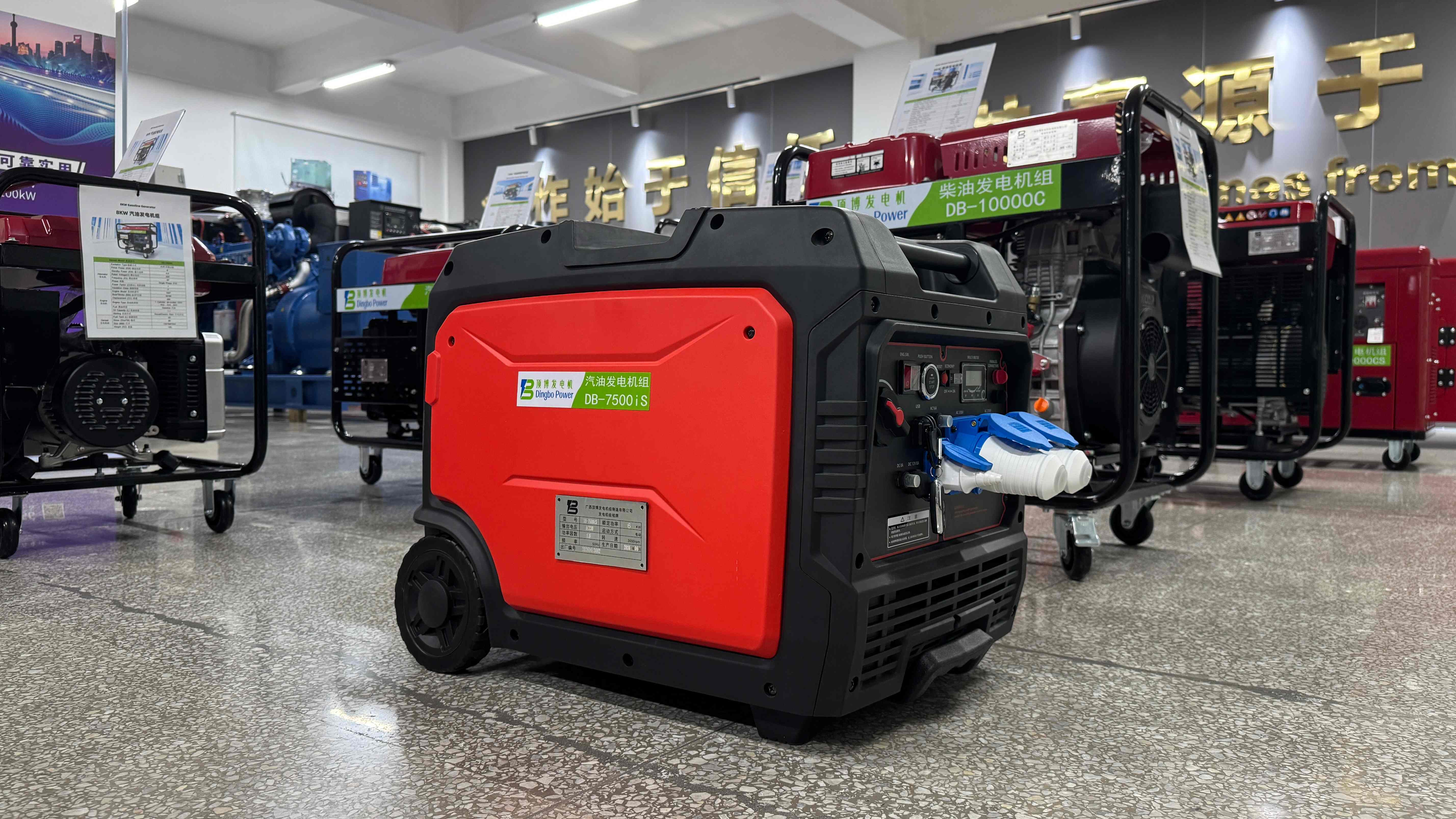
Numbers on a page can hide more than they reveal. The advertised compression ratio doesn't tell you if the piston-to-valve clearance was checked with the actual head gasket thickness you plan to run, and the listed journal diameter means nothing if the crank wasn't straightened after grinding. Before you buy any rotating assembly, dig into how the supplier handles tolerance stacking. Ask whether the rods are weight-matched to within half a gram or just visually sorted, and if the bearings are measured for eccentricity rather than just shell thickness. These are the details that show up as uneven bearing wear or a slight vibration at 3,000 rpm.
Component sourcing gets dangerous when you chase a single impressive number. A turbo spec sheet might show a compressor map with a wide efficiency island, but if the turbine housing A/R was chosen for a dyno queen instead of your street gearing, the boost will feel mushy and late. Look past the peak figures and find out how the part behaves across the entire operating range. Better yet, talk to builders who have torn down engines after real mileage. Their reports about ring seal, valve seat recession, and oil consumption will teach you more than any marketing PDF.
The final assembly is where all the sourcing decisions get tested. A set of forged pistons with perfect specs can still seize if the cylinder bore finish doesn't match the ring material, and a high-flow oil pump won't save a block with restricted lifter bores. When in doubt, buy from a supplier who offers a detailed inspection sheet with each batch and will replace a part without arguing if the measurements are off. The goal isn't to collect the most impressive spec sheet, it's to build an engine that stays together and makes power predictably.
Load Testing and Real-World Performance Checks That Matter
Load testing often gets reduced to firing thousands of virtual users at an endpoint and watching the throughput graph climb. But that approach misses the messy, unpredictable nature of real traffic. What actually matters is whether your system holds up when a sudden spike hits during a deployment, when a downstream payment gateway starts responding in 800ms instead of 80ms, or when a caching layer fails and every request suddenly pounds the database. Those are the conditions that reveal hidden bottlenecks—connection pool exhaustion, thread starvation, cascading timeouts—that synthetic benchmarks rarely surface.
Real-world performance checks should lean heavily on production observability. Instead of only running scripted scenarios in a staging environment, look at real user monitoring data: p95 and p99 latency by endpoint, error rates during peak hours, and resource saturation under organic traffic patterns. Running a canary release or a shadow traffic replay against a small slice of production gives you far more signal than any load testing tool, because it exercises the actual code paths, data distributions, and third-party dependencies your users touch every day.
Finally, the checks that matter are the ones you can act on immediately. Watch for connection pool wait times creeping up, slow query logs filling during moderate load, or garbage collection pauses that get worse as heap grows. Test failover scenarios under load—kill a read replica, throttle a message queue, restart a caching service—and measure how long recovery takes. These targeted, real-world probes reveal not just whether your system can handle a high request count, but whether it degrades gracefully and recovers without manual intervention when things go wrong.
Fuel Consumption, Runtime, and Noise Levels Worth Comparing
When you put two similarly sized generators side by side, the differences in fuel consumption rarely jump out from a spec sheet alone. What matters is how each unit behaves under a real load: one might sip fuel at half load but become thirsty once you push it past 80% capacity. The other could burn slightly more at idle yet hold steady under heavy demand. Those nuances only show up after a few hours of continuous use, not in a quick demo.
Runtime follows a similar pattern. A larger fuel tank doesn't automatically mean longer operation if the engine isn't tuned efficiently. You might see a 10-hour claim on paper, but actual runtime can shrink to 7 hours when powering a compressor or welding rig. Noise levels add another layer: a unit rated at 68 dB(A) might sound acceptable on a quiet residential street, but place it near a jobsite trailer and you'll notice the difference immediately. Some models produce a low-frequency hum that travels farther than the decibel number suggests.
For anyone who has worked next to a generator all day, the combination of fuel stops, refill intervals, and steady drone matters far more than peak output. Comparing these three factors side by side reveals which machine lets you work longer without interruption—and without losing your hearing.
Warranty, Spare Parts, and Service Networks: The Hidden Cost Factors
When buyers compare machines from different manufacturers, they rarely ask what happens after the check clears. Spare parts availability, warranty response times, and the geographic spread of service technicians quietly shape long-term ownership costs more than the sticker price does. A cheap machine that sits idle for three weeks waiting on a backordered pump is far more expensive than a pricier unit with a local parts hub.
Warranty terms are often treated as a marketing checkbox, but the fine print tells a different story. Some policies exclude wear components or require shipping the entire unit to a distant depot for repair, effectively shifting downtime risk back to the customer. Others include on-site labor and overnight parts delivery as standard, which can wipe out thousands in lost production over a single breakdown cycle.
Service networks function as a hidden subscription fee. Manufacturers that rely on third-party dealers may cover a map with pins, yet those dealers prioritize their own sales and maintenance contracts before warranty work. By contrast, a factory-owned service fleet with dedicated emergency lines turns a geographic liability into a competitive shield, keeping equipment running when competitors are still arguing over who pays for the tow.
Vetting the Manufacturer: Red Flags and Smart Questions Before You Buy
A manufacturer's website can look flawless, but a little digging often reveals cracks. Watch for vague claims like "premium materials" without specifics — if they can't name the alloy, the thread count, or the country of origin, that silence says more than a slogan ever could. Another warning sign: customer service that only exists as a generic email form. Try calling the listed number before you buy. If you get a dead line or a robotic loop, imagine what happens when something goes wrong with your order.
Then there are the smart questions that separate serious makers from middlemen. Ask where the product is actually built, not just where it's shipped from. Ask about tolerances or quality control — if the person on the other end doesn't know what a tolerance is, you're probably buying from a reseller, not a manufacturer. Request a sample or a spec sheet, even for a small order. Any legitimate factory will send one without hesitation. If they dodge, that's your answer.
Finally, look for proof of life beyond the catalog. Real manufacturers often post videos of their production floor, share third-party audit results, or have consistent part numbers across years. If every "factory" photo looks like a stock image and the company has changed its name twice in three years, walk away. The best vetting isn't about finding a perfect manufacturer — it's about avoiding the ones who are perfectly good at hiding what they don't do.
FAQ
The difference usually comes down to copper content in the alternator, bearing quality, and how tightly the carburetor is tuned to the engine. A solid manufacturer will use fully guarded AVR circuitry, oversized cooling fins, and bolts that don't vibrate loose after 50 hours. Cheap units often cut those corners first.
We map the engine's torque curve against the alternator's demand, then derate the continuous output by about 15 percent. That way a 3 kW generator isn't running at its absolute ceiling when you plug in a compressor. The governor and AVR also share load sensing, so the throttle opens a beat before voltage drops.
At minimum you want a 4-hour break-in run, a full-load step test, a cold start test, and a harmonic distortion check under resistive and inductive loads. We also run a vibration sweep on the frame and a leak-down test on the fuel system. Anything less tends to hide problems that show up in the first week of ownership.
For anything running electronics, an AVR is non-negotiable. Capacitor regulation drifts with engine speed and can push voltage high enough to damage chargers or control boards. Our AVRs hold output within plus or minus 3 percent, and they recover much faster after a large motor starts.
Ask about the alternator windings, the crankshaft bearing type, the fuel line material, and the control panel enclosure rating. Copper windings last longer under heat, ball bearings outlive sleeve bearings, ethanol-resistant fuel lines prevent cracks, and an IP44 panel keeps moisture out of the switches.
We size the oil capacity larger than typical portable units and use a low-oil shutdown that triggers at a safe threshold, not an emergency one. The frame is welded with cross braces at the engine mount points, and the exhaust is routed away from the fuel tank. That combination is why our units survive job site duty cycles.
Yes. We build 120V/60Hz, 230V/50Hz, and dual-voltage configurations on request. The alternator is wound to the requested spec rather than using a universal tap, which keeps the waveform cleaner. You can also choose a 50A RV outlet, a twist-lock plug, or a bare terminal block.
We put the air filter on a remote intake with a cyclonic pre-cleaner, so it doesn't clog as fast on dusty sites. The fuel valve is mounted outside the tank for easy replacement, and the spark plug is angled for tool clearance. Small service choices like those matter more than warranty length.
Conclusion
The real difference between a premium gasoline generator and a generic unit rarely shows up on the spec sheet. It lives in how the manufacturer sources engine internals, bearings, piston rings, and copper windings, and whether they enforce consistent tolerance standards instead of just assembling whatever parts arrive that week. Load testing separates honest machines from marketing claims: a generator that starts easily with no load can sag badly under a sudden inductive load from a compressor or pump, so high-quality manufacturers verify voltage and frequency stability under cold starts, altitude shifts, and continuous duty. Fuel consumption, runtime, and noise deserve the same skepticism. Compare grams per kWh or liters per hour at 50% and 75% load, not just at idle, and check decibel readings at seven meters under real load, because a cheap unit often burns more fuel and runs louder while delivering less usable power.
The hidden cost factors are warranty, spare parts, and service networks. A three-year warranty means little if replacement parts take months to arrive or the nearest trained technician is a plane ride away. Ask how the manufacturer handles warranty claims, whether local distributors stock common parts, and what training they provide to service centers. Vetting the manufacturer matters more than comparing wattage stickers. Red flags include vague certifications without documentation, no physical address, no serial number tracking, or unwillingness to name component suppliers. Smart questions cut through the noise: Which engine are you using? Can I see a load bank test video? What is total harmonic distortion at full load? Do you have a local distributor with spare parts on hand? A high-quality manufacturer answers with specifics, not generic reassurances, because reliable power comes from engineering choices and accountability, not from a lower price tag.
Contact Us
Contact Person: Rita
Email: [email protected]
Tel/WhatsApp: +8613481024441
Website: https://www.dbdieselgenerator.com/