

Custom Rubber Kneader: Precision Mixing Solutions for Your Industry
2026-08-13
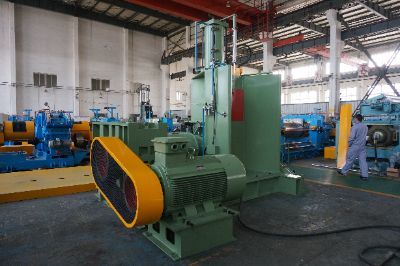
Every rubber processing line eventually hits the same wall: standard kneaders simply cannot handle the unique viscosity, filler load, or temperature profile your compound demands. That is where a custom rubber kneader changes the game. At SFC, we design precision mixing solutions around your specific production targets—not the other way around. Whether you are pushing silica dispersion limits, shortening cycle times, or integrating a new elastomer blend, the right kneader geometry and control logic make the difference between costly scrap and repeatable quality. This post breaks down what truly custom means in rubber mixing and how it translates to measurable throughput and consistency gains on your floor.
Tailored Mixing Geometries for Demanding Compounds
Processing highly filled or shear-sensitive formulations demands more than a standard screw profile. Rotor and screw geometries are now tailored at the design stage to balance dispersive and distributive mixing without pushing melt temperature past critical thresholds. Adjusting flight depth, helix angle, and the arrangement of kneading blocks allows the mixer to handle abrasive fillers or temperature-limited polymers that would otherwise degrade or form agglomerates.
For compounds with high filler loadings, narrow clearance zones create the intense shear needed to break down carbon black or silica clusters. But too much shear can damage fiber reinforcements or trigger polymer chain scission. Modern geometries stagger the clearances and alternate high-shear elements with gentle conveying sections. This gives controlled residence time distribution and prevents hot spots along the barrel.
In practice, a tailored geometry might use a combination of reversed screw elements and wide-disk kneaders placed after the filler feed port. The result is faster wetting of the filler surface, lower energy input per kilogram, and a compound that exits the die with uniform dispersion and minimal thermal history. Operators can then run higher throughputs without sacrificing quality, even on materials that were previously considered marginal for continuous mixing.
Temperature Control That Protects Sensitive Formulations
Sensitive formulations often degrade within a narrow temperature band, and even brief excursions can unravel months of development work. The system here doesn't just hold a setpoint; it maps the thermal profile across the entire sample array and adjusts heater output continuously. That way, a vaccine adjuvant sitting in one corner receives the same gentle warmth as a fragile lipid nanoparticle in the center.
Rather than cycling a compressor on and off, the cooling loop uses a variable-speed drive that shifts gradually between load conditions. This eliminates the sharp temperature spikes that occur with conventional on/off refrigeration. For proteins, monoclonal antibodies, or mRNA payloads, those spikes are what cause aggregation and loss of potency over time.
The control interface leans toward simplicity: you define the acceptable drift, and the firmware holds to it without constant recalibration. Alarms are based on actual product temperature, not just air temperature, so a brief door opening won't trigger a false shutdown or an unnoticed rise. That quiet reliability matters when the batch is worth more than the chamber itself.
From Lab-Scale Trials to Full Production Runs
Moving from glass flasks and benchtop reactors to multi-thousand-liter vessels rarely happens without friction. Early trial batches often hide issues that only appear under full-scale mixing, heat transfer, or filtration loads. We’ve learned to treat the first pilot run as a stress test, not a formality. Viscosity shifts, exotherm profiles, and impurity carryover all change when geometry and residence times scale up, so each parameter gets re-baselined against production equipment rather than lab assumptions.
The handoff between R&D and manufacturing works best when the process is documented in plain operational terms. Instead of a recipe tuned to one skilled chemist, we build ranges around critical controls: agitation speed, feed rate, temperature windows, and hold times. Operators on the floor need to know which deviations matter and which ones are just noise. That clarity cuts down on unnecessary batch rejections and keeps the campaign on schedule.
Qualification batches serve as the bridge, but they shouldn’t be the first time a process meets reality. We run at least one engineering batch with production staff involved from the start, then fold their observations back into the batch record. By the time full production starts, the procedure has already absorbed the quirks of the plant, not just the elegance of the lab.
Built for Abrasive Fillers and High-Viscosity Batches
High-viscosity mixing often goes wrong because standard agitators lose torque at the exact moment the batch thickens. This unit flips that problem on its head: the drive system is paired to the impeller geometry so that even at 80% solids loading, the rotor keeps turning without stalling or cavitation.
Abrasive fillers like silica, calcium carbonate, or glass beads chew through soft metal parts in weeks. Here, the contact surfaces are lined with replaceable ceramic tiles and the shaft seals use a double mechanical barrier with a pressurized flush chamber. That means you can run continuous batches of reinforced resins or filled sealants without swapping wear parts every month.
The discharge side is just as important. A large-diameter, round-bottom outlet eliminates dead zones where thick paste can hang up, and the non-stick coating lets you scrape the vessel clean without leaving behind a hardened skin. For operators, that's less manual cleaning, shorter cycle times, and fewer rejected batches from contamination or uneven filler dispersion.
Real-Time Torque Monitoring Reduces Batch Variation
Torque readings are often treated as a final check, but by then the damage is already done. When you watch torque in real time across every cycle, small shifts in friction, wear, or material consistency become visible immediately instead of after a batch has drifted out of spec. Operators can adjust on the fly rather than scrapping a full run.
This matters most in processes where torque is a proxy for something harder to measure: clamp load in fastening, viscosity in mixing, seal integrity in capping. A slight drift in peak torque might not trip a limit alarm, but over hundreds of units it pulls the distribution wide. Real-time monitoring keeps that distribution tight by flagging trends early, not just individual failures.
The practical effect is less sorting, fewer recipe overrides, and more consistent output from the same equipment. Batch variation drops not because the machine changed, but because the information reached the right person before the problem became expensive.
Maintenance-Friendly Design Keeps Downtime Low
Downtime rarely comes from a single catastrophic failure—it builds up through small, hard-to-reach components that force technicians into hours of disassembly. A maintenance-friendly design starts with the assumption that every wearing part will eventually need attention, so access points are placed where hands actually fit, not just where the CAD model looks clean. Quick-release fasteners, labeled cable routing, and slide-out modules turn a 40-minute bearing swap into a 5-minute job that doesn’t require a specialist.
The real cost of downtime isn’t just the repair itself; it’s the uncertainty of troubleshooting. Designs that embed diagnostic indicators—like wear gauges on belts or color-coded pressure points—let operators spot a developing issue before it forces a shutdown. Even better, common failure items are standardized across the machine line, so a single spare kit covers multiple stations. That kind of repetition reduces both the learning curve and the inventory burden, which directly keeps the line moving.
Maintenance-friendly also means designing for the worst-case scenario: a rushed technician working under production pressure. If a component can be installed backwards, it will be. Polarized connectors, asymmetric mounting holes, and torque-limiting fasteners remove those silent mistakes. When every service action is either tool-free or uses a single wrench size, you stop fighting the design and start fixing the problem. That’s what keeps downtime low—not a promise of reliability, but an architecture that respects the person who has to keep it running.
FAQ
A custom kneader is built around your specific material properties, batch size, and downstream process. You can adjust rotor geometry, chamber volume, cooling or heating capacity, and even the discharge mechanism to match how your rubber actually behaves under shear.
We see demand from automotive sealing, tire retreading, cable insulation, medical rubber goods, and specialty adhesives. Any operation where compound consistency directly affects product performance or rejection rates is a candidate.
The chamber and rotors can be machined with spiral or drilled cooling channels, and we can integrate a closed-loop thermal unit that holds the batch within a narrow window. This prevents scorching in fast-curing compounds and keeps viscosity stable.
Yes, with a variable-speed drive and programmable mixing cycles you can use the same machine for high-shear masterbatch dispersion and then drop the speed for gentle final addition of curatives. Changeover is mostly a matter of recipe settings.
You can specify automatic feeding of powders and oils, temperature interlocks, torque-based endpoint detection, and data logging for every batch. Some plants connect the kneader to their MES so each mix record is traceable to a work order.
Absolutely. Rotors and chamber walls can be hard-faced with tungsten carbide or ceramic coatings, and we can use replaceable wear plates at high-abrasion zones. This extends service life without changing the mixing geometry.
The most useful information includes your compound recipe or at least the main polymers and filler loadings, target batch weight, required mixing time or energy input, and any space or power constraints in your plant. That lets the engineering team size the drive and chamber correctly.
Conclusion
When a compound refuses to disperse evenly, the difference often comes down to the kneader’s geometry. Our custom rubber kneader is built around your material’s actual behavior—blade profiles, clearance, and rotor speed are adjusted for demanding compounds instead of forcing your formula into a generic mixing chamber. That level of adaptation matters just as much for temperature control: heating and cooling circuits follow the batch closely, so heat-sensitive additives don’t degrade before the mix is finished. The same machine can be configured as a small lab unit for recipe development and then scaled to full production runs, preserving the mixing history from one stage to the next.
Abrasive fillers and high-viscosity batches put constant stress on wetted parts, so the kneader’s contact surfaces are specified for wear resistance from the start. In operation, real-time torque monitoring gives operators a direct view of how the batch is thickening, which means adjustments happen during the cycle rather than after off-spec results show up. When maintenance is required, split housings, accessible seals, and replaceable wear plates allow targeted service without pulling the entire line apart. The result is a mixing process that keeps batch variation narrow and downtime low—two factors that show up directly in your final part quality and throughput.
Contact Us
Contact Person: Chen Zhengwei
Email: [email protected]
Tel/WhatsApp: +86-13963975727
Website: https://www.sfcrubbermachine.com