

China Rubber Elevator Belt Selection Guide for Safer Vertical Transport
2026-11-20
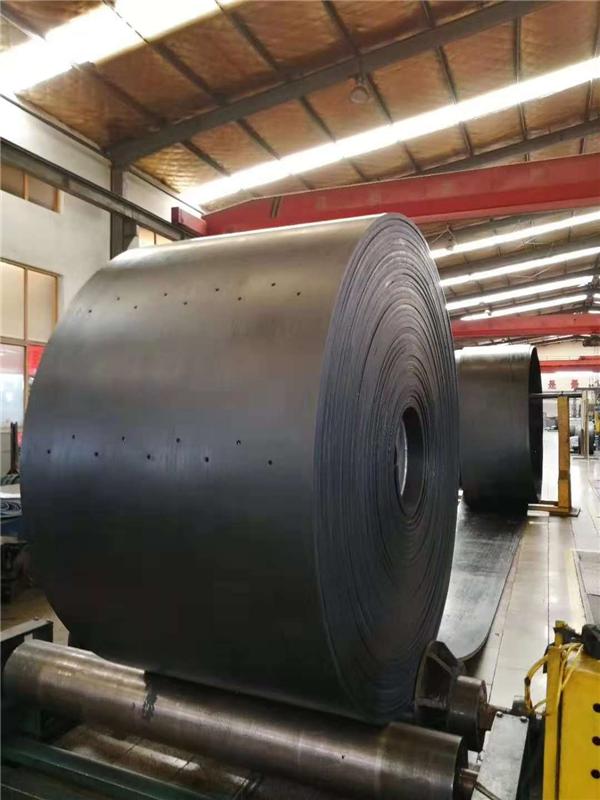
Vertical transport in industrial and commercial buildings often depends on equipment that rarely gets a second thought—until a single component starts to degrade. Rubber elevator belts sit at the center of that risk. With passenger safety, load stability, and downtime costs all tied to belt performance, selecting the right specification is more than a maintenance decision. This guide breaks down what to look for in construction, width, tensile strength, and surface profile, and explains how YUFENG rubber elevator belts are engineered to meet the demands of continuous vertical operation.
Reading Rubber Compound Spec Sheets Without the Guesswork
A rubber compound data sheet becomes easier to read when you stop scanning for one perfect number. The polymer type shapes the conversation more than anything else, so confirm whether you are looking at NBR, EPDM, FKM, or a blend before comparing hardness values. Even compounds with the same Shore A reading can differ noticeably in feel, compression set, and low-temperature behavior because fillers, oils, and cure packages pull the performance in different directions.
Read the mechanical properties as a group instead of checking boxes. Tensile strength, elongation, and tear resistance interact in ways that a single value cannot capture, and a high tensile figure does not guarantee good tear resistance around sharp edges. For seals and gaskets, compression set usually deserves more weight than tensile strength, but only when the test time and temperature are matched to the actual service conditions.
Finally, look at how the compound cures and how consistent it is. Rheometer data like minimum torque, maximum torque, T10, and T90 provide a much clearer picture of factory behavior than a generic cure time. If the sheet only lists typical values without test methods or batch ranges, request the underlying quality records. That is where the real variation appears, and it can save you from approving a compound based on a flattering summary.
Matching Belt Width and Profile Tolerances to Existing Sheaves
When reusing existing sheaves, the first point of failure is rarely the belt itself—it’s the assumption that a nominal cross-section will seat exactly as the original did. Groove flanks wear unevenly, particularly near the top and bottom of the contact zone, so checking with a pitch gauge or worn-sheave template tells you more than a caliper reading across the outer edges. If the new belt sits too deep, the tensile cord ends up running below the designed pitch line; if it sits too high, the sidewalls carry load on a narrow strip and heat builds up quickly.
Belt width tolerance works as a paired value with groove opening, not as an isolated dimension. A slightly narrow belt in a slightly wide groove can still transmit torque if the included angles still match, but the combination reduces wedging force. In contrast, a belt that is only marginally oversize in relation to a worn groove may bottom out under load, which reads as slippage even when tension appears correct. Measuring several points around each groove matters because wear is seldom uniform.
For synchronous drives, profile tolerance is less about sidewall angle and more about land area and flank clearance. A new belt with tighter tooth spacing tolerance can force the load onto a few teeth if the existing pulley has pitch variation, especially on a high-mileage set. Checking backlash at three or four positions before final tensioning tends to catch mismatches that static alignment misses.
Tensile Strength Against Real Passenger Loads
Real passenger loads are rarely the clean, evenly distributed forces shown in a datasheet. During hard braking, sudden swerves, or rough-road impacts, body weight shifts forward and sideways, and that energy travels through seat belt anchors, seat frames, and floor mountings. Tensile strength in these areas has to be judged against peak transient loads, not just a steady pull, because a localized neck or tear can start well below the material's nominal rating.
The difference becomes clearer when tests move from slow, uniform stretching to pulse-like loading with bending and torsion mixed in. Heat-affected zones near welds and the edges of bolt holes tend to concentrate stress, so a part can fail even when the base metal meets the required tensile strength on paper. For this reason, the useful question is not simply how strong the material is, but how the component loses stiffness and where permanent deformation begins under a realistic occupant load.
A more reliable approach is to map the load path with actual passenger weights and body positions, then reinforce only the sections that yield first. This often means adding a gusset at a seat recliner bracket, increasing bolt spacing, or changing a weld sequence rather than thickening the entire structure. The result is a frame that holds up under real passenger loads without carrying excess weight, which matters as much in daily durability as it does in a single extreme event.
Fire and Smoke Ratings That Go Beyond Standard Datasheets
Most datasheets reduce fire performance to a single number, but real installations rarely behave that way. We look at how the material responds during the first few minutes of exposure, whether it drips flaming particles, how much obscuring smoke is released before flashover, and how those factors shift when the product is mounted vertically versus horizontally. That kind of layered reading is what separates a code-compliant choice from one that actually protects the people inside the building.
Our team also tracks variables that standard sheets tend to omit, such as smoke acidity, char integrity after prolonged heating, and the effect of joints or fasteners on flame spread. By pulling test footage, thermocouple curves, and post-burn cross-sections together, we can tell you where a product weakens first and what that means for egress time or compartmentation. It is not about memorizing ratings; it is about understanding what the rating does and does not cover.
When we compare materials for a project, we rank them not only by their headline classification but by their behavior in the context you will actually use them. A ceiling liner in a high-ceiling atrium faces different stresses than a wall panel in a narrow corridor, and the same product can perform quite differently in each setting. Going beyond the datasheet means testing those conditional scenarios so your specification holds up under real fire conditions, not just in a controlled chamber.
Why Splice Design Predicts Long-Term Wear Better Than Price
When you look at an expensive belt or strap, the price tag often reflects brand markup, exotic materials, or hand-finishing. But none of those automatically translate to durability. The splice is where two ends of material join to form a continuous loop, and that single junction carries the entire tension load every time the belt moves. A well-engineered splice distributes stress across overlapping fibers rather than concentrating it at a stitch line or glued edge. That means the difference between a belt that lasts years and one that cracks, stretches, or snaps at the seam within months.
Price can also be misleading because some high-end belts use decorative stitching or thin edge paint that looks refined but fails under repeated flexing. A thoughtfully designed splice, by contrast, often uses skiving, interlocking layers, and staggered bonding points that allow the joint to flex naturally without creating a weak spot. Even if the belt material is modest, a cleanly executed splice can outlast a pricier belt with a crude overlap. Over time, the splice area is where abrasion and fatigue accumulate first, so its construction matters more than the number on the tag.
In practice, evaluating a splice means checking whether the transition is smooth, whether the thickness changes gradually, and whether the adhesive or thread reinforcement extends beyond the immediate seam. A poorly spliced belt may feel sturdy initially but will develop a memory crease or delaminate after repeated cycles. A well-designed splice, on the other hand, remains nearly invisible and continues to handle load evenly. If you are trying to judge long-term wear, ignore the price and inspect the splice—it tells you more about how the belt was actually built to last.
Routine Inspections That Uncover Early Belt Fatigue
Most belt failures give off warning signs long before they snap, but only if someone is looking closely enough. Run a fingertip along the inner ribs and edges; glazing feels slick, while early cracking often hides at the base of the ribs. A small flashlight held at a low angle makes surface fatigue easier to spot than a direct overhead inspection.
Tension drift is another early indicator that rarely announces itself. Use a deflection test or a tension gauge on a set schedule tied to operating hours, not calendar days. Compare the reading against the drive’s baseline, and note whether the belt has settled deeper into the pulley grooves. Fine rubber dust collecting around the guard is often a sign that slip and heat are already at work.
Tracking behavior under load can reveal problems that static checks miss. Watch the belt briefly during start-up and at full speed, paying attention to any sideways movement or a slight chirp that disappears once the system warms up. If the wear pattern shifts from one edge to the other or the width has narrowed beyond the manufacturer’s tolerance, schedule a closer look before the outer fabric starts to separate.
FAQ
Look beyond the datasheet. A dependable supplier can walk you through their compound mixing records, adhesion test results between rubber and steel cords, and the exact tension control used during belt curing. If the only selling point is a lower number on the quote, the long-term cost usually shifts to downtime and premature replacement.
Because the load profile changes more than most people expect. In taller shafts, the belt spends more time under high cyclic tension, and heat builds up around the drive sheave. A belt with a stiffer carcass and better cord alignment may feel less supple on the bench but survives far longer in a high-rise installation.
They should track more than visible cracks. Run a hand along the edges and feel for swelling or uneven width loss. Measure the remaining cover thickness at several points, especially near the splice. Also check for cord pattern read-through on the back side. If those signs show up together, replace the belt rather than waiting for a failure.
Not always. Thicker covers protect the steel cords, but they also increase bending resistance and can generate more heat on smaller sheaves. For most passenger lifts, the right balance is a moderate cover with a compound designed for high flex fatigue, not simply more rubber.
Ask for fatigue testing under repeated reverse bending, not just a static tensile report. A useful test cycles the belt around a sheave under load until cracks appear or cords separate. Also request steel cord pull-out force per cord and dynamic adhesion after heat aging. These results show how the belt will behave after years of movement, not just on day one.
In any building where fire spread through the hoistway is a genuine concern, such as hospitals, high-rise residential towers, or buildings with limited smoke control. The added cost is minor compared with the safety margin. Just confirm the compound still meets the required flex life, because some flame-retardant formulas sacrifice flexibility.
Poor sheave alignment and improper tensioning cause more early failures than material defects. If the belt enters the sheave at even a slight angle, the edge cords take extra stress and begin to separate. After installation, run several full-load trips and re-check tracking before the shaft is handed over.
Conclusion
Selecting a rubber elevator belt in China is less about chasing the thickest cover or the lowest quote and more about reading material data in the context of the actual shaft. A compound sheet only becomes useful when elongation, abrasion loss, and heat aging are weighed against passenger traffic patterns and machine-room temperatures. Width and profile tolerance matter just as much: a belt that sits slightly off in an existing sheave groove will scrub away edges and drift long before its rated life. Tensile strength should also be checked against real loads, including uneven passenger distribution and emergency braking forces, rather than the neat number stamped on the cabin plate.
Fire and smoke behavior deserves a closer audit than standard datasheets provide. Request full test reports for smoke density and toxicity under the ventilation conditions of the building, because code minimums often leave high-rise shafts underprotected. Splice design quietly separates belts that last from belts that just pass a bid comparison; a reinforced stepped splice with proper curing generally withstands flex fatigue far better than a cheap butt joint. Routine inspections then become the final safeguard, with early signs like edge cord separation, cover cracking near splices, and uneven sheave contact flagging fatigue before it turns into unplanned downtime.
Contact Us
Contact Person: Jayce
Email: [email protected]
Tel/WhatsApp: 8615318787602
Website: https://www.yuphengbelt.com/