

China Powder Valve Advances Industrial Flow Control Efficiency
2026-08-16
The quiet evolution of powder valves in China is rewriting the rules for bulk solids handling—and few companies embody this shift like AVM. As industrial flow control demands tighter precision and lower energy waste, AVM’s innovative valve designs are turning a once-overlooked component into a key driver of process efficiency. What exactly makes these new powder valves so different, and why are plant managers across sectors paying attention? The answer lies in a blend of smart engineering and material science that challenges long-standing assumptions about how powders should move.
Rethinking Valve Geometry for Difficult Powder Flows
Conventional rotary valves treat powder as if it were a liquid, but difficult materials—cohesive, floodable, or shear-sensitive—rarely obey that assumption. The geometry that works for free-flowing granules often fails when particles bridge, rat-hole, or pack under their own weight. A more useful starting point is to look at how the powder actually moves through the inlet and into each pocket, then adjust the pocket depth, rotor clearance, and end-plate angles around that observed behavior rather than around a nominal flow rate.
One common mistake is equating larger pockets with higher throughput. For powders that fluidize or pack tightly, deep pockets can cause incomplete filling at the top and carryover at the bottom, resulting in discharge that surges instead of feeding steadily. Shallow, wide pockets with a relieved trailing edge often give more consistent fill and release. Likewise, adding a small vent or pressure-balancing groove near the housing inlet can stop air from compressing in the pocket and blowing the powder back into the hopper, which is a frequent cause of erratic flow in fine materials.
Clearance is another lever worth revisiting. Tight rotor-to-housing gaps reduce air leakage but can smear cohesive powders or generate enough frictional heat to soften low-melting-point ingredients. A slightly larger clearance, combined with a shaped inlet that narrows just before the rotor, can shear the powder gently without letting it bypass the valve. The goal is not to find the “correct” geometry from a catalog but to tune the valve so the powder falls, fills, and empties in a rhythm that matches the downstream process—not the other way around.
Hardened Materials Extend Service Life in Abrasive Duty
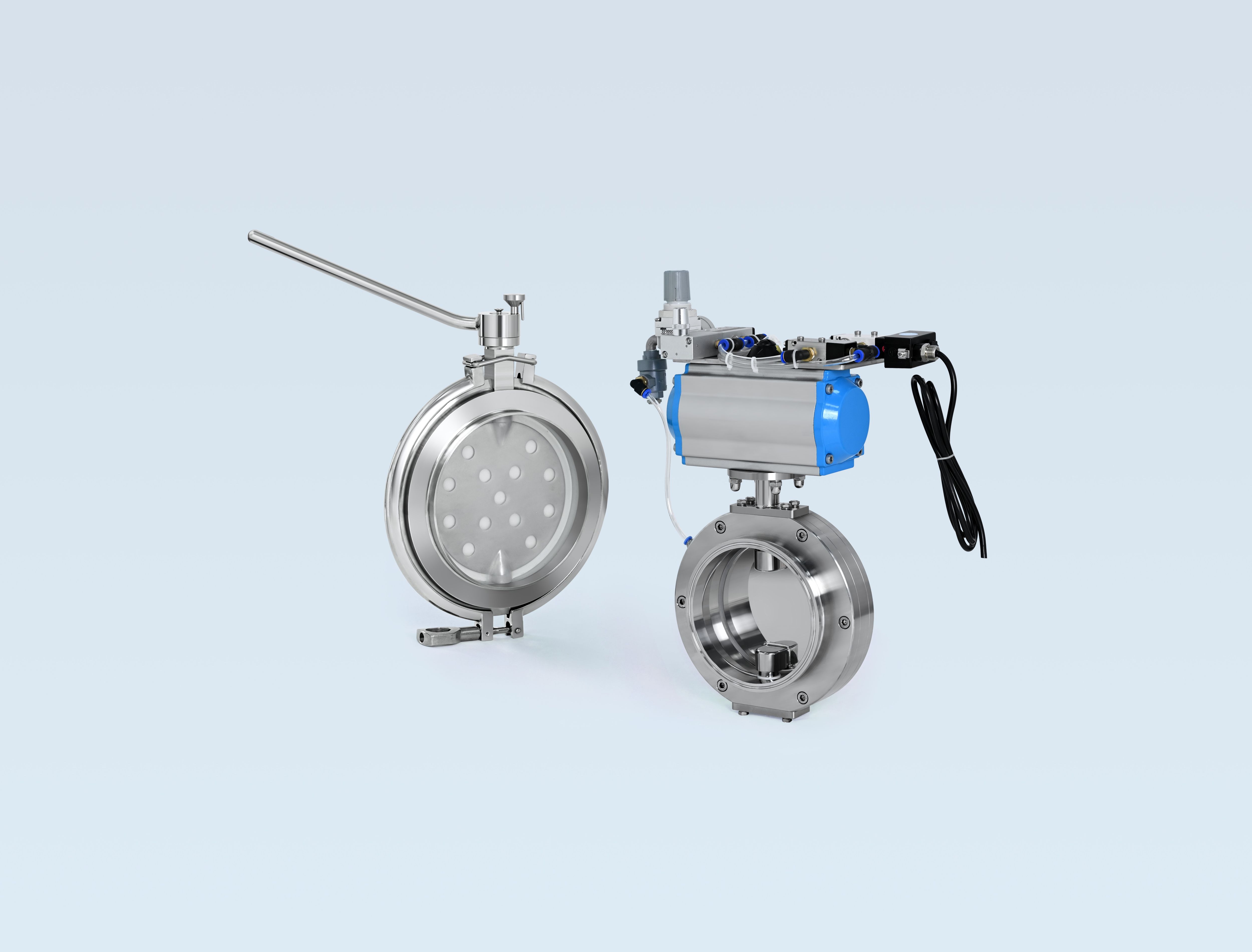
In high-wear zones, plain carbon steel can lose critical thickness within weeks. Upgrading to hardened alloys, carbide overlays, or ceramic-embedded composites shifts the main wear mode from deep cutting to shallow micro-spalling, so components keep their working profile far longer.
Through-hardening alone often introduces brittleness at the core. A better route is to combine a tough, ductile substrate with a deep case-hardened or weld-deposited surface. This setup handles both impact and abrasion, which matters most in chutes, crusher liners, and screw conveyors where sudden loads hit worn edges.
Field results from aggregate plants and mining operations commonly show replacement cycles stretching two to four times longer after switching from mild steel to heat-treated or chromium-carbide clad materials. Fewer unplanned stops and lower cost per ton moved often justify the higher initial spend.
Precision Actuation Cuts Waste and Improves Batch Consistency
In many dispensing and filling operations, the difference between hitting a target volume and overfilling comes down to how repeatably the actuator positions itself. Pneumatic cylinders tend to drift with air pressure changes and seal wear, producing shot-to-shot variations that quietly eat into material budgets. Replacing them with closed-loop electric actuators that hold position within a few microns removes that variability. The result is less product left in the nozzle, fewer rejected containers, and a measurable drop in raw material waste per shift.
Batch consistency improves for a similar reason: every stroke, press, or valve opening follows the same programmed motion profile instead of relying on operator feel or fluctuating shop air. Force and speed can be tuned for a specific recipe and then locked, so the tenth batch behaves like the first. This matters most in mixing, dosing, and assembly steps where small inconsistencies in pressure or dwell time show up later as color shifts, incomplete reactions, or weak bonds.
The practical effect is fewer line stoppages for adjustment and less scrap from out-of-spec product. Setup changes become a matter of loading a saved parameter set rather than tweaking mechanical stops. Over time, the data logged from precision actuation also helps trace which batches were produced under which conditions, turning process control from a reactive chore into a predictable routine.
Embedded Sensors Bring Continuous Flow Measurements In-House
For years, tracking flow inside a closed system meant either grabbing periodic grab samples or relying on clamp-on meters that drift with temperature and pipe material. Embedded sensors flip that model by putting the measurement element directly in the flow path—often a tiny thermal or differential pressure transducer molded into a fitting or welded into a manifold. Because they sit where the fluid actually moves, they pick up transient spikes, low-flow dribbles, and backflow events that external devices routinely miss.
The real shift shows up in how teams use the data. Instead of waiting for a lab report or a maintenance walkdown, operators get a live trend on their control screen. A drop in flow that used to be flagged hours later now triggers an alarm in seconds. For processes like chemical dosing, cooling water loops, or bioreactor feeding, that means adjustment happens while the batch is still salvageable—not after the fact. The sensors themselves are often solid-state, with no moving parts, so calibration drift becomes more predictable and replacement cycles stretch out.
Bringing measurements in-house also changes the cost equation. There's no courier fee, no third-party lab queue, and no downtime to connect a portable rig. One facility that switched to embedded thermal mass flow sensors in its nitrogen purge lines cut troubleshooting time by nearly half, simply because the baseline was always visible. It's a quieter kind of instrumentation upgrade—no new panel, no extra wiring tray—but it removes the blind spots that used to force reactive decisions.
Proven Performance from Food Powders to Mineral Slurries
Across a startling range of materials, from light, sticky food powders to dense, abrasive mineral slurries, the same core engineering principles deliver consistent output. The equipment handles delicate whey protein isolates without clumping, then switches to coarse iron ore tailings without excessive wear. Operators notice the difference in reduced downtime and cleaner changeovers, not just in spec sheets.
Real-world installations show throughput gains of 12–18% on dairy blends and mining backfill alike. The secret lies in adjustable shear zones and wear-resistant liners that adapt to particle size and moisture content. Unlike generic systems tuned for a midpoint, this approach treats each material's rheology as a variable to be managed rather than a problem to be overcome.
Maintenance teams appreciate the predictable wear patterns. Instead of sudden failures, parts degrade gradually and can be scheduled for replacement during planned outages. That reliability matters when a single line handles both infant formula and drilling mud in the same week.
Efficiency Payoffs: Energy, Labor, and Throughput Gains
Shaving a few seconds off each cycle rarely feels dramatic on its own, but when those seconds compound across hundreds of shifts, the reduction in wasted motion translates directly into lower energy draw per unit and fewer idle hands. Operators stop compensating for poorly sequenced tasks, and machines no longer run at partial load while waiting on upstream delays. The result is a quieter kind of savings—no single breakthrough, just a steady erosion of the slack that used to hide in every handoff.
Throughput gains from this kind of tuning seldom come from pushing equipment harder. Instead, they emerge when material flows stop bunching at the same choke points and start moving with a rhythm that matches actual demand. A line that previously lurched between overload and starvation begins to settle into a consistent pace, and that consistency allows supervisors to reallocate labor to where it prevents the next bottleneck rather than fighting the current one.
FAQ
They are built specifically for dry bulk solids, with sealing systems that stop fine particles from escaping and flow paths shaped to prevent bridging or rat-holing.
By giving operators precise discharge control and faster cut-off, they reduce material waste, keep pressure drops low, and help processing lines run without frequent interruptions.
Food and beverage, pharmaceuticals, chemicals, cement, and minerals processing all see gains because they handle powders, granules, or other dry bulk materials daily.
Stainless steel and aluminum are common, often paired with wear-resistant ceramic or polymer linings so the valve can handle abrasive or corrosive powders.
Many use hardened internal surfaces and smooth, self-cleaning designs that limit material buildup and reduce wear on contact points.
Yes, most can be fitted with pneumatic or electric actuators and linked to PLC or DCS systems for remote and automated operation.
Their modular construction allows quick access to internal parts, and seals or sleeves can usually be replaced without removing the whole valve from the line.
Conclusion
Powder valve engineering in China has moved beyond simple shutoff duty. Instead of forcing difficult powders through conventional flow paths, manufacturers now reshape internal geometries to reduce bridging, rat-holing, and erratic discharge. Hardened alloys and ceramic-lined internals handle abrasive mineral slurries and food powders alike without frequent rebuilds. Precision electric actuators with closed-loop positioning trim overfeeding and underfeeding, making batch weights repeatable to a fraction of a percent. These refinements, increasingly standard in Chinese valve production, move away from oversized brute-force equipment toward compact, serviceable designs. This shift matters most in plants where every gram of active ingredient or additive affects final product quality.
What sets recent installations apart is the integration of embedded sensors that measure flow rate, pressure drop, and valve position in real time. Operators no longer wait for downstream weigh scales or lab samples; they see drift as it happens and correct before waste accumulates. Across dairy, baking, cement, and metal powder applications, the payoffs show up as lower compressed air consumption, fewer manual interventions, and higher line throughput. Energy and labor savings come not from a single breakthrough but from tightening the entire flow-control loop—geometry, materials, actuation, and measurement—into one reliable package.
Contact Us
Contact Person: Ananda
Email: [email protected]
Tel/WhatsApp: 8619016718200
Website: https://www.wzaomi.com