

Best Pilates Bed Options for a Full-Body Home Workout
2026-11-16
Transform your living room into a full-body Pilates studio without sacrificing space or style. The right Pilates bed can turn a corner of your home into a low-impact, high-reward workout zone, but with so many options, finding the perfect match feels overwhelming. Whether you're a reformer novice or a seasoned practitioner, the key is balancing durability, versatility, and footprint. In this guide, we break down the best Pilates beds for home use—and show how Yingruis stands out by blending studio-grade performance with home-friendly design. Get ready to stretch, strengthen, and sculpt your entire body without ever leaving your house.
Finding a Reformer That Fits Your Living Room Flow
Before you fall for a reformer with all the bells and whistles, take a hard look at the actual footprint of your living space. Measure the corner you think might work, then imagine rolling out the carriage, reaching for straps, and sitting up without bumping a side table. A machine that turns your room into an obstacle course kills the urge to practice. Look for a reformer with a slim profile when stored, or one you won’t hate seeing in the open every day.
Think about how you actually move through the room when you’re not working out. If your reformer has to be shifted out of the way for movie night, weight and wheel quality matter more than pulleys and springs. Some models fold in half but feel wobbly during footwork; others are heavy enough to stay put yet roll smoothly when you tilt them. Test that transition before buying, because a reformer you dread moving is a reformer you’ll stop using by February.
The flow also has to do with your own body and schedule. A reformer that fits your living room flow is one you can hop on in socks, mid-morning, without rearranging half the furniture. It doesn’t demand a dedicated studio vibe; it works with the lamp, the rug, the side you naturally walk in from. Pick materials and colors that blend instead of scream gym, and suddenly your living room still feels like a living room—just one with a very good secret.
Why Spring Resistance Beats Free Weights for Core Work
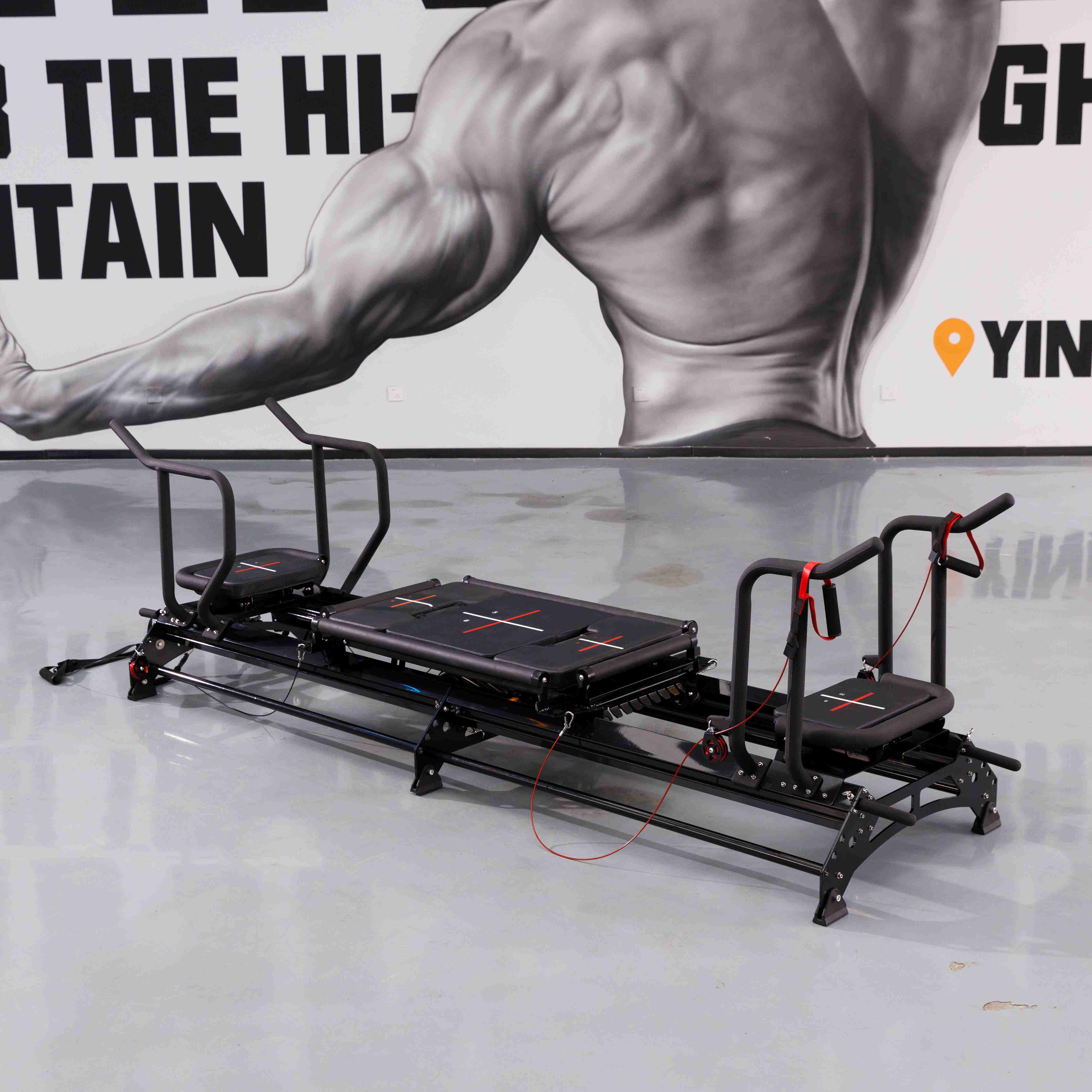
Spring resistance changes the core training game by providing tension that grows as you move, rather than staying constant like a free weight. With a band or spring-loaded machine, the further you stretch, the harder your muscles must work—meaning your abs and obliques never get a moment to coast through the easy part of a rep. This forces your trunk to stay engaged through the full range, turning exercises like resisted pallof presses or standing rotations into brutal anti-extension and anti-rotation challenges.
Free weights rely on gravity, so when you curl a dumbbell or press a plate, the load is heaviest only at the bottom or top of the movement, and your core often just braces statically. Springs, on the other hand, create variable resistance that peaks at the end of the contraction. Try a kneeling chop with a band anchored low: as you pull the band diagonally across your body, the resistance climbs, demanding your deep core stabilizers fire harder to prevent your spine from twisting. That dynamic overload is something a dumbbell simply can't replicate.
Another overlooked advantage is that spring resistance allows you to load movements in planes free weights struggle with—horizontal pressing, rotational swings, or resisted carries where the band tries to pull you off balance. Because the tension is always trying to yank you back to the starting point, every rep becomes a fight for position. Your core learns to resist being pulled out of alignment, which translates directly to real-world strength: holding a heavy bag, pushing a lawnmower, or stopping a kid from falling all require that same brace-and-react ability.
Compact Frames That Still Support Taller Users
Many taller individuals assume they must choose between a space-hogging chair and one that leaves their shoulders unsupported. A well-designed compact frame solves this by keeping the base narrow while extending the backrest and seat pan. Look for models with a seat depth of at least 20 inches and a backrest height that reaches above the scapula, often through a taller back shell rather than a wider footprint. Adjustable lumbar placement matters more than overall chair size for preventing mid-back fatigue.
The gas lift and headrest are the real differentiators. A longer cylinder stroke can add 3–4 extra inches of seat height without changing the frame’s width. Similarly, a slender but tall backrest with a ratcheting headrest lets you dial in neck support without pushing the chair away from the desk. Avoid overly curved “racing” backs that force tall spines into a C-shape; instead, look for a flatter thoracic section paired with a pronounced, movable lumbar pad.
Upholstery and Frame Materials Worth Your Money
When shopping for a sofa or armchair, the materials hiding beneath the cushions matter just as much as the fabric you see. A hardwood frame—think kiln-dried oak, maple, or ash—resists warping and cracking over years of daily use, unlike softer woods or particleboard that can sag after a couple of seasons. Look for joints that are glued, dowelled, and corner-blocked rather than simply stapled; this traditional joinery is a quiet sign the piece was built to outlast trends.
Upholstery fabrics have their own hierarchy of durability, but that doesn't mean you're stuck with scratchy synthetics or boring tweeds. Tightly woven cotton-linen blends, high-rub-count polyester, and performance velvets offer serious stain resistance without the plastic feel. Pay attention to the double rub count if you can find it—anything above 30,000 suggests a fabric that can handle kids, pets, and movie nights. For leather, full-grain or top-grain hides age beautifully and develop character, while bonded leather peels within a few years and is rarely worth the initial savings.
Cushion cores are the final piece of the puzzle. High-resilience foam wrapped in a layer of down or polyester fiber gives you that sink-in comfort without turning into a shapeless pancake. Avoid cushions made purely of low-density foam or loose fill—they feel plush in the showroom but lose their support quickly. If you can, ask about the foam's density rating; anything from 1.8 to 2.5 pounds per cubic foot hits that sweet spot between softness and bounce-back.
Setting Up a Home Studio Without Overhauling Your Space
You don't need to knock down walls or dedicate an entire spare bedroom to get usable recordings. Start by picking the quietest corner you already have—maybe that's the side of the living room farthest from the fridge, or a walk-in closet with clothes still hanging. Soft, irregular surfaces like a full bookshelf, a fabric couch, or even a heavy curtain rod mounted on a tension pole can tame echoes without any permanent changes.
Position your microphone so your voice travels away from the noisiest part of the room, not just toward the prettiest backdrop. If the window faces a busy street, set up with your back to it and let the mic's cardioid pattern reject what's behind you. A simple reflection filter attached to the mic stand costs less than a moving truck and often does more for clarity than acoustic foam stuck to a wall you don't own.
Finally, treat lighting and cable management as part of the studio, not afterthoughts. A clamp-on LED panel bounced off a neutral wall gives you soft, even light for video calls without a tripod taking up floor space. Run cables under a rug or along baseboards with removable clips, and leave one labeled power strip within arm's reach so you can tear everything down in five minutes on a Sunday evening.
Progressing from Beginner Basics to Advanced Full-Body Moves
Most people rush into advanced full-body routines before their joints and nervous system are ready, which is why the smartest progression starts with simple versions of the big patterns. A bodyweight squat, a glute bridge, an incline push-up, and a suitcase carry might not look impressive, but they teach you how to brace your core, keep your spine neutral, and transfer force through your feet. Spend a few weeks owning those movements with slow tempos and full range of motion before adding load or complexity.
Once those basics feel automatic, you can blend them into flowing combinations that demand more coordination and stability. Think squat-to-press with light dumbbells, reverse lunge with a rotation, or a bear crawl into a push-up. These hybrid moves bridge the gap between isolation-style training and true full-body work, forcing multiple muscle groups to talk to each other in real time. Your rest periods stay shorter, and your breathing becomes part of the exercise instead of an afterthought.
The final layer includes demanding full-body lifts and explosive patterns like the Turkish get-up, the clean and press, or a controlled burpee-to-box-jump sequence. Here the goal isn't just finishing reps; it's maintaining sharp form when fatigue sets in. If your technique starts to break down, step back to the previous stage for a few sets. That willingness to move backward is what actually keeps you moving forward without wrecking your body.
FAQ
Measure your floor space before browsing, but don't forget ceiling clearance if you plan to stand on the carriage. Many home units fold vertically or slide under a sofa, but the folded footprint can still be awkward. A model with wheels and a locking frame usually saves more hassle than one that claims to be compact but needs two people to move.
A good bed with adjustable springs can hit legs, core, back, arms, and shoulders through variations of footwork, rowing, and long stretch exercises. You don't need extra props for a solid session, though a jump board or sitting box adds variety. If your routine already includes dumbbells, you can keep using them alongside the carriage for upper-body overload.
Thicker, denser padding matters more than you'd expect, especially for kneeling and side-lying work. Cheap foam compresses after a few months and you start feeling the frame through the pad. Look for at least an inch of high-resilience foam or a replaceable upholstery layer so you're not shopping again next spring.
Neither is inherently better, but wood tends to absorb vibration and feels warmer under your hands, while steel frames often handle heavier user weight without flexing. Check the joints on wooden models and the welds on metal ones. A well-built maple or beech frame can last decades, but a budget pine bed may warp if stored near a heater.
Expect to spend roughly $300 to $700 for a dependable entry-level unit with adjustable resistance and a padded carriage. Below that, you're often trading away smooth gliding or spring quality, and above that you're mostly paying for brand reputation or studio-grade extras. Buying used from a Pilates studio that's upgrading can get you closer to the lower end without sacrificing stability.
Anything that requires controlled resistance through a full range of motion benefits from the springs, such as leg circles, arm arcs, and elephant. The carriage also gives you instant feedback when one side is weaker, because the uneven glide becomes obvious. Mat work is great for portability, but a bed makes spinal articulation and shoulder stability easier to feel and correct.
They focus on how many exercises the manual shows and ignore whether the machine fits their body proportions. A shorter carriage can make tall users feel cramped during long stretches, and a very long rail may be awkward in a small room. Try the same movement pattern you plan to do most often, even if that means lying on the floor to mimic the carriage position before ordering.
Wipe the rails with a dry cloth after each session and check the spring clips for wear every couple of weeks. If you hear squeaking, a tiny bit of silicone lubricant on the wheels or rails usually fixes it, but avoid oil-based sprays that collect dust. Replace springs as a set if one shows visible stretching, since mismatched tension makes exercises feel uneven.
Conclusion
A home Pilates reformer only earns its keep if it slips into your daily routine without becoming a piece of furniture you walk around. The right model doesn't need a dedicated room—many compact frames fold or roll aside, yet still offer carriage length that accommodates taller bodies without knee or wrist strain. Spring resistance matters more than most first-time buyers realize: unlike free weights, the consistent tension through a full range of motion forces your core to stabilize from start to finish, which is why a ten-minute session can leave your midsection more fatigued than a half hour of dumbbell work. Pay attention to the upholstery and frame too—cheap vinyl cracks within months, and lightweight aluminum can flex under load. Higher-density foam over a solid maple or steel frame holds up to daily use and feels closer to a studio machine.
Setting up doesn't mean clearing out your living room. Most reformers need only a mat-sized footprint and can be stored vertically against a wall, so you can keep your coffee table exactly where it is. Once the bed is in place, progression comes naturally: start with footwork and basic bridging to learn the carriage's travel, then layer in long spine stretches and eventually full-body sequences like the teaser or elephant. The beauty of a well-chosen reformer is that it meets you at your level—adding or removing springs changes the load, not the movement pattern, so you advance without relearning form. That adaptability beats a gym membership for anyone who wants a full-body session before the kettle boils.
Contact Us
Contact Person: Owen Wu
Email: [email protected]
Tel/WhatsApp: 86-15376736259
Website: https://www.yingruisfit.com/