

Aluminum Gravity Parts Supplier: Key Factors for Superior Product Quality
2026-07-09
When sourcing aluminum gravity cast parts, quality isn't just a checkbox—it's the backbone of your product's performance. Yet, not all suppliers deliver the same standard. At DDR, we understand that superior quality hinges on precise process control, material integrity, and engineering expertise. In this article, we'll unpack the key factors that separate exceptional suppliers from the rest, helping you make an informed choice for your next project.
The Role of Premium Raw Materials in Lasting Performance
Performance that endures starts long before a product reaches the user—it begins with the raw materials themselves. Every flaw left unchecked in a base metal, every inconsistency in a polymer chain, becomes a future failure point. By working with tightly specified, high-purity inputs, manufacturers can push fatigue resistance and load-bearing capacity well beyond typical limits. In one case, switching to a cleaner grade of bearing steel cut premature spalling in half without changing any downstream process.
The hidden difference often shows up under stress that only time can apply. A seal compound with carefully controlled filler dispersion won’t harden and crack after a few thermal cycles; a die-cast alloy with narrow impurity windows keeps its ductility in corrosive atmospheres year after year. These aren’t just material upgrades—they’re engineered decisions that remove the weak links which eventually turn into field returns. When components are built from ingredients selected for how they age, not just how they mold, the result is a quieter, more predictable lifespan.
Precision Casting Techniques That Shape Consistency
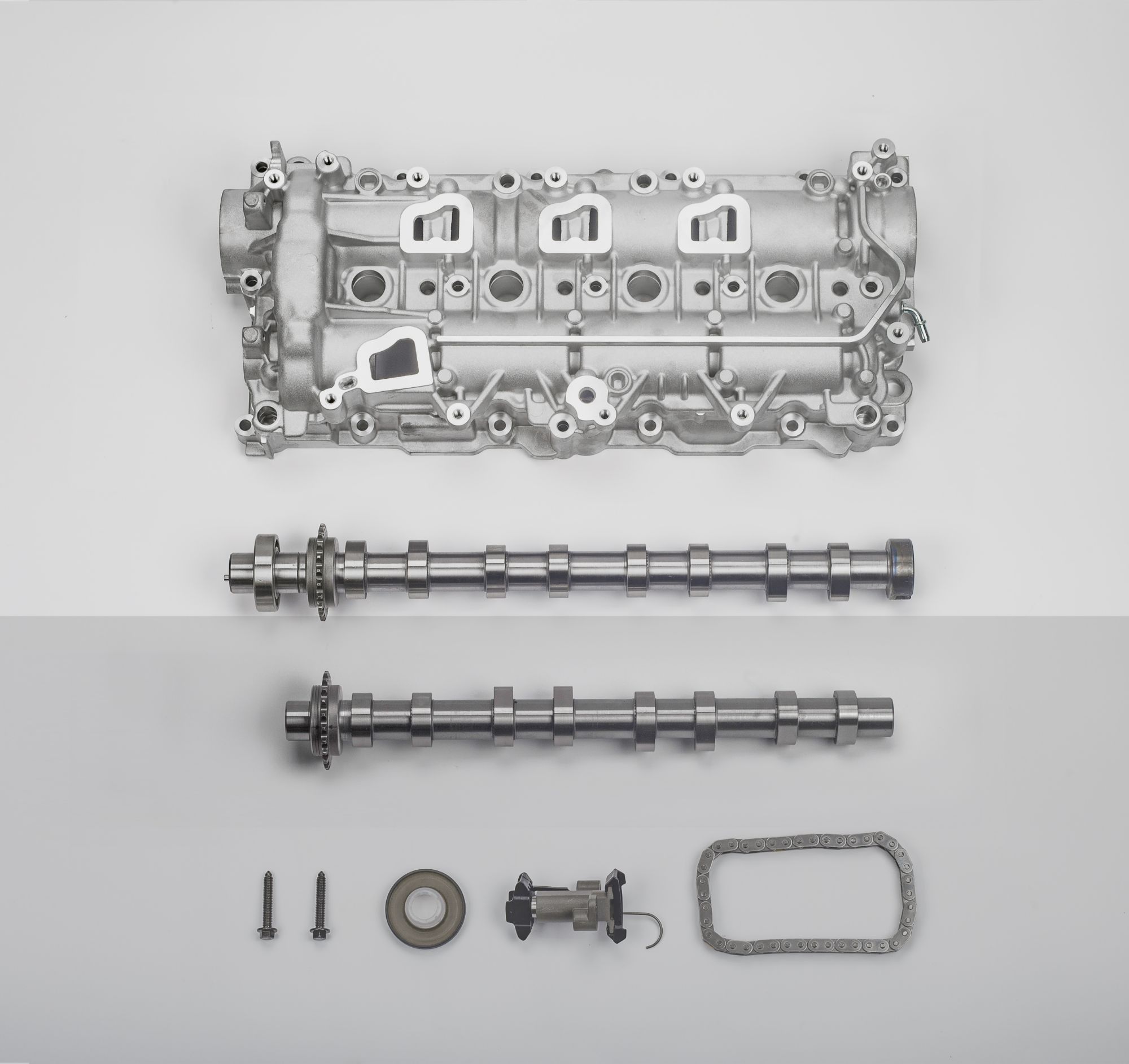
Mastering dimensional accuracy in precision casting begins well before the metal enters the mold. Advanced simulation software maps out thermal behaviors and flow dynamics, allowing foundries to anticipate and counteract distortion before it occurs. Pattern dies are machined to micrometric tolerances, often using multi-axis CNC systems that translate digital models directly into physical tooling. This upfront investment in digital rigor pays off in every pour, ensuring that each component emerges with wall thicknesses, fillet radii, and surface contours precisely as intended, regardless of how many units are produced.
The choice of shell-building technique directly impacts repeatability. For instance, ceramic shell investment casting creates a rigid, thermally stable mold that resists deformation under the extreme temperatures of molten superalloys. Through controlled slurry viscosity and stucco application, foundries achieve consistent shell permeability and strength, which governs both the surface finish and the metallurgical integrity of the final part. When this process is paired with automated dipping and drying cycles, variables like humidity and coating thickness become tightly regulated, eliminating the batch-to-batch variations that often plague hand-built molds.
Post-casting inspection closes the loop on consistency. Coordinate measuring machines and blue-light scanners now compare each critical dimension against the CAD model within minutes, generating full deviation maps that highlight even subtle trends toward warping or shrinkage. This feedback loops directly back into the simulation parameters and shell-building protocols, enabling real-time process adjustments. The result is a casting workflow that doesn't just produce a good part occasionally—it reproduces it endlessly, with a level of certainty that transforms precision casting from a craft into a predictable engineering discipline.
Beyond Standard Inspections: Real-World Quality Verification
Quality verification often stops at a checklist—boxes ticked, standards met, report filed. But the real world doesn't unfold in a controlled lab. A product that passes every bench test can still stumble in the hands of a user, under harsh sunlight, or after months of daily wear. That gap between compliance and actual experience is where true quality lives or dies.
Moving beyond standard inspections means asking uncomfortable questions: What happens when this item is used in ways no manual predicted? Will it survive a frustrated yank, a spilled drink, a sudden temperature swing? We've found that genuine durability reveals itself not in pass/fail metrics, but in the tiny degradations that only appear after repeated, messy human interaction.
This approach demands a different rhythm—longer observation, fewer assumptions. Instead of validating what we already know, we let the product speak through its scars. A scuffed edge, a softened button, a hinge that still holds after ten thousand extra cycles: those are the signatures of readiness. Real-world verification isn't about certifying perfection; it's about proving resilience where it actually counts.
Engineering Collaboration for Tailored Component Design
Bringing together cross-disciplinary expertise early in the design phase often reveals unexpected shortcuts that can dramatically shorten development timelines. Instead of working in silos, engineers, materials specialists, and manufacturing teams share real-time insights, challenging initial assumptions about what’s achievable. This fluid exchange means that component geometry, tolerance requirements, and manufacturing constraints are refined collaboratively, reducing rework and preventing costly late-stage surprises.
A tangible benefit of this approach is the ability to exploit emerging production methods before they become industry standard. When the team collectively experiments with novel alloys or additive techniques, the resulting component can be both lighter and more durable than traditional designs. Suppliers become true partners rather than order-takers, offering suggestions that nudge the design toward greater simplicity and higher reliability, often achieving performance benchmarks that a single department would struggle to reach alone.
The iterative dialogue extends beyond blueprints and simulations to physical prototyping, where hands-on problem-solving reveals subtle improvements. Adjusting a bracket’s thickness by a fraction of a millimeter or reorienting a cooling channel might seem minor, yet these details compound into a component that outlasts expectations. This collective tuning turns abstract requirements into a tangible, field-ready part that’s optimized not just for function, but for the entire ecosystem of its lifecycle.
Surface Enhancement Methods That Extend Product Life
From shot peening to laser shock processing, controlled mechanical impacts create compressive residual stresses on component surfaces, effectively inhibiting crack initiation and slowing fatigue propagation. These methods prove especially valuable in aerospace and automotive sectors, where cyclic loading conditions demand exceptional surface integrity. By plastically deforming the near-surface layer, engineers can double or even triple the service life of critical parts without altering the base material chemistry.
Thermal and thermochemical techniques offer another powerful path to longevity. Processes like nitriding, carburizing, and induction hardening selectively modify surface hardness and wear resistance while preserving a tough, ductile core. The resulting gradient structures resist abrasive wear, fretting, and corrosion far better than untreated surfaces. When combined with modern coating technologies such as physical vapor deposition (PVD) or diamond-like carbon (DLC) films, these enhancements create multi-layered defenses that dramatically extend the operational window of everything from cutting tools to medical implants.
Emerging laser and electron beam treatments now allow for micro-scale precision engineering of surface topography and microstructure. By controlling melt pool dynamics and rapid solidification, manufacturers can tailor surface characteristics to specific performance demands—whether that means oil-retaining micro-textures for improved lubrication or nanocrystalline layers that offer exceptional hardness without brittleness. As industries push components to higher loads and faster cycles, these advanced surface solutions are becoming not just upgrades but essential design features for long-lasting products.
Streamlined Logistics Ensuring On-Time Delivery Without Compromise
In our world, every shipment has a story, and we make sure it ends with a smile. We don't just move boxes; we synchronize every step of the journey, from the moment you hand over the goods until they reach their final destination. Our team works like a well-rehearsed orchestra, blending technology with old-fashioned attention to detail, so nothing slips through the cracks.
Delays are more than just inconveniences—they can disrupt entire operations. That's why we built a network that thrives on flexibility, adapting to weather, traffic, or whatever the day throws at us. With real-time tracking and a can-do mindset, we keep your supply chain flowing as smoothly as a river, no matter the obstacles.
We measure success not by boasts, but by the relief in a client’s voice when a critical delivery arrives right on schedule. It’s about trust, earned one successful delivery at a time. No shortcuts, no excuses—just genuine reliability that feels like having a logistics partner who truly cares.
FAQ
Focus on their experience with gravity casting, especially in your industry. A supplier with extensive know-how in mold design, gating systems, and solidification control can deliver consistent quality. Check their track record for defect rates and how they handle dimensional accuracy.
Quality starts with the alloy. Reputable suppliers use certified ingots and control composition to match application needs, whether it’s strength, corrosion resistance, or thermal properties. They should also conduct regular spectrographic checks to ensure batch consistency.
Real-time monitoring of pour temperature, mold temperature, and cooling rates is critical. Advanced suppliers employ process control tools and inspections like X-ray, dye penetrant, or pressure testing to catch porosity, cracks, or inclusions before parts leave the floor.
Absolutely. Many suppliers offer heat treatment, machining, and surface finishing. These steps can alter mechanical properties and dimensions. A capable supplier maintains strict control across all processes, ensuring the final part meets exact specifications without hidden flaws.
Early involvement in design reviews helps optimize part geometry for castability, reducing risks of shrinkage or filling issues. Suppliers who provide feedback on rib additions, wall thickness adjustments, or parting line placement can significantly boost both quality and yield.
Look for evidence of lean manufacturing practices, quality certifications like ISO 9001 or IATF 16949, and investment in modern equipment. Regular audits, employee training programs, and a culture of root-cause analysis for defects indicate a supplier focused on long-term excellence.
Conclusion
The true measure of an aluminum gravity parts supplier lies not merely in certifications but in a deeply integrated approach to quality that begins long before metal is poured. Premium raw materials form the backbone of durability, as handpicked ingots with controlled impurity levels directly influence tensile strength and corrosion resistance. However, material excellence alone is hollow without precision casting techniques that turn consistency into a repeatable science—from optimized gating systems that minimize turbulence to controlled cooling parameters that refine grain structure. These foundational steps ensure that every batch mirrors the last, yet true reliability demands scrutiny that surpasses standard checklists. Real-world quality verification goes beyond dimensional reports and spectrometer readings, incorporating dynamic load tests, thermal shock cycling, and prolonged fatigue simulations that echo actual service conditions, catching weaknesses that lab-only inspections often miss.
But the supplier’s role extends further into true partnership. Engineering collaboration reshapes generic blueprints into tailored solutions, where minor design tweaks—a rib here, a radius adjustment there—unlock significant improvements in weight savings or fluid flow dynamics. Once the component is refined, surface enhancement methods such as precision micro-peening or advanced anodizing chemistries build a protective layer that fights wear and oxidation, effectively extending product lifespan without adding bulk. Finally, even the finest part loses its value if it arrives late. Streamlined logistics—backed by strategic warehousing and agile transportation routing—ensure that production schedules stay on track, delivering components just in time and in perfect condition. This seamless blend of material science, process control, collaborative engineering, and dependable logistics defines a supplier that doesn’t just meet specifications but elevates the entire manufacturing chain.
Contact Us
Contact Person: Shelly
Email: [email protected]
Tel/WhatsApp: 8613967667688
Website: https://www.yongyu.com/